
Signs an Aging Parent Needs Help: Look for Patterns, Not One Imperfect Day

Signs Aging Parent Needs Help

Signs that an aging parent may need help are most useful when they are compared with the person’s own baseline and tracked as repeated, meaningful changes. One cluttered room, missed meal, forgotten appointment, or unexplained bruise should not be turned into a diagnosis or a verdict about living alone. Record frequency, severity, context, and consequences,
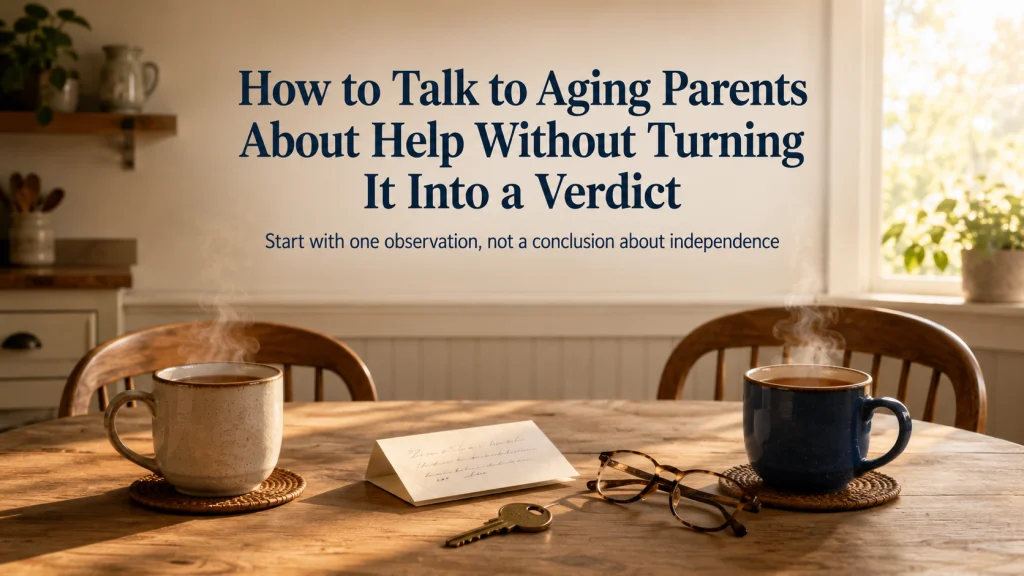

How to Talk to Aging Parents About Help Without Turning It Into a Verdict

How To Talk To Aging Parents About Help

A useful conversation begins with one neutral observation and one shared goal, not a verdict about whether an aging parent can still manage. Choose one topic, ask permission, learn what the parent wants to preserve, and offer two or three workable options rather than presenting a finished decision. Keep the first step small, reversible, and

Why Seniors Refuse Help: Understand What the No Is Protecting

Why Seniors Refuse Help

A refusal of help may be protecting control, privacy, identity, trust, reciprocity, routine, or the right to choose how a problem is solved. Before repeating the same offer more forcefully, ask what the offer changes besides the workload. Separate a preference conflict from an unmet essential need or immediate danger, then redesign the support around