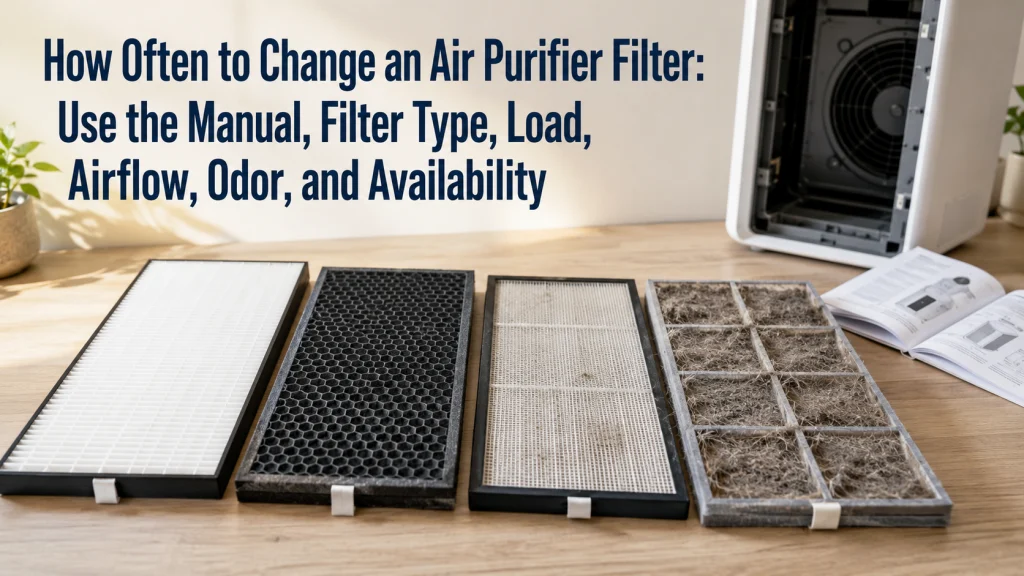
How Often to Change an Air Purifier Filter: Use the Manual, Filter Type, Load, Airflow, Odor, and Availability
How Often To Change Air Purifier Filter

Air purifier and HVAC filters should not be cleaned or replaced on one universal calendar. Begin by identifying every filter stage and its part number, then use the manual to learn whether each part may be vacuumed, washed, dried, reset, or replaced. Track how the machine is used, what the filter encounters, how airflow and
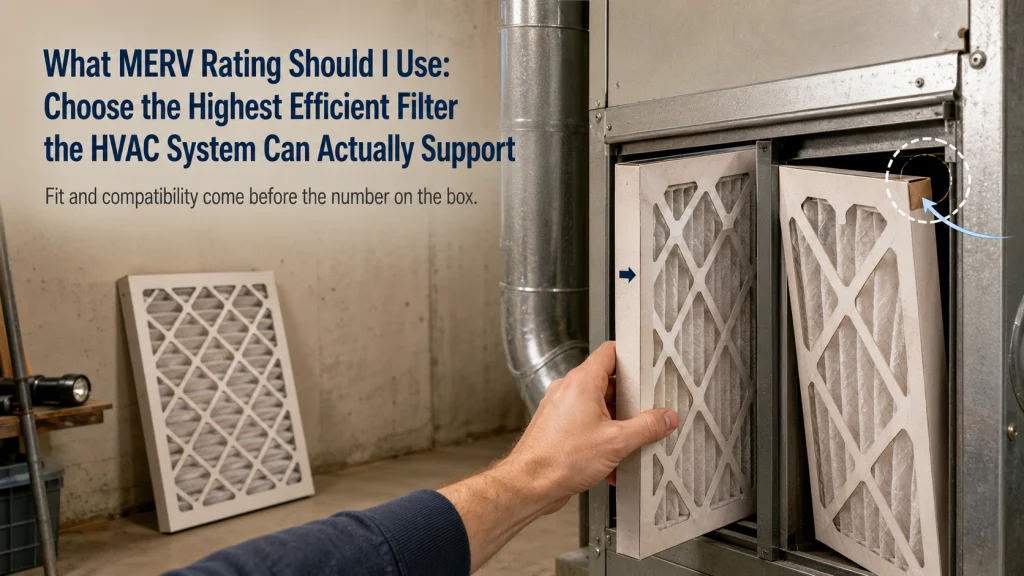
What MERV Rating Should I Use: Choose the Highest Efficient Filter the HVAC System Can Actually Support

What Merv Rating Should I Use

The right MERV rating starts with the exact HVAC system, filter slot, and physical filter size, not with the largest number on a package. MERV 13 can be an appropriate target when the system fan and filter location can support it, while some systems require a different compatible choice. A filter must fit snugly, face

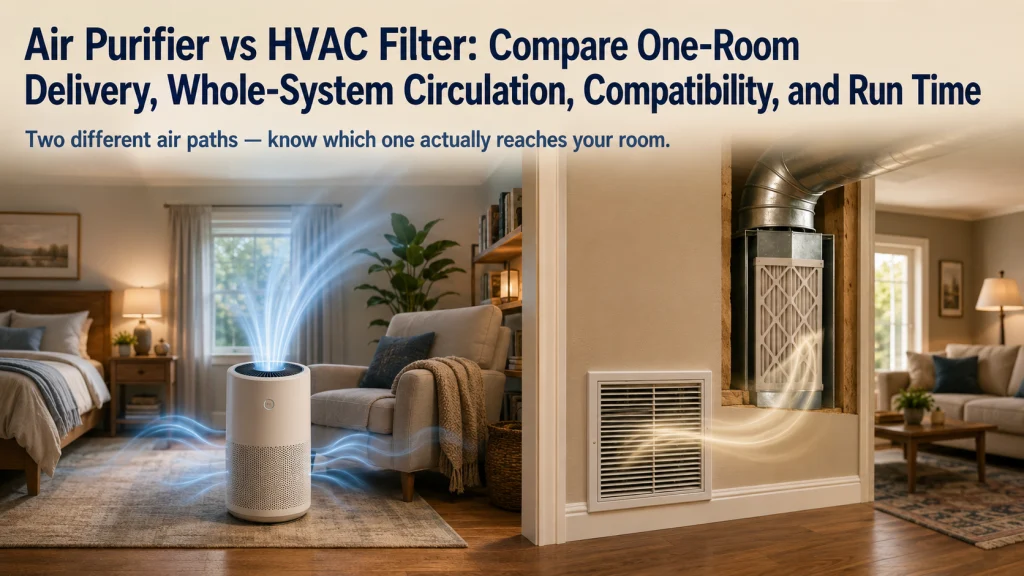
Air Purifier vs HVAC Filter: Compare One-Room Delivery, Whole-System Circulation, Compatibility, and Run Time

Air Purifier Vs Hvac Filter

A portable air purifier and a central HVAC filter solve different parts of the same household problem. One can stay close to the room being used, while the other depends on the home’s installed equipment and operating schedule. The better choice comes from mapping the system, naming the priority room, confirming compatibility, and deciding what

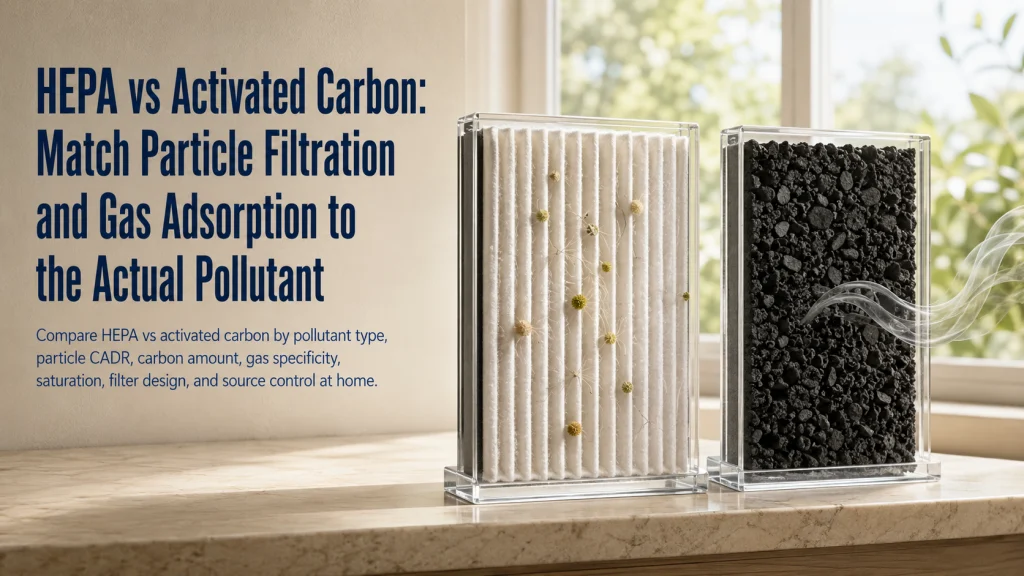
HEPA vs Activated Carbon: Match Particle Filtration and Gas Adsorption to the Actual Pollutant

Hepa Vs Activated Carbon

HEPA and activated carbon solve different air-cleaning problems. HEPA media captures airborne particles such as pollen, dust, smoke particles, and mold spores, while activated carbon adsorbs certain gases and odor molecules onto its surface. Neither mechanism should be judged from a filter percentage alone because whole-device airflow, seals, media quantity, target pollutant, and replacement condition

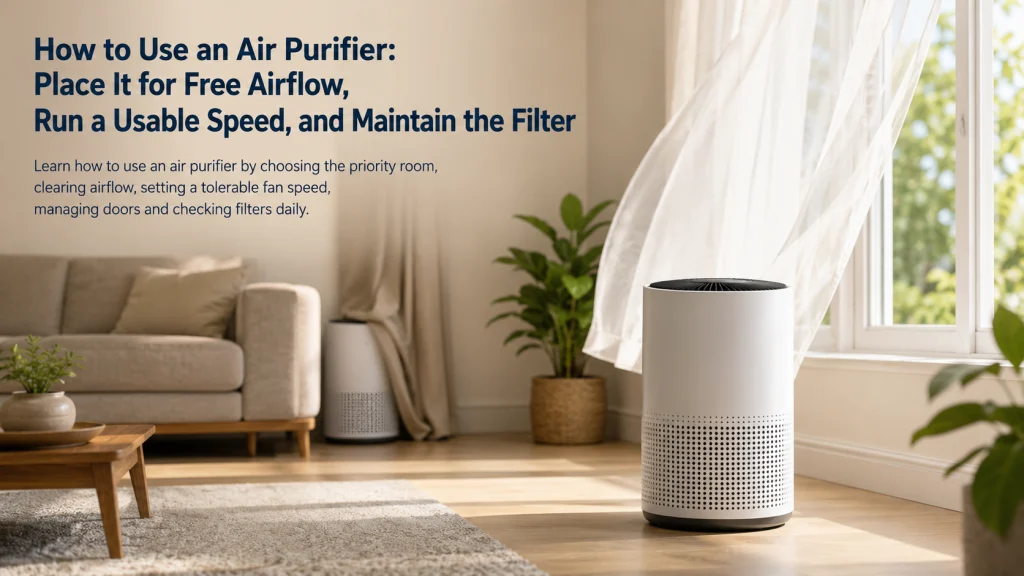
How to Use an Air Purifier: Place It for Free Airflow, Run a Usable Speed, and Maintain the Filter

How To Use An Air Purifier

Using an air purifier well is mostly a matter of putting it in the right room, keeping its air path open, and choosing a fan setting the household can tolerate consistently. The same unit can perform very differently when it is hidden behind furniture, placed inside a closet, left beside an open doorway, or positioned

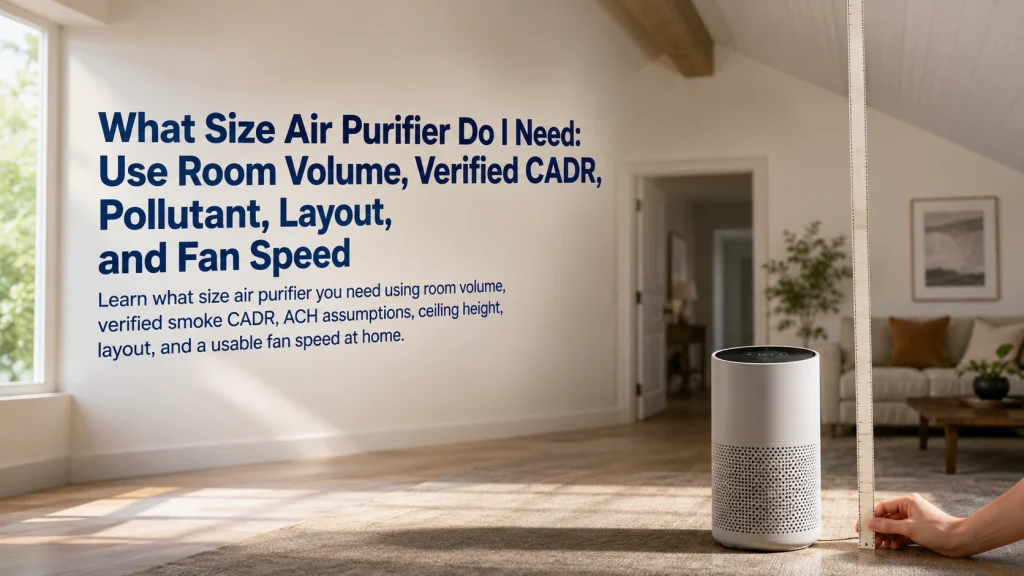
What Size Air Purifier Do I Need: Use Room Volume, Verified CADR, Pollutant, Layout, and Fan Speed

What Size Air Purifier Do I Need

Size a portable particle air cleaner from the room volume, a verified smoke CADR, the comparison assumption, the likely fan speed, and the way air actually moves through the space. Square-foot coverage alone can hide different air-change assumptions, ceiling heights, and operating speeds. A high ceiling or open doorway increases the air volume the unit

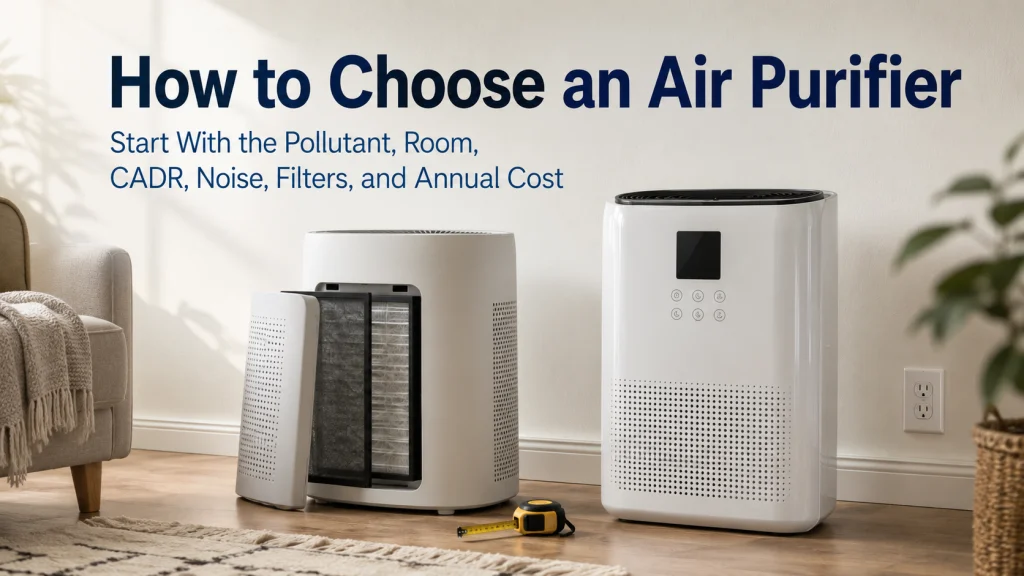
How to Choose an Air Purifier: Start With the Pollutant, Room, CADR, Noise, Filters, and Annual Cost

How To Choose An Air Purifier

A useful portable air purifier starts with a defined job: a named pollutant in a real room, handled at a fan speed the household can live with. Large coverage numbers and long feature lists can distract from the questions that determine everyday use, including filter supply, noise, placement, controls, recurring cost, and safety. Compare particle

Do Air Purifiers Work: Define the Pollutant, Clean-Air Delivery, Room, Run Time, and Outcome

Do Air Purifiers Work

Air purifiers can reduce selected airborne pollutants when the filter mechanism, clean-air delivery, room, placement, run time, and maintenance all fit the job. The useful question is not whether one machine can make a home broadly “clean,” but whether it can reduce a named pollutant in the space where people actually spend time. Less airborne

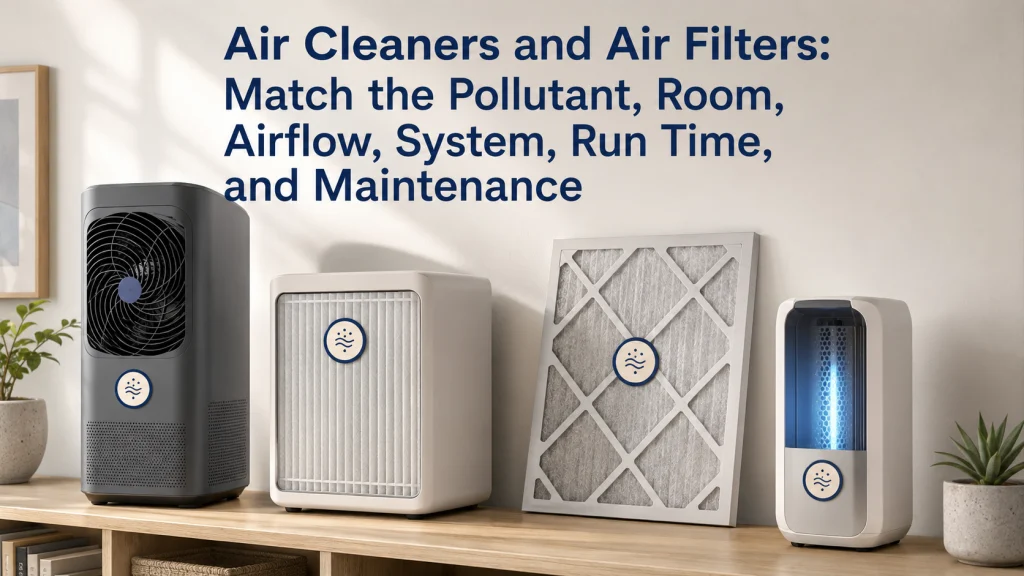
Air Cleaners and Air Filters: Match the Pollutant, Room, Airflow, System, Run Time, and Maintenance

Air Cleaners And Air Filters

Air cleaners and air filters make more sense when you begin with the air problem rather than the product format. Identify whether the concern is particles, gases, or both, then match the mechanism to the actual room or central system and to a fan speed the household can live with. Source control and appropriate ventilation

Indoor Air Quality in Apartments: Separate What You Control From Shared Systems and Building Responsibilities

Indoor Air Quality In Apartments

Indoor air quality in apartments depends on separating what happens inside the unit from what travels through shared systems or building pathways. Start by handling alarms, gas, smoke, and severe symptoms as emergencies. For nonemergency concerns, record the time, room, activity, weather, window and door status, fan use, and nearby building events without naming a

Bathroom Ventilation: Verify Outdoor Exhaust, Airflow Path, Use, Maintenance, and Moisture Response

Bathroom Ventilation

A bathroom fan is useful only when moist air can reach the grille and the duct sends that air outdoors. First confirm the intended destination through documentation and safe observations. Then check whether replacement air can enter the room, use the fan during and after moisture-producing activities according to guidance, and keep accessible grilles clean.

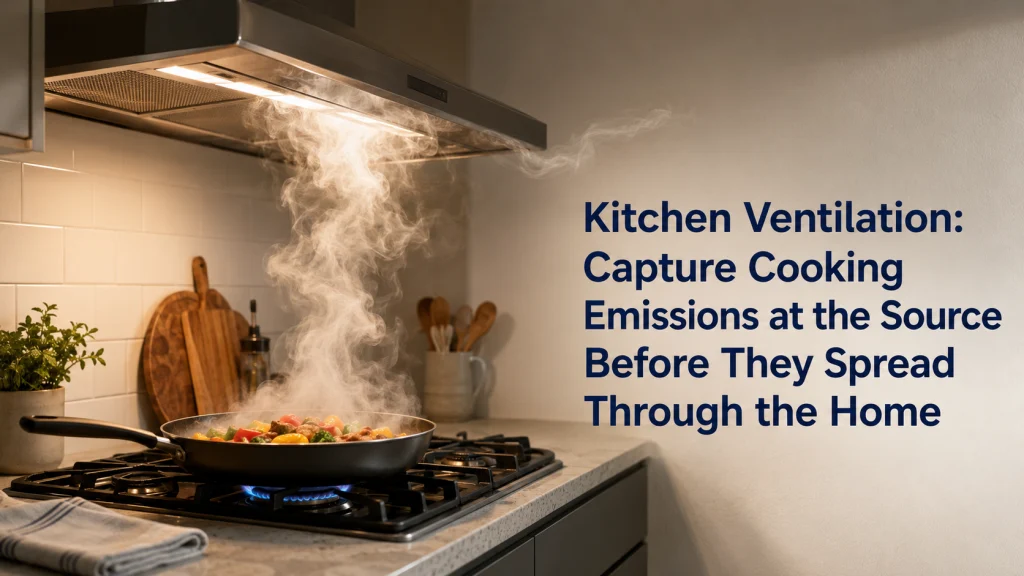
Kitchen Ventilation: Capture Cooking Emissions at the Source Before They Spread Through the Home

Kitchen Ventilation

Kitchen ventilation works best when it captures cooking emissions close to the pan before they spread through the room. Begin by verifying whether the existing hood or microwave unit vents outdoors or recirculates air back into the kitchen. When outdoor-vented exhaust is available, turn it on early, place active cooking under the capture area when