Fear of Falling in Older Adults: Rebuild Participation Without Pretending Fear Is Irrational
Fear Of Falling In Older Adults

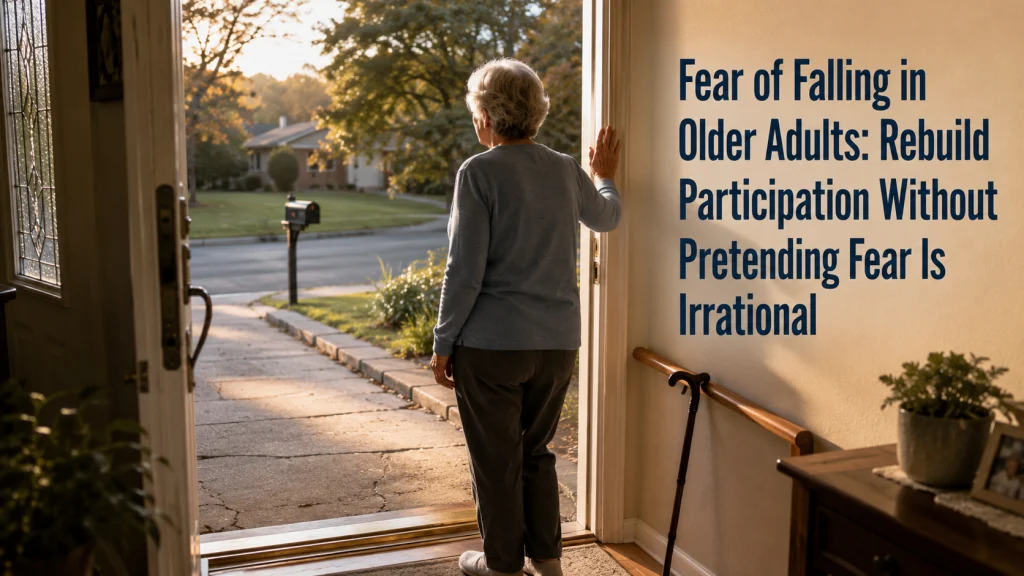
Fear of falling in older adults can be protective when it points to a real hazard, uncertain capacity, or a recent change that needs attention. It becomes costly when avoiding every risky-feeling activity also removes walking, bathing, stairs, errands, and social participation. A cautious plan separates the hazard from the remembered threat, removes what can

How to Stay Active With Limited Mobility: Build an Activity System Around What Is Available Today

How To Stay Active With Limited Mobility

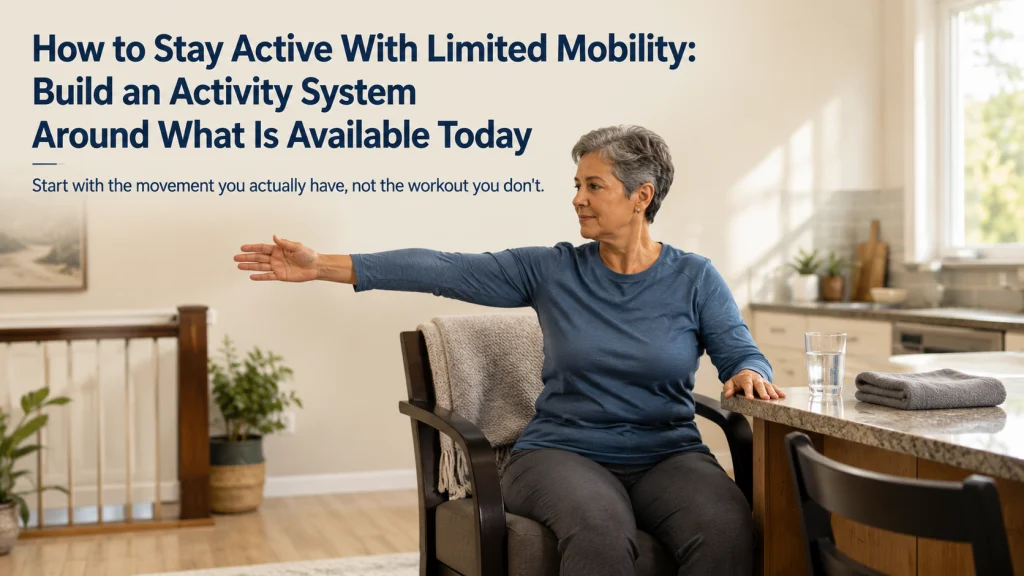
Staying active with limited mobility begins by identifying what movement is available today rather than forcing one standing workout to become the standard. Small windows of movement can be distributed across seated, supported, lying, aquatic, or assisted formats depending on the person’s current capacity and environment. Consistency, recovery, and participation matter more than calorie estimates

How to Improve Walking Endurance: Increase Time Without Hiding Recovery Problems

How To Improve Walking Endurance

Walking endurance should be judged by duration, pace, terrain, and recovery together rather than by distance or step count alone. Start with a repeatable route, record when effort first changes the walk, and use planned walk-rest intervals before fatigue forces a stop. Progress only one variable at a time while keeping weather, terrain, seating, hydration,

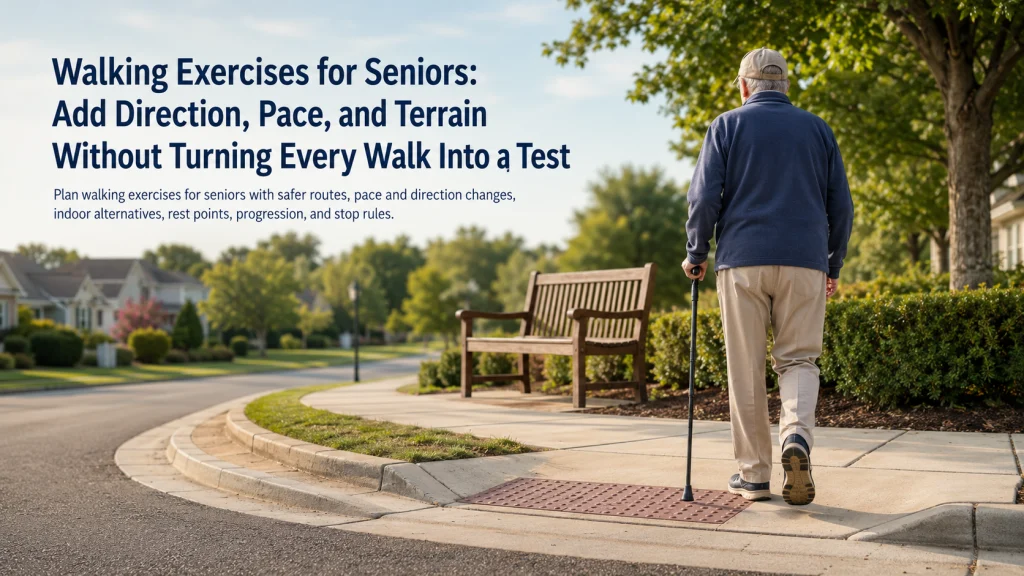
Walking Exercises for Seniors: Add Direction, Pace, and Terrain Without Turning Every Walk Into a Test

Walking Exercises For Seniors

Walking practice becomes more demanding when the route adds turns, crowds, uneven surfaces, poor lighting, or limited places to rest, even when the total time stays the same. Separate walking skill from endurance, choose a route that fits the current day, and add only one challenge at a time. Keep footwear, mobility aids, weather, energy,

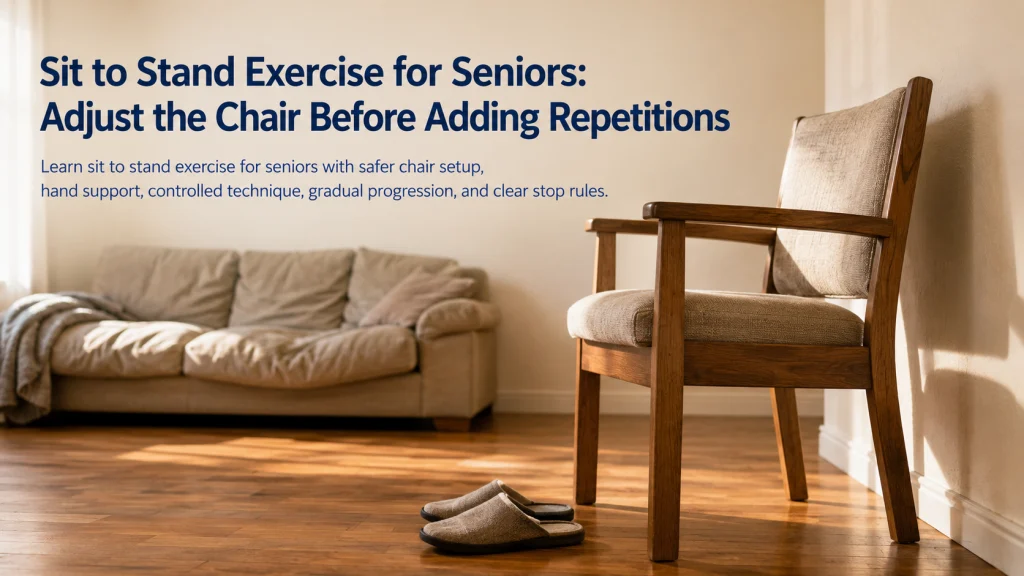
Sit to Stand Exercise for Seniors: Adjust the Chair Before Adding Repetitions

Sit To Stand Exercise For Seniors

Sit-to-stand practice becomes easier or harder before strength changes at all because chair height, firmness, armrests, foot position, and hand support alter the task. Begin with a secure chair that allows a smooth rise and return, choose the permitted level of hand support, and test a small starting set. Progress only one variable at a

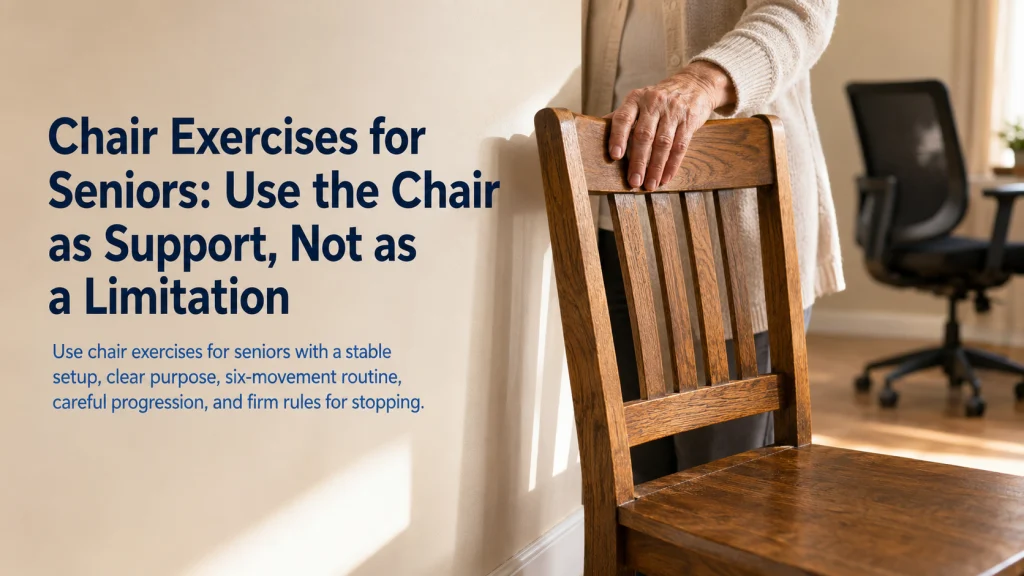
Chair Exercises for Seniors: Use the Chair as Support, Not as a Limitation

Chair Exercises For Seniors

Chair exercises for seniors can support mobility, strength, circulation, and confidence when the chair is stable and the routine matches the reason for exercising. Begin with a safe setup, choose movements that fit the current purpose, and avoid changing positions so often that the routine becomes harder to follow. Progress range, control, or resistance one

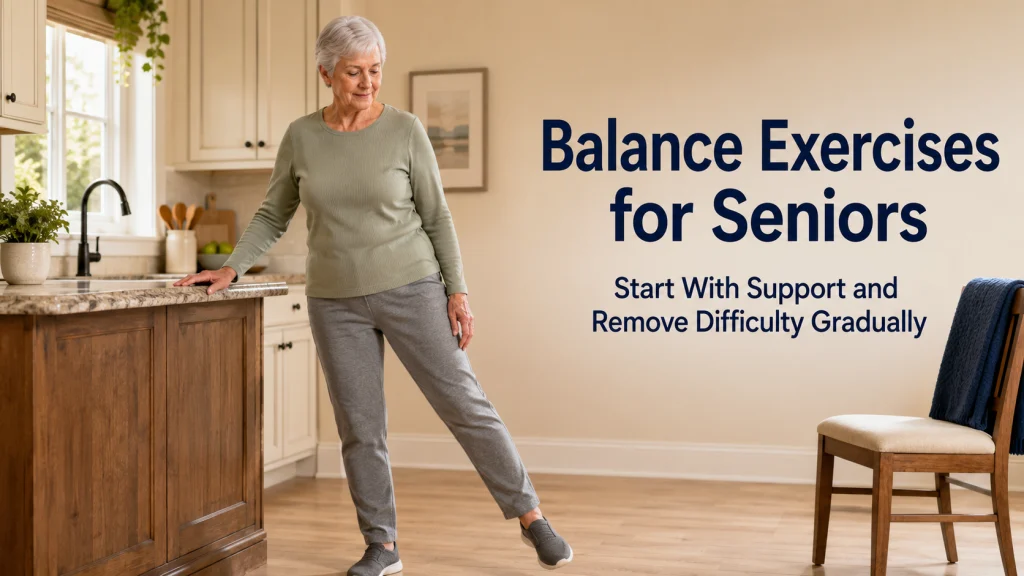
Balance Exercises for Seniors: Start With Support and Remove Difficulty Gradually

Balance Exercises For Seniors

Balance exercises for seniors should begin with stable support and a practice area where a small mistake does not become a serious fall. Start with stance and controlled weight shifts, then add reaching, direction changes, and stepping only when the earlier version remains organized. Progress one variable at a time, such as support, vision, surface,

Functional Exercises for Seniors: Train the Movements Daily Life Actually Requires

Functional Exercises For Seniors

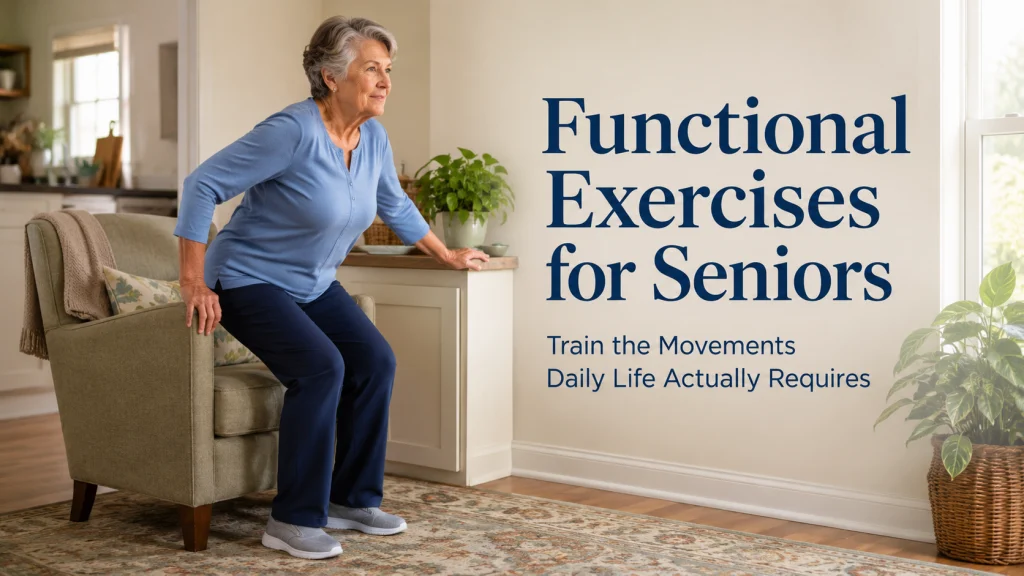
Functional exercises for seniors should begin with the daily task that has become harder, not with a random equipment list. Standing from a chair, reaching a shelf, carrying groceries, turning in a narrow space, and stepping onto a curb each require a different movement pattern. Choose a supported starting version, use a comfortable range and

How to Maintain Mobility as You Age: Match Strength, Balance, Walking, and Support to Daily Life

How To Maintain Mobility As You Age

Maintaining mobility as you age begins with identifying the ordinary movement that is becoming harder, not choosing a long exercise list. Difficulty rising from a chair, feeling unsteady while turning, stopping early on a familiar walk, and avoiding activity because of fear point to different starting routes. Choose one movement problem, connect it to one

How to Find Purpose in Retirement: Replace the Work Role With Meaningful Commitments

How To Find Purpose In Retirement

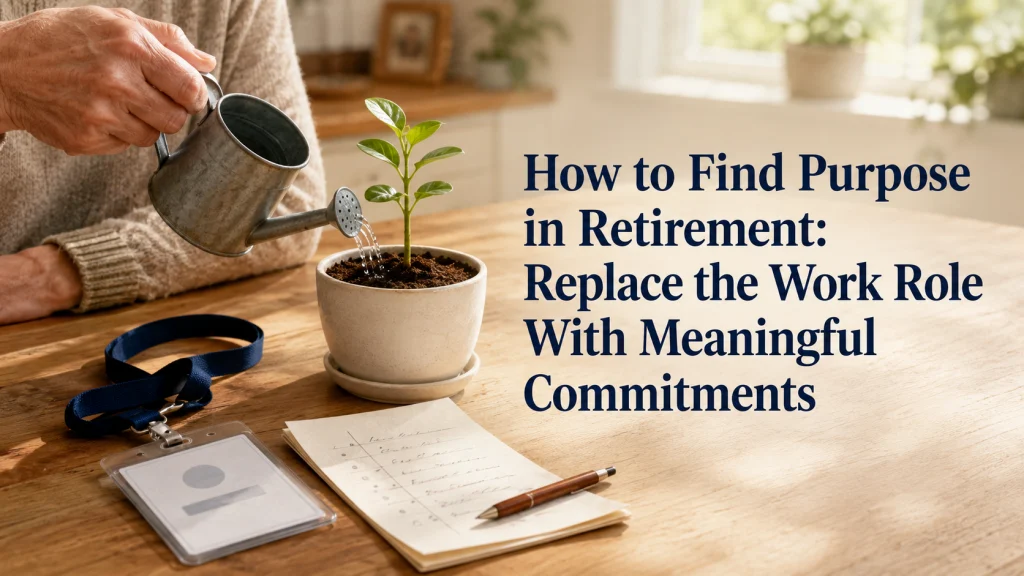
Learning how to find purpose in retirement starts by noticing which functions disappeared with the work role, not by searching for one perfect calling. Choose a small portfolio that includes contribution, connection, learning, care, creativity, stewardship, faith, play, or rest in proportions that fit your current life. Test one or two commitments for four weeks,

Solo Aging: Build a Support System Before You Need a Default Helper

Solo Aging

Solo aging does not mean being lonely, living without meaningful relationships, or doing everything alone. It means planning without assuming that a spouse, adult child, or nearby relative will automatically coordinate help when a specific need appears. Map the roles that require another person, ask for explicit agreement, add backups, and keep professional authority with

Signs an Aging Parent Needs Help: Look for Patterns, Not One Imperfect Day

Signs Aging Parent Needs Help

Signs that an aging parent may need help are most useful when they are compared with the person’s own baseline and tracked as repeated, meaningful changes. One cluttered room, missed meal, forgotten appointment, or unexplained bruise should not be turned into a diagnosis or a verdict about living alone. Record frequency, severity, context, and consequences,