How to Floss Properly: Clean Both Sides of Each Contact Without Snapping Into the Gums
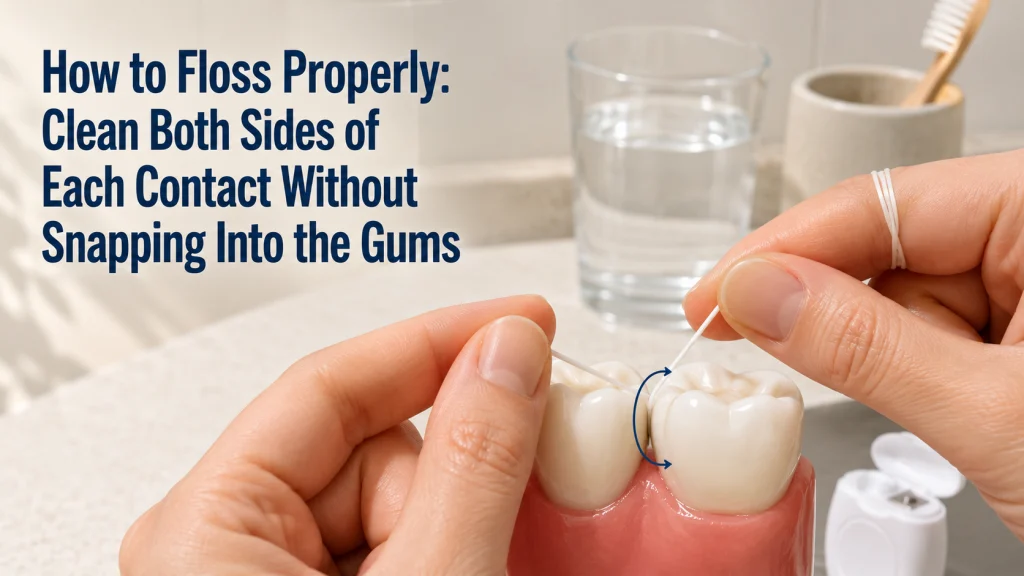
How To Floss Properly

Proper flossing means more than passing floss through the contact between two teeth. The floss must wrap gently around the first tooth, clean that wall with controlled strokes, then shift to the second tooth wall in the same gap. Choose string, tape, or a holder that can reach every contact, use a fresh segment as
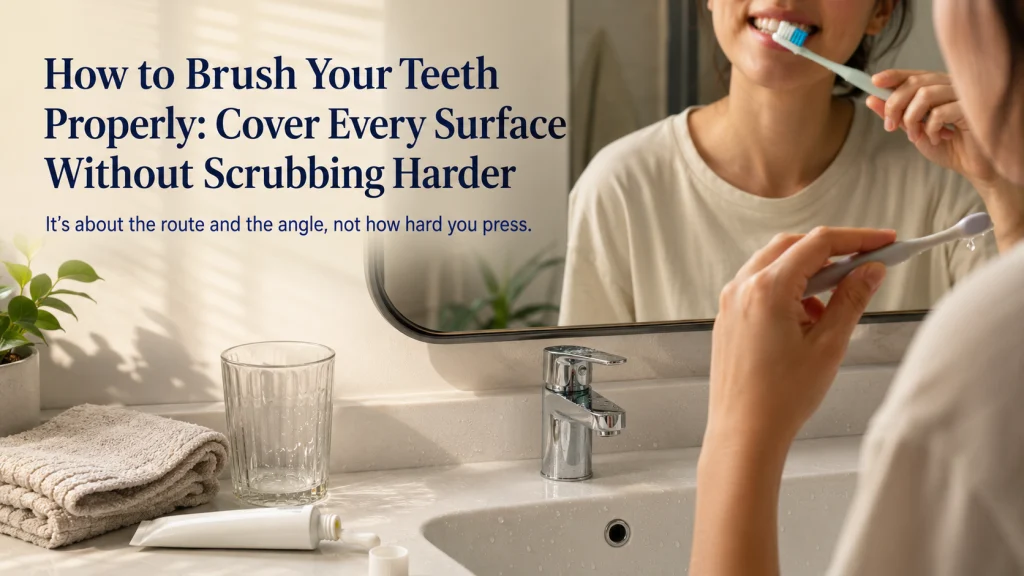

How to Brush Your Teeth Properly: Cover Every Surface Without Scrubbing Harder

How To Brush Your Teeth Properly

Proper tooth brushing depends more on complete surface coverage, gentle pressure, and a repeatable route than on using more force. Choose a soft-bristled brush that reaches comfortably, use fluoride toothpaste unless a dental professional gives different instructions, and spend about two minutes covering the outer, inner, and chewing surfaces twice a day. Manual and powered

Oral Hygiene Routine: Give Brushing, Interdental Cleaning, Rinses, and Optional Steps the Right Roles

Oral Hygiene Routine

An oral hygiene routine becomes easier when every step has a clear job. Brushing with fluoride toothpaste and daily interdental cleaning cover the essential work, while mouthwash and tongue cleaning belong only when they answer a specific need or preference. Product order should come from the exact label or an individual dental instruction rather than

Oral Hygiene: Build a Daily System for Teeth, Gums, Breath, and Dental Appliances

Oral Hygiene

Oral hygiene is easier to manage when each task has a clear role. Brushing cleans exposed tooth surfaces, interdental cleaning reaches between teeth, optional adjuncts add a specific function, and dental appliances need their own routine. Start with the surface, tool, symptom, or appliance creating the uncertainty, then follow the matching workflow instead of adding

Why Do I Still Smell After a Shower? Check Skin, Drying, Product, Clothing, and Odor Changes

Body Odor After Shower

Body odor after a shower does not automatically mean the shower failed or that the body was not cleaned well enough. The source may be underarm skin, another external area, a towel, clothing, footwear, a product mismatch, or sweat returning after the routine. Troubleshoot one layer at a time instead of scrubbing harder or stacking

Whole-Body Deodorant: Check the Product Claim, Body Area, and Label Before Applying It Everywhere

Whole Body Deodorant

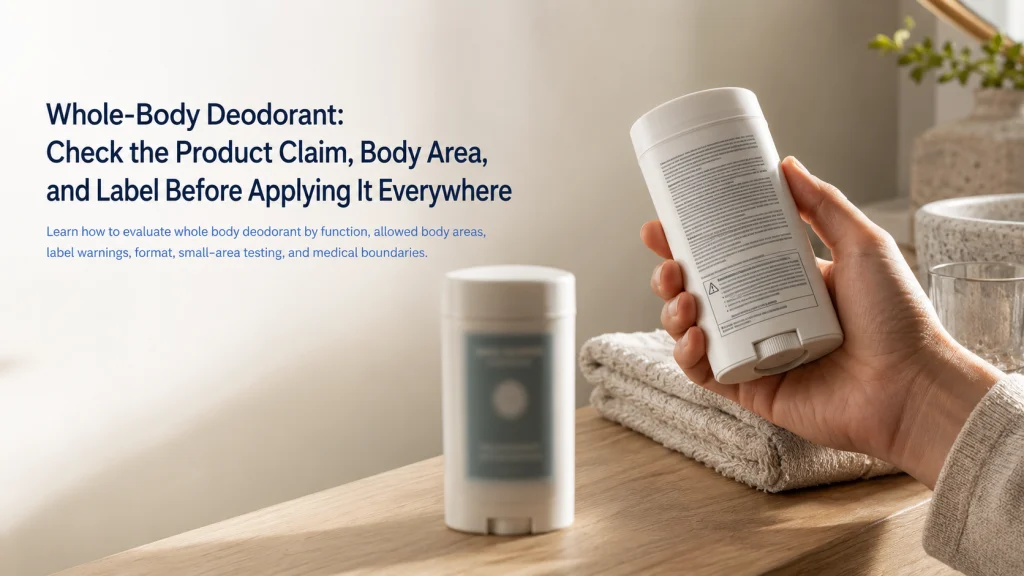
Whole body deodorant is a broad marketing category, not permission to apply one product to every part of the body. Start by confirming whether the product is a deodorant, antiperspirant, or combination, then read the exact allowed areas, warnings, fragrance information, and stop-use directions. Use it only on external skin specifically permitted by the label,

How to Apply Antiperspirant: Read the Drug Facts and Follow the Exact Label

How To Apply Antiperspirant

A reliable antiperspirant routine starts with the exact product label rather than a one-size-fits-all online rule. Confirm that the package is an antiperspirant, locate its Drug Facts, and follow the labeled area, timing, amount, skin condition, and warnings. Dry, intact underarm skin may fit many products, but bedtime use, post-shower timing, and reapplication instructions can

Deodorant vs Antiperspirant: Choose Odor Control, Sweat Reduction, or a Combination Product

Deodorant Vs Antiperspirant

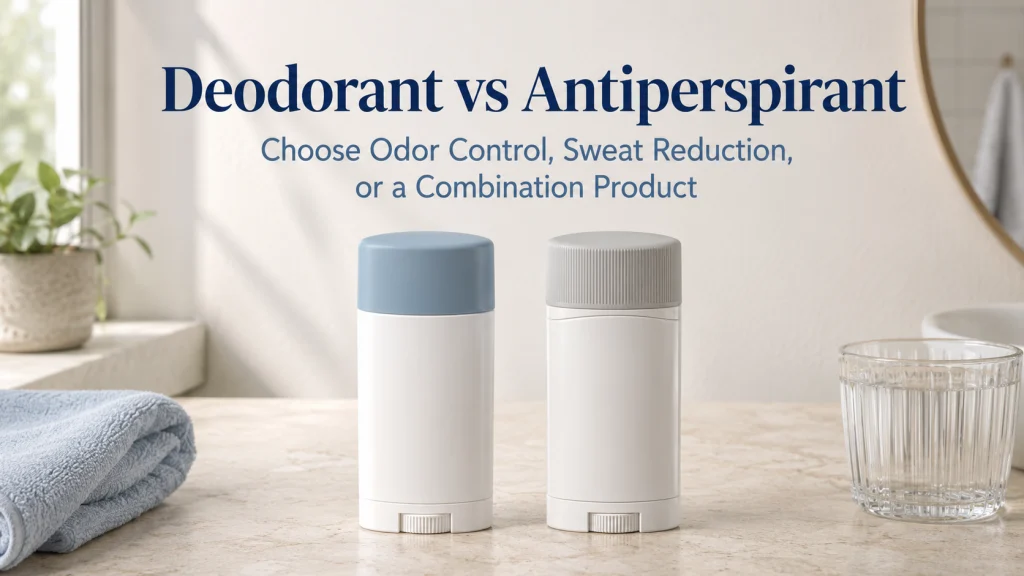
Deodorant and antiperspirant may come in similar packages, but they solve different problems. Deodorant is mainly for odor control, while antiperspirant is intended to reduce underarm perspiration; combination products do both. Choose by naming the problem first, then confirm the category, active claim, intended body area, directions, and warnings on the label. A product comparison

Shower After a Workout: Remove Sweat, Change Clothes, and Handle Shared Facilities Safely

Shower After Workout

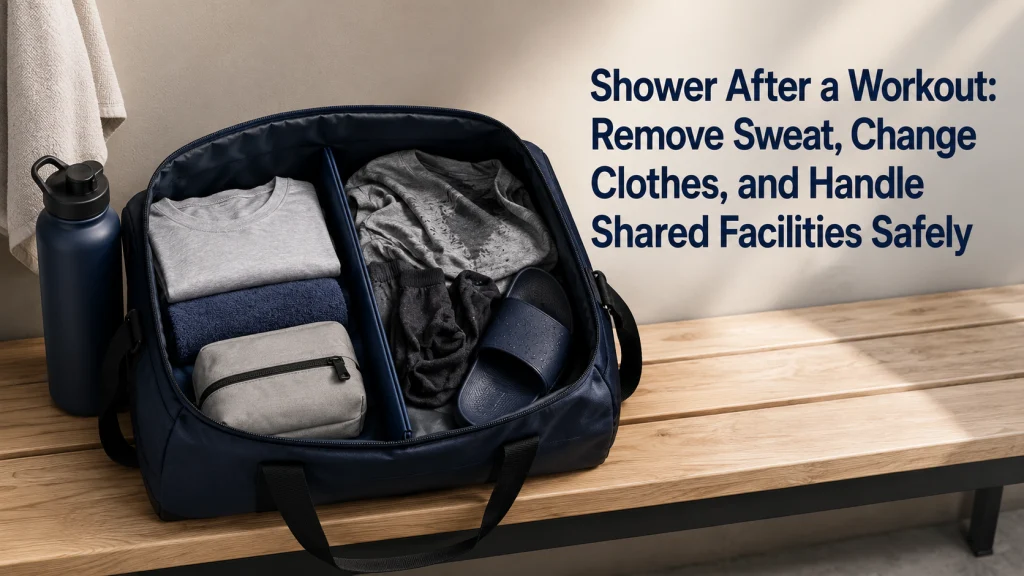
A shower after a workout is mainly about removing sweat, changing out of damp clothing, and managing shared-space exposure without turning every session into an aggressive cleaning routine. After an ordinary workout, change clothes and shower when practical, using a gentle wash rather than scrubbing harder or adding unnecessary products. A delayed shower calls for

Bar Soap vs Body Wash: Compare Cleansing Function, Formula, Packaging, and Routine Fit

Bar Soap Vs Body Wash

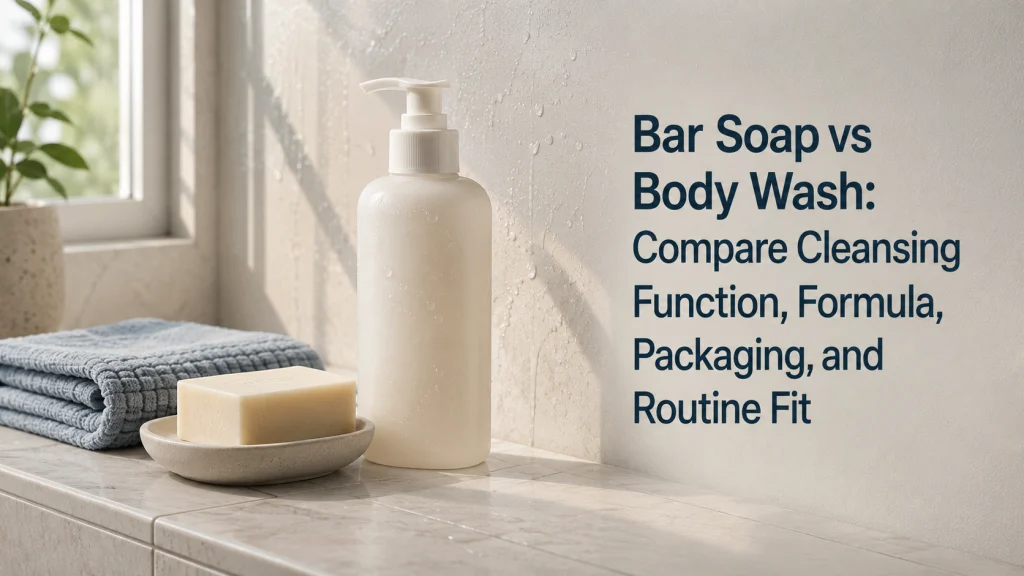
A bar, body wash, shower gel, or gentle cleanser cannot be judged by format alone. Compare the actual cleansing task, intended use, ingredient list, fragrance, after-feel, package behavior, storage needs, sharing pattern, cost per real use, and observed skin response. Keep medicated, antibacterial, acne, antifungal, intimate, facial, hair, and disease-specific products outside an ordinary body-cleanser

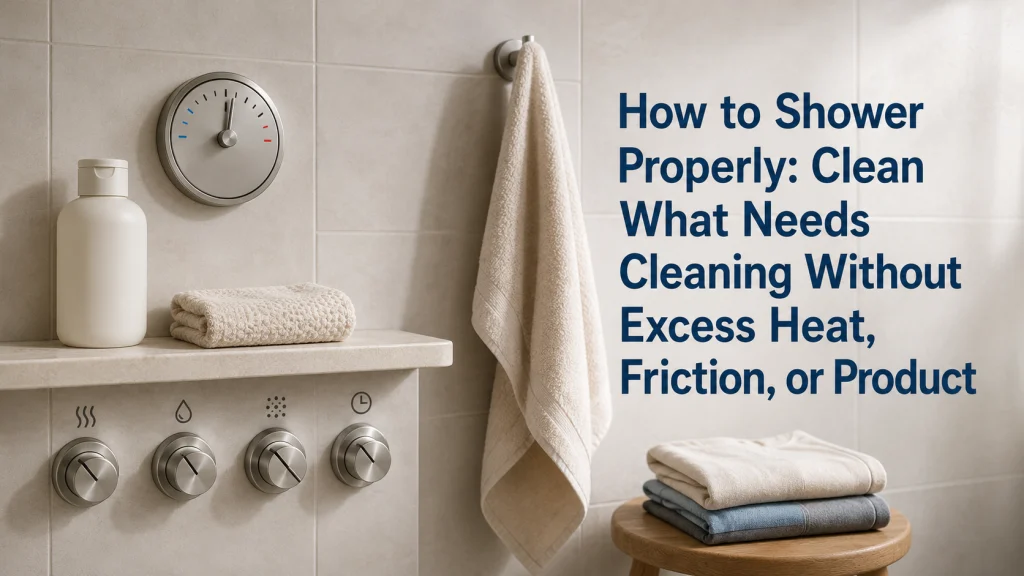
How to Shower Properly: Clean What Needs Cleaning Without Excess Heat, Friction, or Product

How To Shower Properly

A practical shower removes ordinary sweat, visible soil, and residue without turning heat, cleanser, friction, or time to maximum. Prepare clean clothes and a towel first, use comfortable water, wash the external body with only the cleanser and pressure the task requires, rinse fully, and dry carefully. Hair, facial, intimate, wound, medical, and assisted-bathing needs

How Often Should You Shower? Use Sweat, Soil, Skin Response, and Activity Instead of One Universal Rule

How Often Should You Shower

Shower frequency is better decided by activity, sweat, visible soil, odor, climate, skin response, access, and professional instructions than by one calendar number. Set an ordinary baseline, then add event-triggered bathing after situations such as heavy sweating, close-contact activity, swimming, or soil-heavy work. A full shower is not always necessary when a targeted wash safely