Why Seniors Refuse Help: Understand What the No Is Protecting
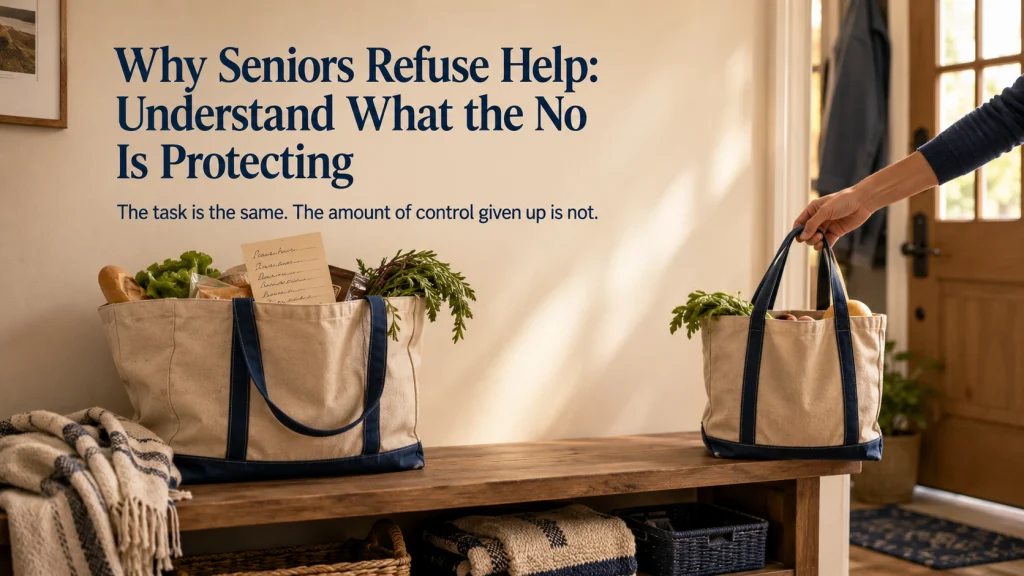
Why Seniors Refuse Help

A refusal of help may be protecting control, privacy, identity, trust, reciprocity, routine, or the right to choose how a problem is solved. Before repeating the same offer more forcefully, ask what the offer changes besides the workload. Separate a preference conflict from an unmet essential need or immediate danger, then redesign the support around
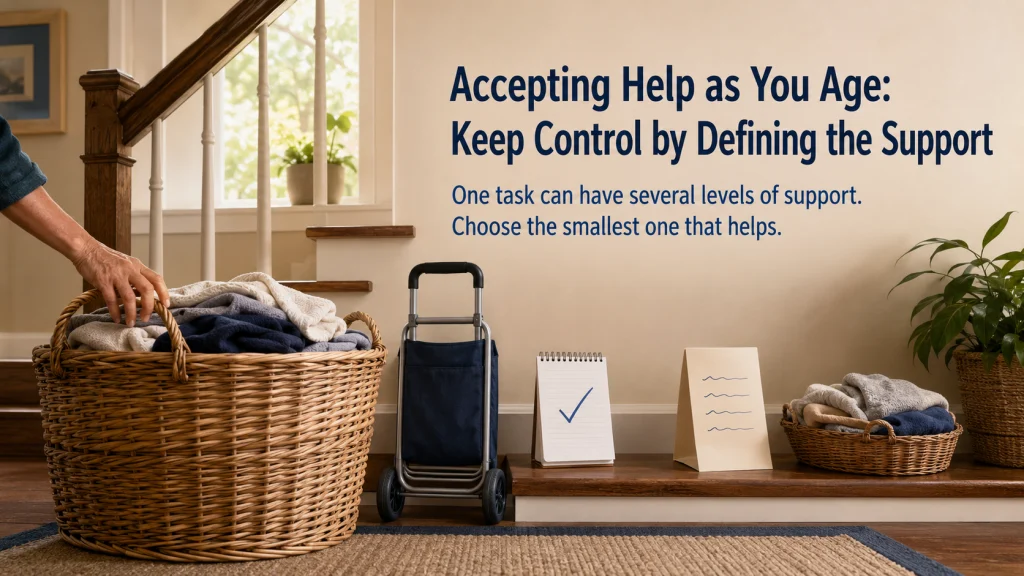
Accepting Help as You Age: Keep Control by Defining the Support

Accepting Help As You Age

Accepting help as you age does not have to mean handing over an entire part of life. Start by naming what you want to protect, identify the exact objection, and define the smallest useful support with clear limits. Keep consent, privacy, timing, cost, and a stop rule visible from the beginning. A short trial can

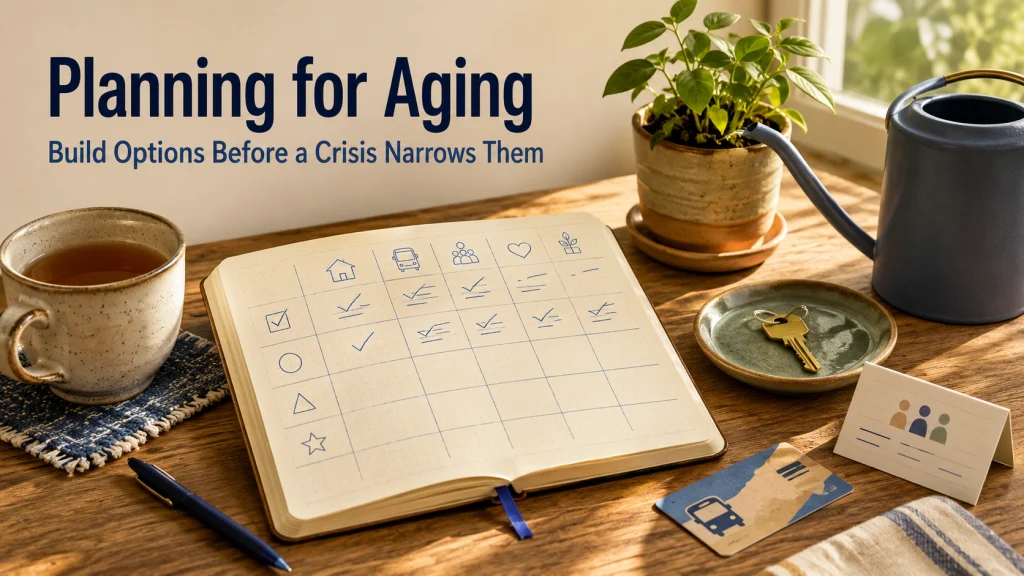
Planning for Aging: Build Options Before a Crisis Narrows Them

Planning For Aging

Planning for aging is not about predicting every future problem. It is about preserving options before a move, health change, transportation loss, or support gap makes decisions more urgent. A useful first plan records what matters to you, how daily life works now, who can help, which professional questions remain open, and one next action

Common Myths About Aging: Separate Real Change From Age-Based Assumptions

Common Myths About Aging

Common myths about aging often turn a birthday into a rule about memory, movement, sleep, learning, driving, or independence. Age can provide context, but it cannot show what one person can do, what has recently changed, or what support would help. Replace age-based assumptions with questions about function, change over time, environment, and safety. New,