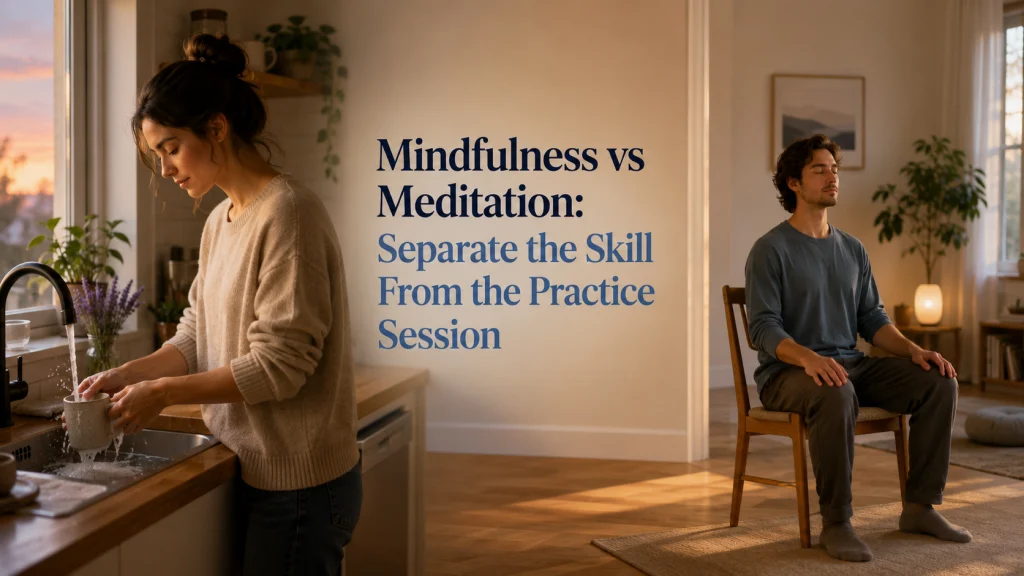
Mindfulness vs Meditation: Separate the Skill From the Practice Session
Mindfulness Vs Meditation

Mindfulness and meditation overlap, but they are not identical. Mindfulness is a quality of attention that can be used during ordinary activity, while meditation is a family of structured practices that may or may not use mindfulness as the main method. Choose a formal session when you want dedicated practice time, and choose an informal
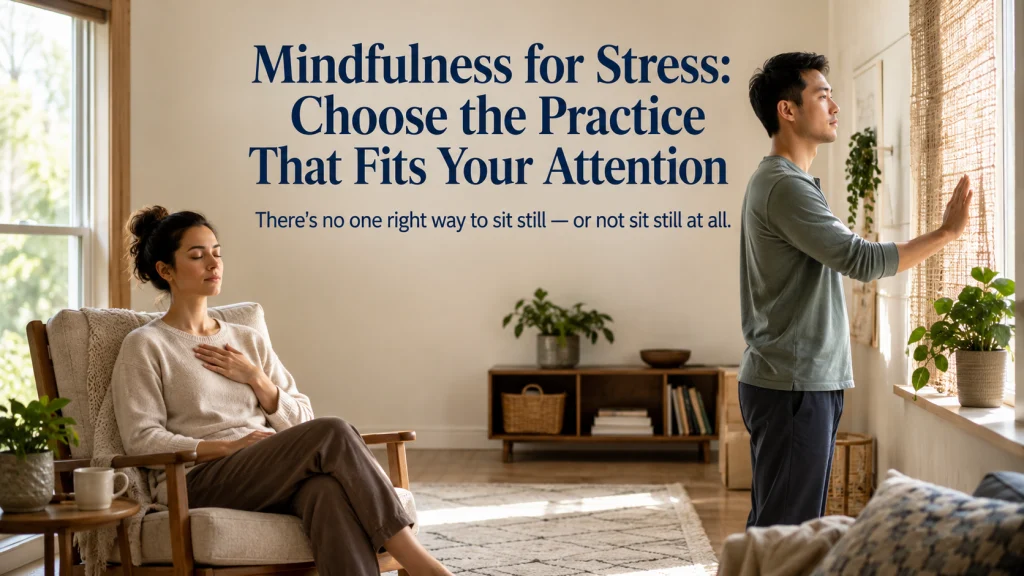
Mindfulness for Stress: Choose the Practice That Fits Your Attention

Mindfulness For Stress

Mindfulness for stress is not one required posture, one app, or one attempt to empty the mind. The shared skill is choosing where attention goes and noticing when it wanders, then selecting a practice that fits your tolerance for stillness, internal sensations, movement, imagination, time, and privacy. Some people do better with inward attention, while

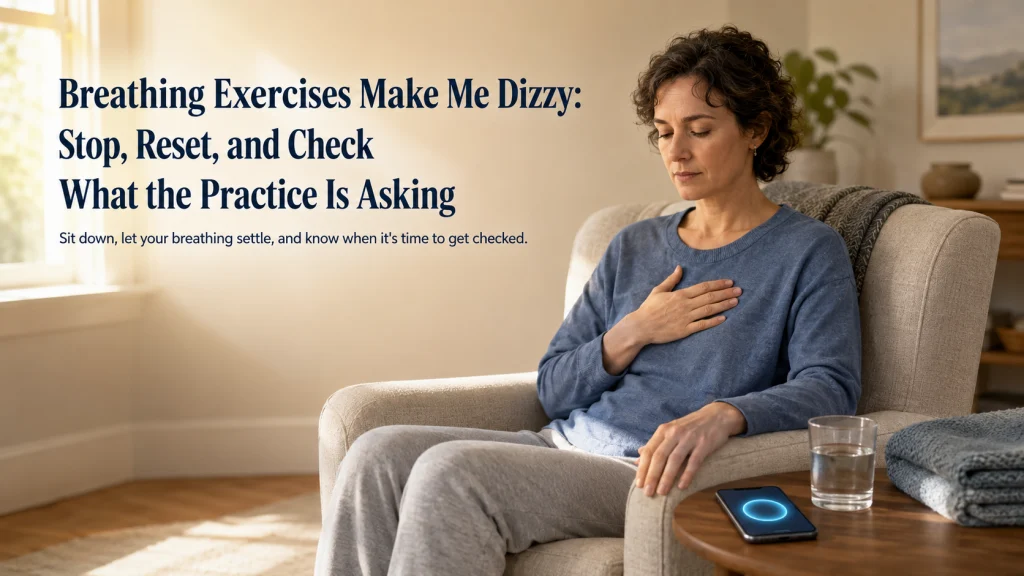
Breathing Exercises Make Me Dizzy: Stop, Reset, and Check What the Practice Is Asking

Breathing Exercises Make Me Dizzy

If a breathing exercise makes you dizzy, light-headed, tingly, or air-hungry, stop the exercise instead of trying to finish the count. Sit or lie down safely, return to ordinary uncounted breathing, and check whether urgent symptoms are present. The episode may reflect an overly deep, fast, held, or forced breathing pattern, but the pattern alone

Progressive Muscle Relaxation: Release Tension Without Clenching as Hard as You Can

Progressive Muscle Relaxation

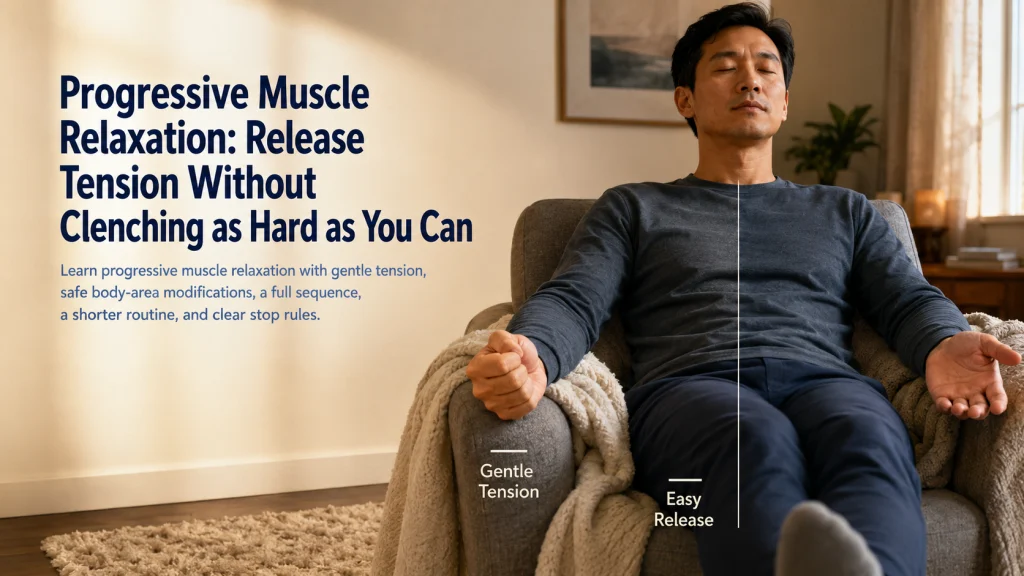
Progressive muscle relaxation uses a deliberate tense-and-release sequence to help you notice the difference between effort and letting go. The tension should be gentle enough to create contrast, not a maximum clench. Skip or modify any area that is painful, injured, cramping, recently operated, numb, weak, or medically restricted. You can use a full body

Coherent Breathing: Try a Steady No-Hold Rhythm Without Treating Five Breaths as Magic

Coherent Breathing

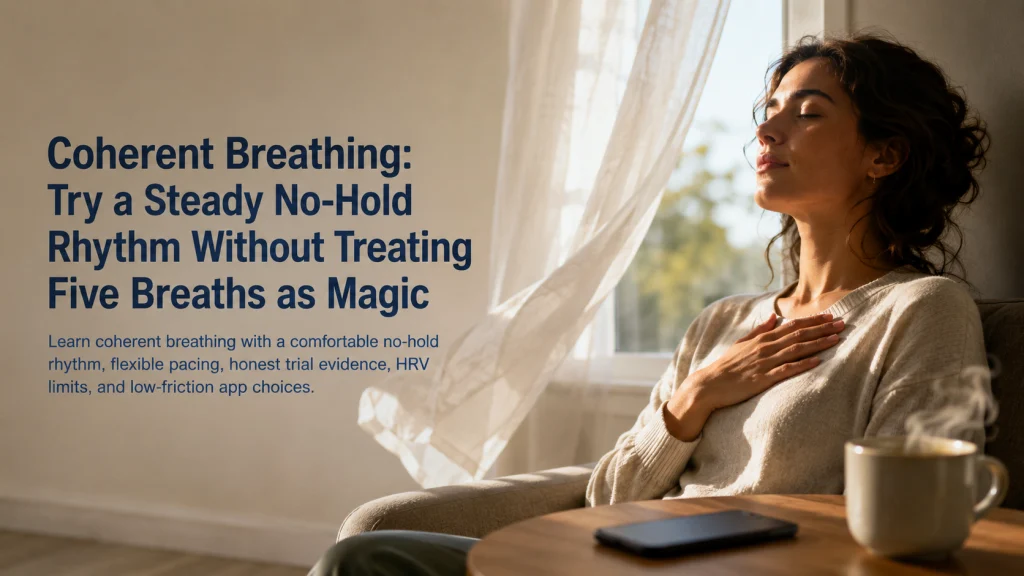
Coherent breathing is a steady, no-hold breathing pattern built around a smooth inhale and exhale. The useful part is the repeatable pacing, not a promise that one exact breaths-per-minute target creates a special state. Start with a rhythm that feels easy enough to continue without air hunger, dizziness, or pressure to match a device. Keep

4-7-8 Breathing: Keep the Ratio Flexible When the Hold Feels Too Long

4 7 8 Breathing

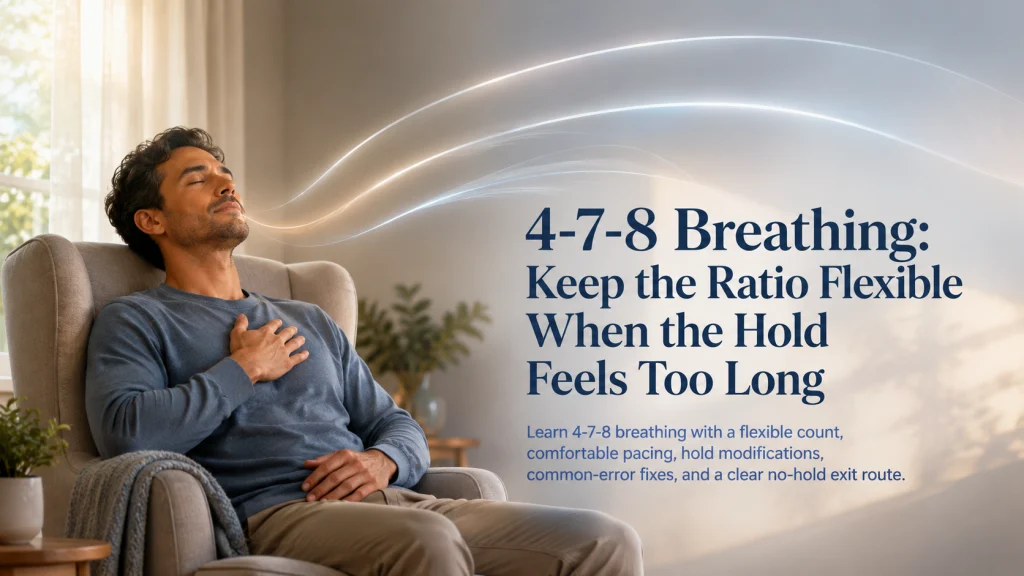
4-7-8 breathing uses an inhale, a longer hold, and an even longer exhale, but the counts do not have to equal slow clock seconds. Start at a pace that avoids air hunger, dizziness, throat tension, and forced emptying. A hold that still feels strained after the count is shortened is a reason to move to

Box Breathing: Use Equal Counts Without Turning Calm Into a Test

Box Breathing

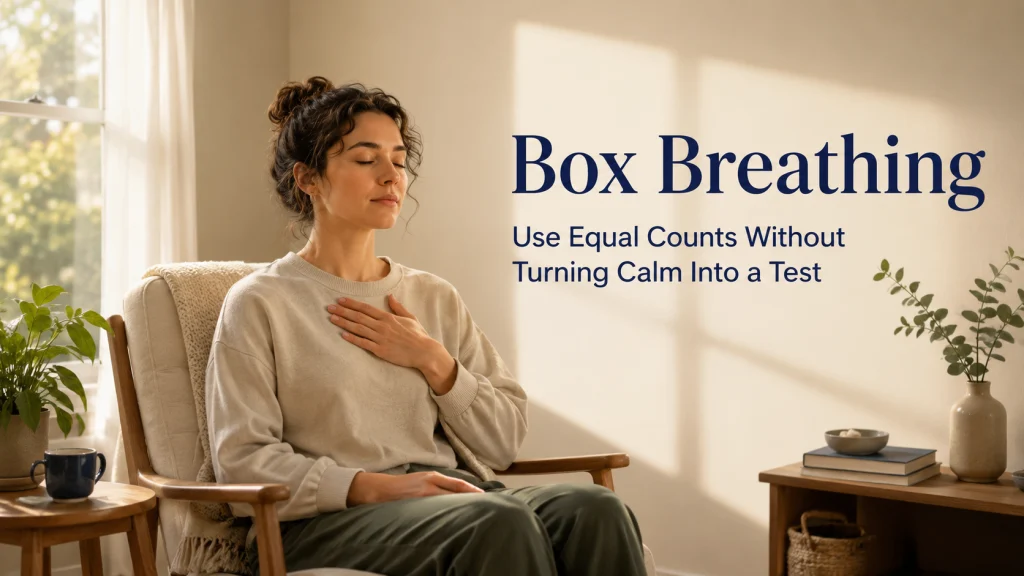
Box breathing uses four equal phases: inhale, hold, exhale, and pause after the exhale. The equal shape is the method, but the count does not have to be four and a hold should not become a test of endurance. Start with a short, comfortable rhythm, keep each breath normal-sized, and shorten or remove a hold

Diaphragmatic Breathing: Learn a Comfortable Pattern Before Adding Counts

Diaphragmatic Breathing

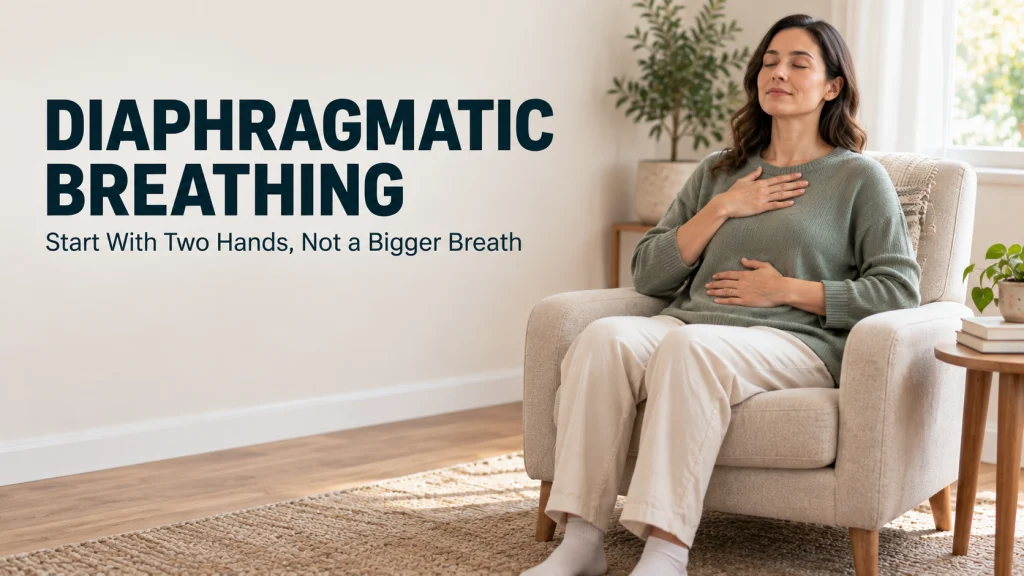
Diaphragmatic breathing is a low-effort way to practice a quieter breathing pattern before adding fixed counts or breath holds. The goal is not to take the biggest breath possible, but to reduce unnecessary shoulder and upper-chest effort while allowing gentle movement around the lower ribs and abdomen. Start in a supported position, stop if the

Breathing Exercises for Stress: Choose a Rhythm Your Body Can Follow

Breathing Exercises For Stress

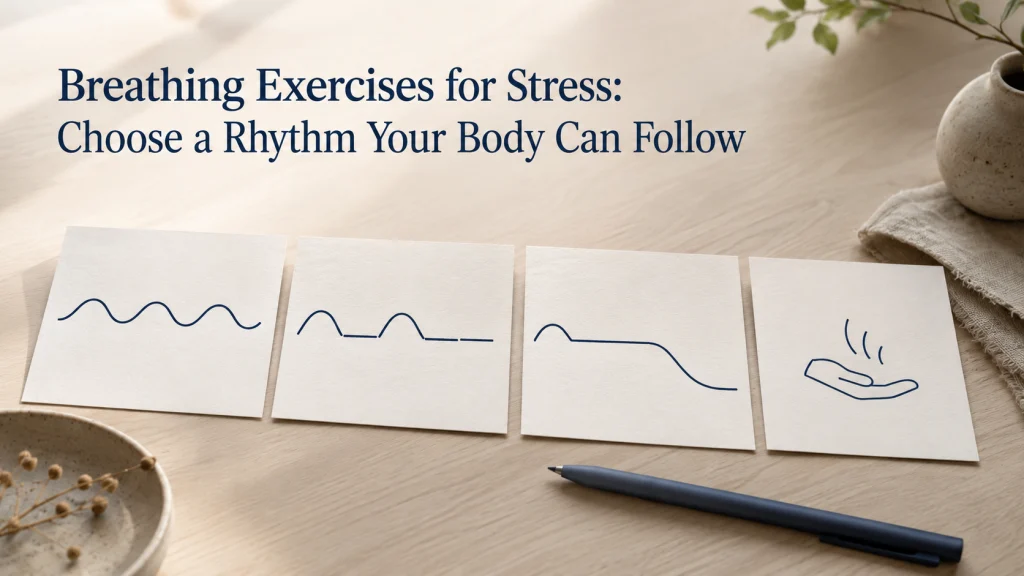
Breathing exercises for stress are easier to use when the rhythm matches your tolerance, setting, and main physical signal. A slow pattern without breath holds may suit someone who dislikes counting, while a counted sequence or muscle-release practice may fit a different situation. Stop or simplify the practice if it causes dizziness, air hunger, tingling,

How to Stop Feeling Overwhelmed: Reduce the Decision Load Before Solving the Whole Problem

How To Stop Feeling Overwhelmed

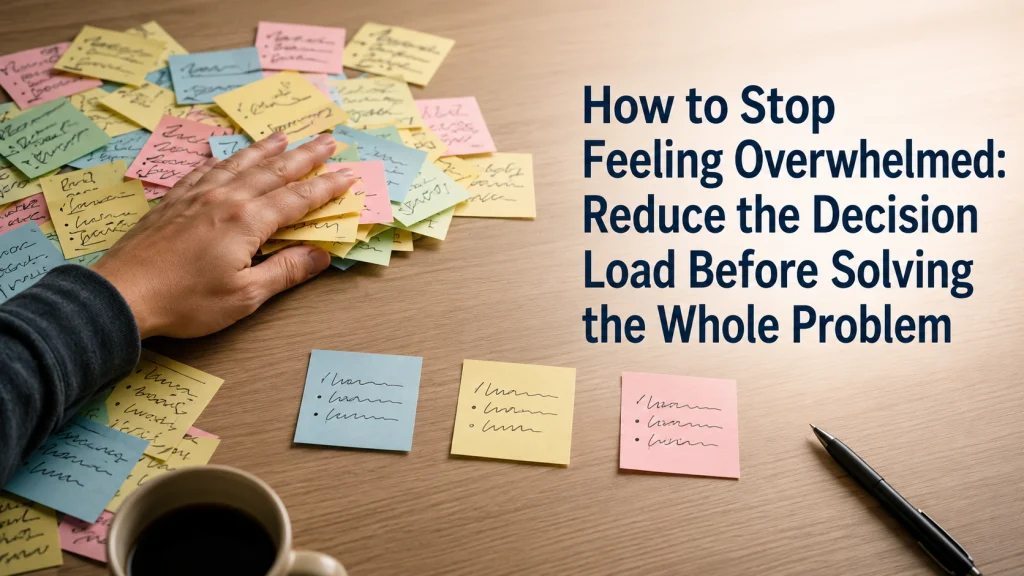
When everything feels urgent, the first job is not solving the whole situation. It is reducing the number of decisions competing for the next ten minutes. Protect safety and essential responsibilities, stop new inputs, write every open loop in one rough list, sort only into now, today, and later, then choose one physical next action.

Stress Management Plan: Prepare Responses for Low, Medium, and High-Stress Days

Stress Management Plan

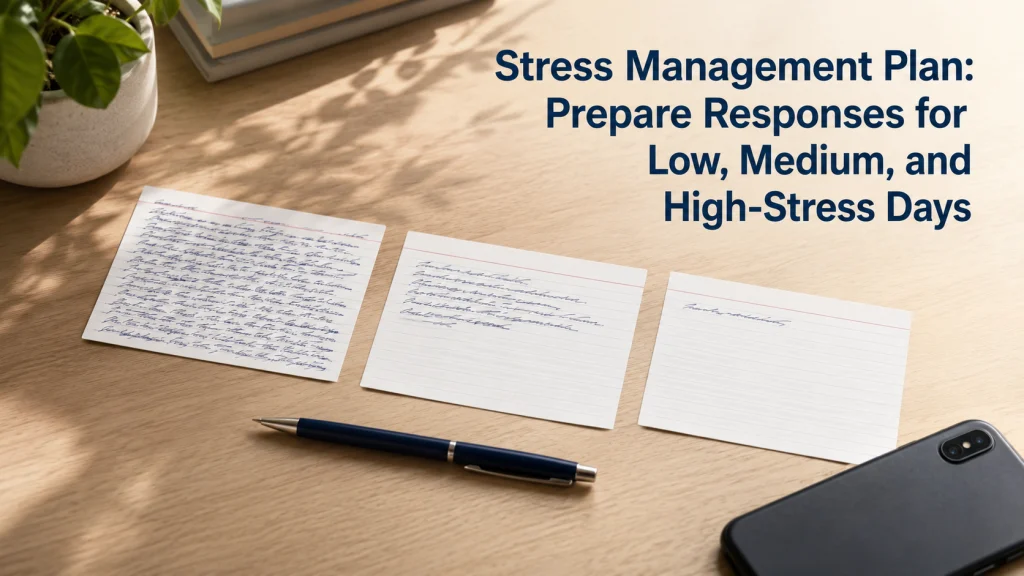
A personal stress plan should reduce decisions when attention, time, and patience are already limited. Build three functional levels, low, medium, and high stress, then pair one action for the source with one action for the stress response. Add a minimum version for busy or disrupted days, prepare support and environmental cues in advance, and

Stress Journal: Track Context, Response, and Cost Without Recording Your Whole Day

Stress Journal

A stress journal works best when it records a few comparable details instead of every thought from the day. Use five fields: context, signal, response, immediate effect, and later cost. Log either specific stressful events or one brief daily check-in, then wait until you have seven entries before reviewing for patterns. Stop the exercise if