How to Improve Walking Endurance: Increase Time Without Hiding Recovery Problems

How To Improve Walking Endurance

Walking endurance should be judged by duration, pace, terrain, and recovery together rather than by distance or step count alone. Start with a repeatable route, record when effort first changes the walk, and use planned walk-rest intervals before fatigue forces a stop. Progress only one variable at a time while keeping weather, terrain, seating, hydration,
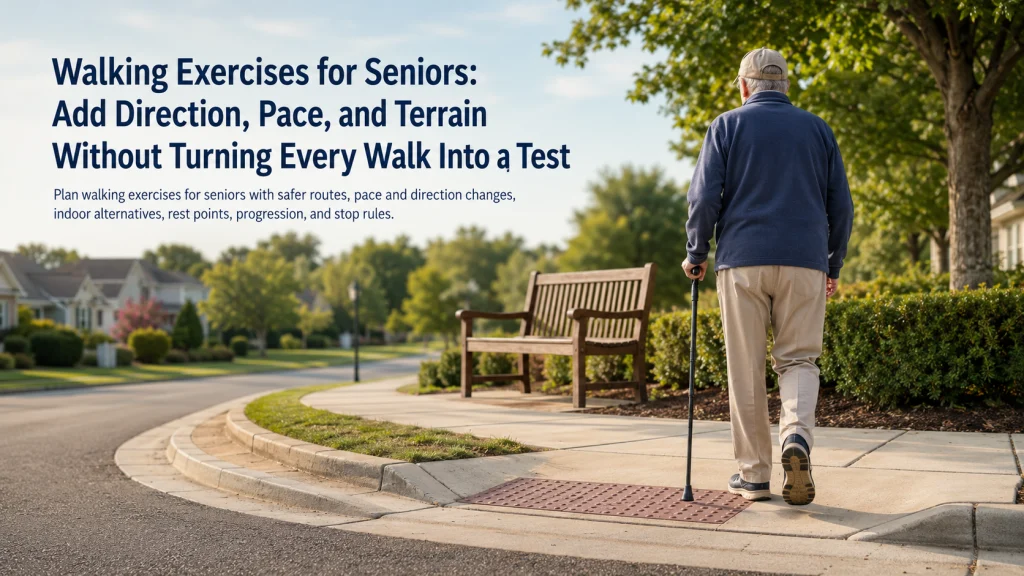
Walking Exercises for Seniors: Add Direction, Pace, and Terrain Without Turning Every Walk Into a Test

Walking Exercises For Seniors

Walking practice becomes more demanding when the route adds turns, crowds, uneven surfaces, poor lighting, or limited places to rest, even when the total time stays the same. Separate walking skill from endurance, choose a route that fits the current day, and add only one challenge at a time. Keep footwear, mobility aids, weather, energy,

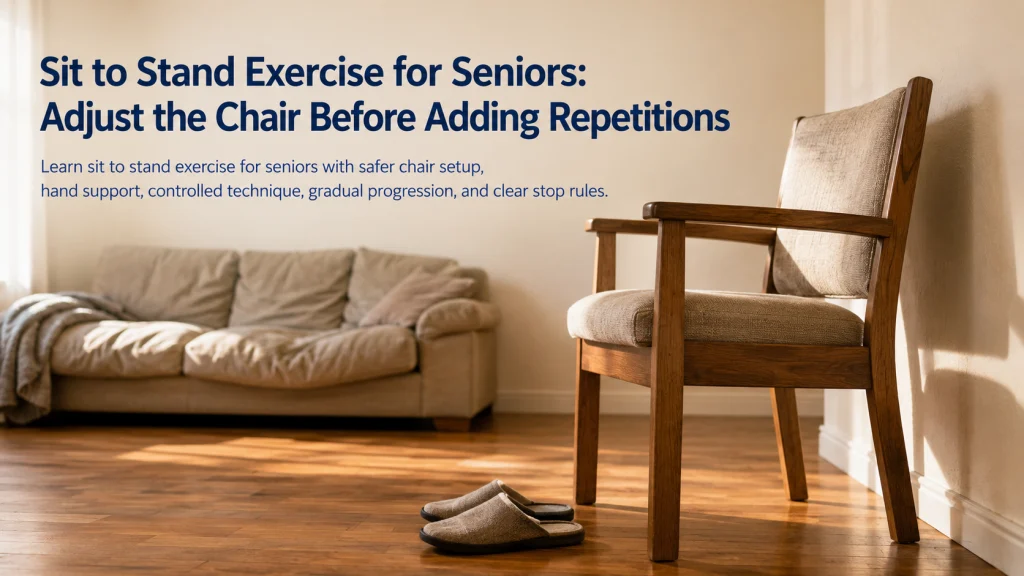
Sit to Stand Exercise for Seniors: Adjust the Chair Before Adding Repetitions

Sit To Stand Exercise For Seniors

Sit-to-stand practice becomes easier or harder before strength changes at all because chair height, firmness, armrests, foot position, and hand support alter the task. Begin with a secure chair that allows a smooth rise and return, choose the permitted level of hand support, and test a small starting set. Progress only one variable at a

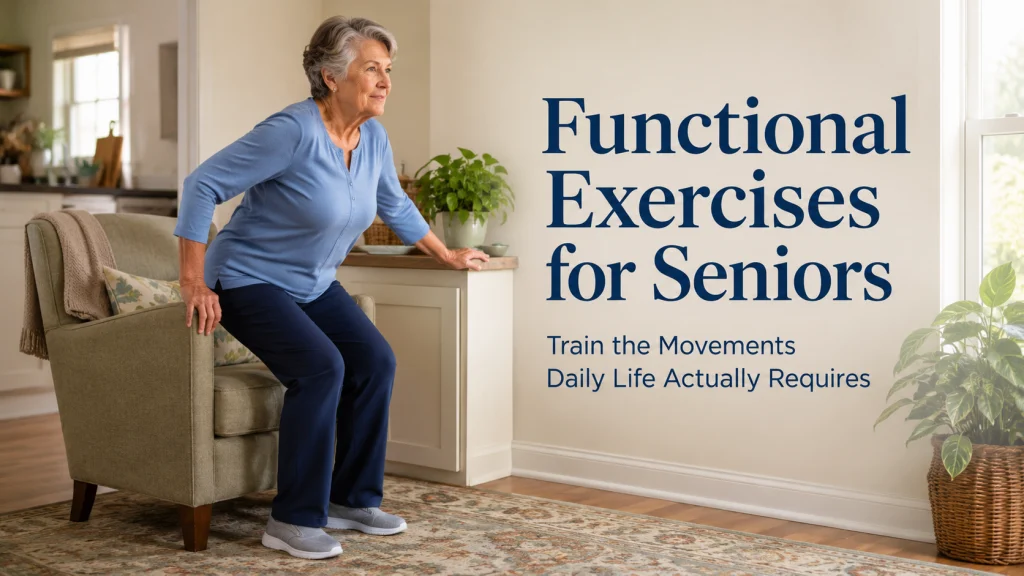
Functional Exercises for Seniors: Train the Movements Daily Life Actually Requires

Functional Exercises For Seniors

Functional exercises for seniors should begin with the daily task that has become harder, not with a random equipment list. Standing from a chair, reaching a shelf, carrying groceries, turning in a narrow space, and stepping onto a curb each require a different movement pattern. Choose a supported starting version, use a comfortable range and