
Rest Between Sets: Let the Next Set Decide When the Break Was Long Enough
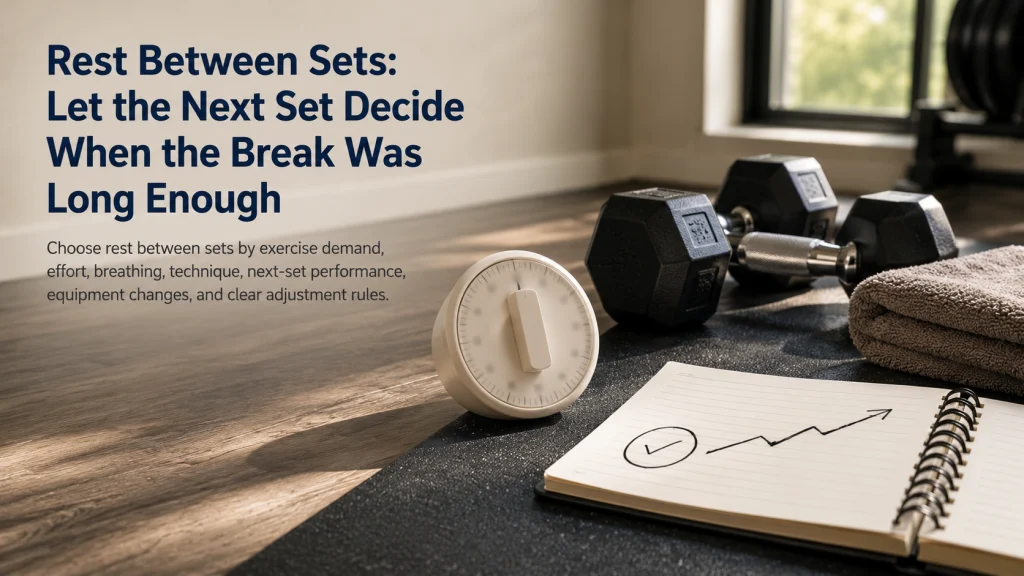
Rest Between Sets

Rest between sets should be long enough for the next set to meet its planned standard, not merely long enough for a timer to reach zero. Start with a practical range based on exercise demand, load, effort, training experience, and the goal of the session. Then check breathing, technique, repetitions, and equipment readiness before beginning

Rest Days for Beginners: Match Recovery to the Activity Instead of Treating Rest as Doing Nothing

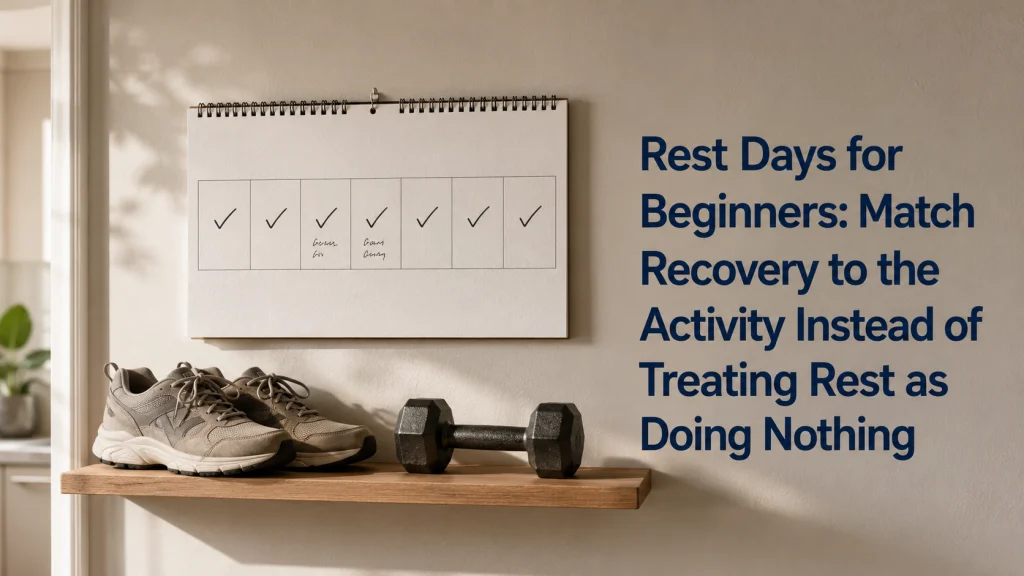
Rest Days For Beginners

Rest is relative to the work that came before it. A beginner may keep a daily movement habit while giving demanding strength, cardio, or unfamiliar sessions more recovery time. Use activity type, intensity, duration, soreness, energy, sleep, performance, and joint comfort to decide whether the next day calls for full rest, light activity, or another

Cool Down After Workout: Lower the Demand Gradually and Record How the Session Ended

Cool Down After Workout

A cool-down helps you move from workout effort toward ordinary movement instead of treating the final timer as an instant stop signal. Lower speed, resistance, range, or pace when that transition is practical, then restore the room and record how the session ended. Stretching is optional and serves a different purpose from the immediate reduction