A cool-down helps you move from workout effort toward ordinary movement instead of treating the final timer as an instant stop signal. Lower speed, resistance, range, or pace when that transition is practical, then restore the room and record how the session ended. Stretching is optional and serves a different purpose from the immediate reduction in effort. A cool-down does not guarantee that soreness or injury will be prevented, and warning symptoms require appropriate help rather than a longer transition.
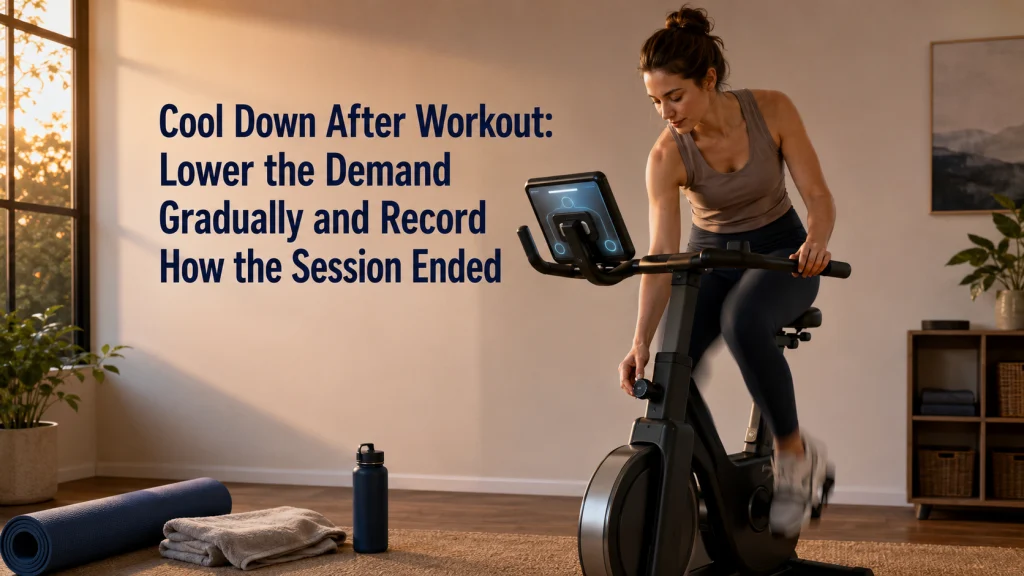
The Timer Can End Before the Transition Does
Two identical workout videos reach zero at the same second. One person stops from vigorous movement and sits down immediately. The other keeps moving at an easier pace, lets breathing settle, then clears the floor and puts equipment away.
| What the Screen Shows | What the Person May Still Need |
|---|---|
| The workout timer says complete. | Effort may still feel elevated, movement may still need to slow, and the room may not yet be safe for cleanup. |
| The machine program has ended. | The belt, pedals, resistance, breathing, and balance may still need a gradual return toward normal. |
| The instructor has moved to the closing screen. | The user may still need an easier version of the activity before stopping. |
The video ending and the body’s transition are not identical. A useful cool-down starts with the way the session actually ended, not with a fixed list of stretches.
For the broader setup and progression process, use the beginner home-workout guide. The complete home exercise guide places the cool-down within the wider routine.
Define Cool-Down Separately From Stretching and Recovery Days
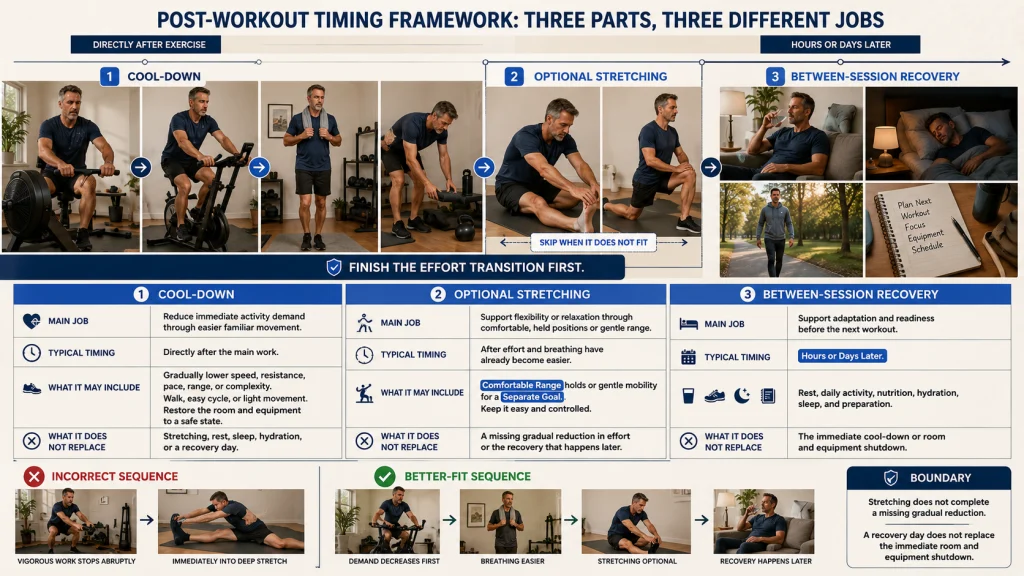
A cool-down is the immediate transition from workout effort toward easier movement and ordinary activity. For a beginner, that transition can remove the awkward feeling that the workout has ended but the body has not quite caught up. Its central job is to lower the demand gradually when that makes sense for the session and the person.
Stretching is a separate choice. It may involve comfortable held positions or gentle movement for a flexibility goal, but it is not required to make the transition count. Recovery days are also separate because they address what happens between sessions rather than during the first minutes after one workout.
| Part of the Routine | Main Job | Typical Timing |
|---|---|---|
| Cool-down | Reduce the immediate activity demand and return the room to a safe state. | Directly after the main work. |
| Optional stretching | Use comfortable range for a separate flexibility or relaxation goal. | After effort has already decreased, when it fits the person and activity. |
| Between-session recovery | Manage rest, activity choice, and longer-term recovery before the next workout. | Hours or days after the session. |
Key decision: Finish the effort transition first. Add stretching only when it serves a clear, comfortable purpose, and use a separate recovery plan for the time between workouts.
Know When Gradual Reduction Is Practical
A gradual reduction is most useful when the session ends at a pace, resistance, or movement demand that still feels clearly above ordinary activity. The change does not need to be long or elaborate. It needs to create a sensible path from the last working level toward easier movement.
Examples include:
- walking more slowly after a brisk indoor walk;
- pedaling with less resistance after a cycling session;
- reducing step height, arm range, or direction changes after low-impact cardio;
- using a calmer whole-body movement after a mixed session that alternated cardio and resistance work;
- performing an easier final round when the main workout ended with repeated movement rather than a single strength set.
A gradual transition may be less relevant after a very easy session that already ends near ordinary movement. It also may not be appropriate when symptoms, instability, injury, or another safety concern means exercise needs to stop and help is required.
The goal is not to keep moving at all costs. It is to lower demand when doing so remains comfortable and safe.
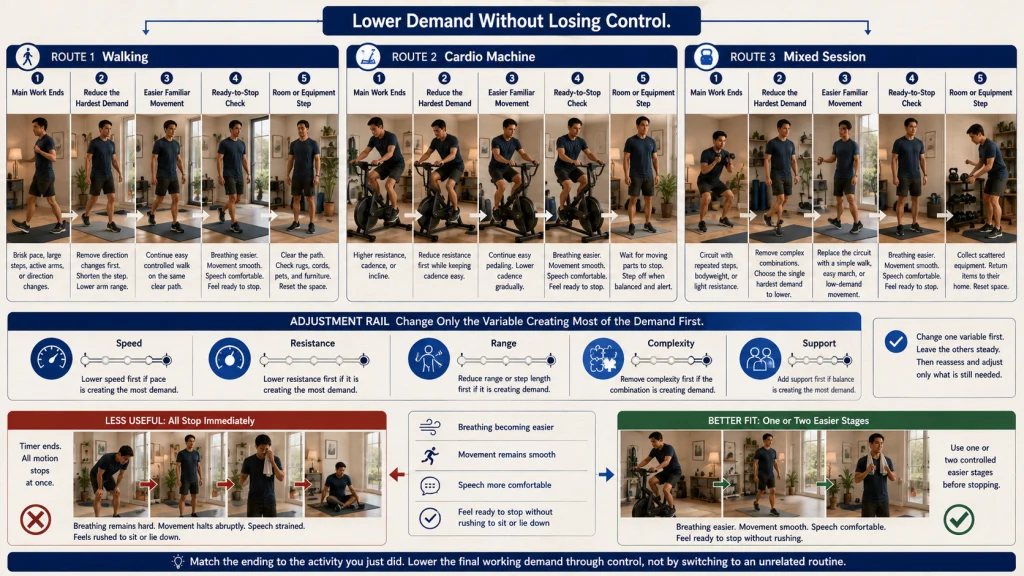
Lower Speed, Resistance, Range, or Pace
Choose the variable that created most of the workout demand and reduce it in stages. Changing one variable at a time makes the transition easier to feel and control.
- Speed: Shorten the stride or slow the movement rhythm.
- Resistance: Reduce machine resistance, band tension, or external load when the equipment allows a safe change.
- Range: Use a smaller step, shallower bend, or reduced arm movement.
- Complexity: Remove direction changes, coordination demands, or combined movements.
- Support: Move closer to a stable support when balance or fatigue makes the final transition less certain.
Do not reduce every variable so quickly that movement becomes awkward. A brisk walk may shift first to an easy walk, then to relaxed steps. A cycling session may reduce resistance before cadence falls. A mixed routine may replace a coordinated sequence with a simple march or slow walk around the room.
Once the main demand has started to fall, the transition can stay familiar. Using a simpler version of the activity often feels less confusing than switching to an unrelated closing routine.
| Session Type | Main Work Ends With | Possible Transition | Room and Equipment Step |
|---|---|---|---|
| Indoor walking or low-impact cardio | Brisk pace, larger steps, arm movement, or direction changes | Remove direction changes, shorten the step, lower the arm range, and continue at an easy pace. | Stay clear of rugs, cords, pets, and furniture until balance and attention feel settled. |
| Cycling or another cardio machine | Higher resistance, cadence, or incline | Reduce resistance in stages, continue easy movement, then slow before stopping the machine. | Wait for moving parts to stop, step off carefully, and secure controls or cables. |
| Mixed cardio and resistance session | A circuit with repeated steps, bodyweight movement, or light resistance | Replace the circuit with a simple walk, easy march, or low-demand repeated movement. | Do not bend to collect scattered equipment while breathing and balance still feel unsettled. |
These examples show a structure rather than a universal routine. Match the final stages to the session that actually happened, the space available, and how the last working interval felt.
Let Breathing and Effort Settle Without Chasing an Exact Number
A cool-down does not need a universal heart-rate target, countdown, or device zone. It is easy to feel that you are doing the ending incorrectly when a screen provides numbers but no clear sense of readiness. Watches, machines, and videos may offer context, yet the transition still needs to feel coordinated and manageable for the person doing it.
Let a few practical signs guide the final minutes:
- breathing becomes easier rather than more strained;
- movement stays smooth and controlled;
- you can reduce pace without feeling unstable;
- you can speak more comfortably than during the hardest part of the workout;
- you feel ready to stop moving without rushing to sit or lie down.
There is no need to wait for a perfect reading. The guide to beginner exercise intensity explains how talk, effort, and movement control can provide context when device numbers feel confusing.
Editorial observation: A treadmill program may display “workout complete” before belt speed, breathing, and the room setup have fully returned to normal. The software has finished its program, but the user still has a moving surface, equipment controls, and a transition to manage.
Keep Stretching Optional and Comfortable
Stretching can follow the effort transition when it feels comfortable and supports a separate goal. It does not need to be deep, painful, or long, and it does not complete a missing gradual reduction after vigorous movement.
A useful distinction is simple:
- Transition first: Reduce the activity demand until movement and breathing feel more settled.
- Stretch second, if desired: Use comfortable positions or gentle range without bouncing or forcing.
- Skip it when it does not fit: End after the transition and room reset when stretching is uncomfortable, irrelevant, or not part of the goal.
Persistent restriction, repeated pain, neurological symptoms, or a new movement limitation does not belong in a generic stretching routine. Use the workout recovery guide for the broader distinction between mobility, flexibility, rest, and recovery choices.
Safety warning: Do not bounce, force a painful position, or use deep stretching as a requirement after every workout. Stop any stretch that causes sharp pain, instability, numbness, or another concerning symptom.
Consider Hydration and Room Temperature Without Universal Prescriptions
Hydration needs vary with session length, heat, sweating, clothing, environment, health conditions, and individual factors. A general article cannot assign one fluid amount that fits every person and workout.
Keep water accessible when it fits the session, but do not treat rapid drinking as the definition of a cool-down. The immediate transition still depends on lowering activity demand, checking symptoms, and restoring a safe setup.
Room temperature can also change the final minutes. A hot space may make continued heavy movement uncomfortable, while a cold room may make an abrupt stop feel unpleasant. Adjust clothing, airflow, and the pace of the transition without creating a rigid temperature rule.
Note: People with medical conditions, fluid restrictions, pregnancy, medication considerations, or unusual symptoms may need individualized guidance rather than general hydration advice.
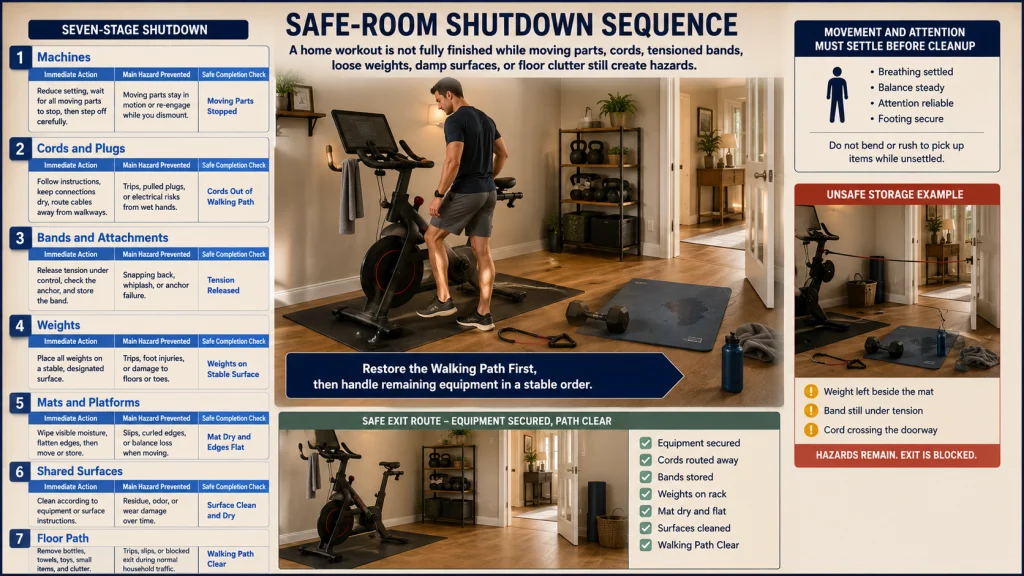
Secure Equipment and Restore the Room
The workout is not fully finished while moving parts, loose cords, bands, weights, sweat, or a cluttered floor still create a household hazard. After a tiring session, it can be tempting to sit down and promise to deal with the room later. A short, orderly shutdown protects the next few minutes without turning cleanup into another workout.
Use this equipment-shutdown checklist after movement and attention feel reliable:
- Machines: Reduce the setting, wait for moving parts to stop, use the normal shutdown controls, and step off carefully.
- Cords and plugs: Follow the equipment instructions, keep cords out of walking paths, and do not handle electrical connections with wet hands.
- Bands and attachments: Release tension under control, inspect the attachment point, and store the band without leaving it stretched across the room.
- Weights: Place them on a stable surface rather than dropping or leaving them beside the walking path.
- Mats and platforms: Wipe moisture, flatten curled edges, and move them only after footing feels steady.
- Shared surfaces: Clean according to the equipment or surface instructions without turning cleanup into an unsafe rush.
- Floor: Remove bottles, towels, toys, and other items that could become trip hazards.
Editorial observation: The most convenient storage place is not always the safest shutdown path. A weight beside the mat, a band still under tension, or a cord crossing the exit can turn cleanup into the riskiest part of the session. Restore the walking path first, then handle the remaining items in a stable order.
Record How the Session Ended
A short note can turn a vague feeling of “that did not go well” into something more useful and less discouraging. Record the final effort and any unusual response without trying to diagnose the cause.
| What to Record | Useful Question | What It May Change Next Time |
|---|---|---|
| Final effort | Did the last working phase feel manageable, harder than planned, or unsustainable? | Starting level, pace, resistance, range, or session length |
| Transition | Could effort be reduced smoothly, or did stopping feel abrupt? | The number of easier stages at the end |
| Discomfort | Was there ordinary effort, repeated pain, or a new movement problem? | Exercise choice, professional guidance, or a stop in progression |
| Dizziness or unusual symptoms | Did anything concerning appear during or after the transition? | Immediate safety action and whether evaluation is needed |
| Room and equipment | Was shutdown easy, or did clutter and setup create risk? | Equipment placement and cleanup sequence |
Keep the note brief enough to repeat. A few words such as “pace too high, transition awkward, no unusual symptoms” can be more useful than a detailed log that is never maintained.
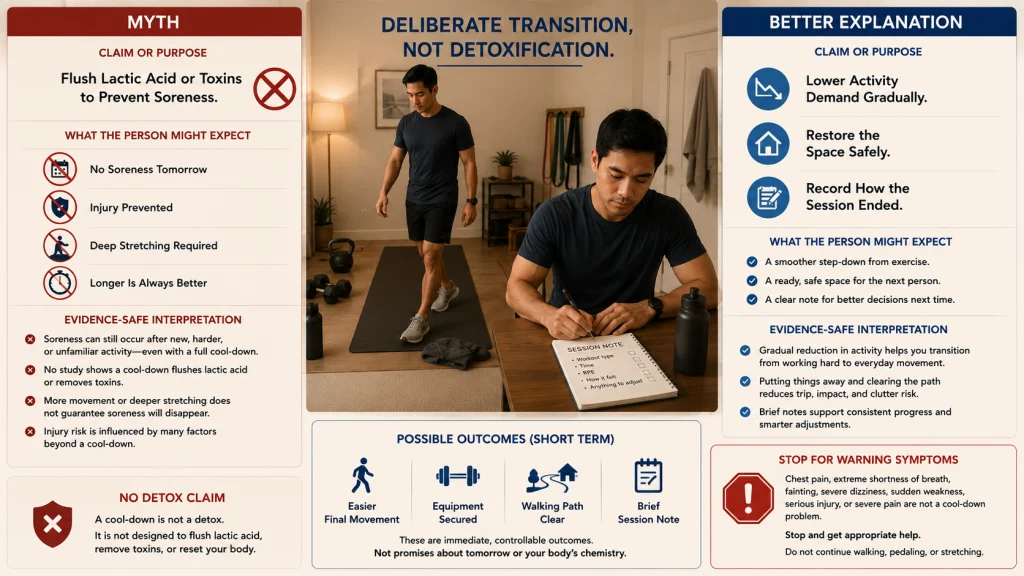
Know What Cooling Down Does Not Guarantee
A cool-down can organize the immediate transition and support a safer room reset. It does not guarantee that soreness, injury, fatigue, or every uncomfortable sensation will be prevented.
Soreness can still occur after new, harder, or unfamiliar activity. Stretching deeply, adding more movement, or extending the transition does not guarantee that it will disappear.
The useful result is more modest: the workout ends with a deliberate taper, a safe equipment shutdown, and a record of anything that may affect the next decision.
Stop for Warning Symptoms
A cool-down is not a treatment for symptoms that make exercise unsafe. Do not keep walking, stretching, or pedaling in an attempt to make a serious sign disappear.
Safety warning: Stop exercise and seek appropriate help for chest pain or pressure, extreme shortness of breath, fainting, severe dizziness, sudden weakness, serious injury, or severe pain. Use urgent help when the situation is immediate or dangerous.
Persistent joint or muscle pain, neurological symptoms, pregnancy, recent surgery, chronic conditions, disability-related limitations, or a long period of inactivity may require individualized guidance from a physician, physical therapist, or qualified exercise professional.
Record what happened only after safety has been addressed. A symptom log must not delay appropriate care.
Taper, Restore the Space, and Record the Session
Finish the main work by lowering the demand that made it challenging. Reduce speed, resistance, range, pace, or complexity in controlled stages until easier movement feels appropriate.
Then secure the equipment, clear the room, and note how the session ended. Add comfortable stretching only when it serves a separate goal rather than treating it as the entire cool-down.
The next-day decision belongs to a different part of the routine. Use the guide to rest days for beginners when the question is how to plan activity between sessions, and review the warm-up guide when preparing for the next workout.
FAQs
⏱️ How long should a beginner cool-down last?
There is no single duration for every session. Continue long enough to reduce the main workout demand in controlled stages and feel ready to stop safely. Easy activity may need only a brief transition, while harder or more complex work may need more than one reduction step.
🚶 Can easy walking be a complete cool-down?
Yes, when walking provides a comfortable lower-intensity version of the activity and helps effort settle. The path still needs to be clear, and warning symptoms require stopping and appropriate help rather than continued walking.
🧘 Do I have to stretch after every workout?
No. Stretching is optional and serves a separate flexibility or comfort goal. Complete the effort transition first, then stretch only through comfortable range when it fits the activity and your needs.
💧 Do I need to drink a fixed amount of water afterward?
No universal amount fits every person and workout. Hydration needs vary with heat, sweating, session length, clothing, health conditions, and individual factors. People with fluid restrictions or medical considerations need individualized guidance.
🧪 Does cooling down remove lactic acid and prevent soreness?
Do not use lactic-acid flushing or detox claims to explain the cool-down. A deliberate transition can help organize the end of the session, but it does not guarantee that soreness will be prevented.
🚲 What should I do when a machine program ends suddenly?
Reduce resistance, speed, or incline using the normal controls, continue at an easier level when safe, and wait for moving parts to stop before stepping away. Follow the machine instructions and keep cords and nearby items out of the path.
📝 What is worth recording after a workout?
Record final effort, whether the transition felt smooth, any discomfort, dizziness or unusual symptoms, and any equipment or room problem. Keep the note brief enough to use when planning the next session.
🚩 When should I stop instead of cooling down gradually?
Stop and seek appropriate help for chest pain or pressure, extreme shortness of breath, fainting, severe dizziness, sudden weakness, serious injury, or severe pain. Do not continue a gradual transition in an attempt to make a dangerous symptom disappear.