An oral hygiene routine becomes easier when every step has a clear job. Brushing with fluoride toothpaste and daily interdental cleaning cover the essential work, while mouthwash and tongue cleaning belong only when they answer a specific need or preference. Product order should come from the exact label or an individual dental instruction rather than a rigid universal sequence. Build a morning anchor, an evening anchor, a travel fallback, and a simple review process that removes unused or irritating steps.
Give Each Product a Role Before Giving It a Place in the Sequence
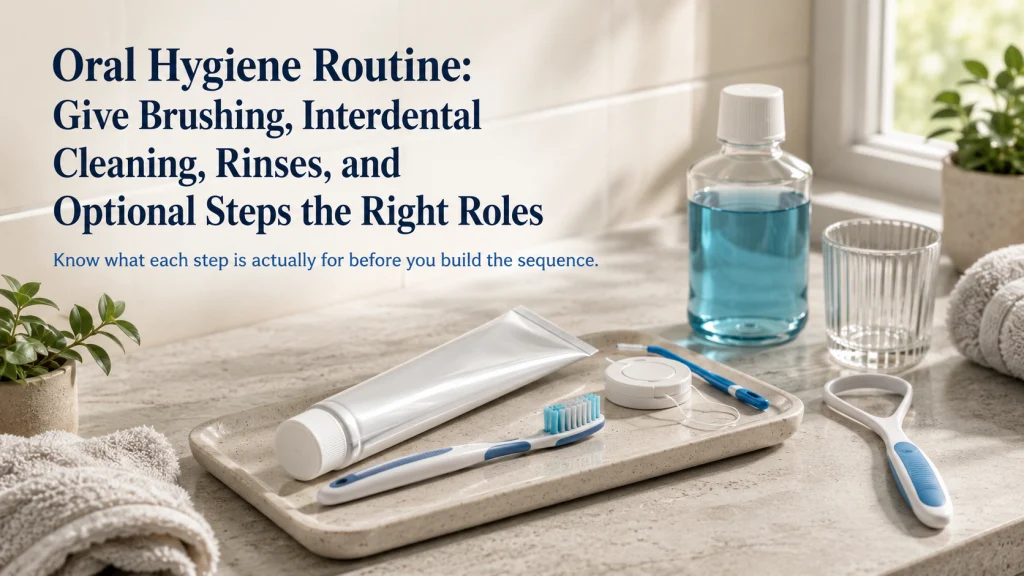
Two bathroom trays hold the same toothbrush, fluoride toothpaste, floss, mouthwash, and tongue cleaner. The first feels crowded before the routine even begins because every item is marked mandatory and locked into a rigid seven-step sequence. The second feels manageable: brushing and interdental cleaning do the essential work, mouthwash is conditional, and tongue cleaning remains optional.
Nothing has been removed from the counter, yet the second tray asks less of the person standing in front of it. The difference is clarity. Each item has a purpose, so the routine can be built around the tasks that matter instead of the number of products beside the sink.
Core rule: Start with the surfaces that need cleaning, assign one tool to each task, and add another step only when it solves a specific problem.
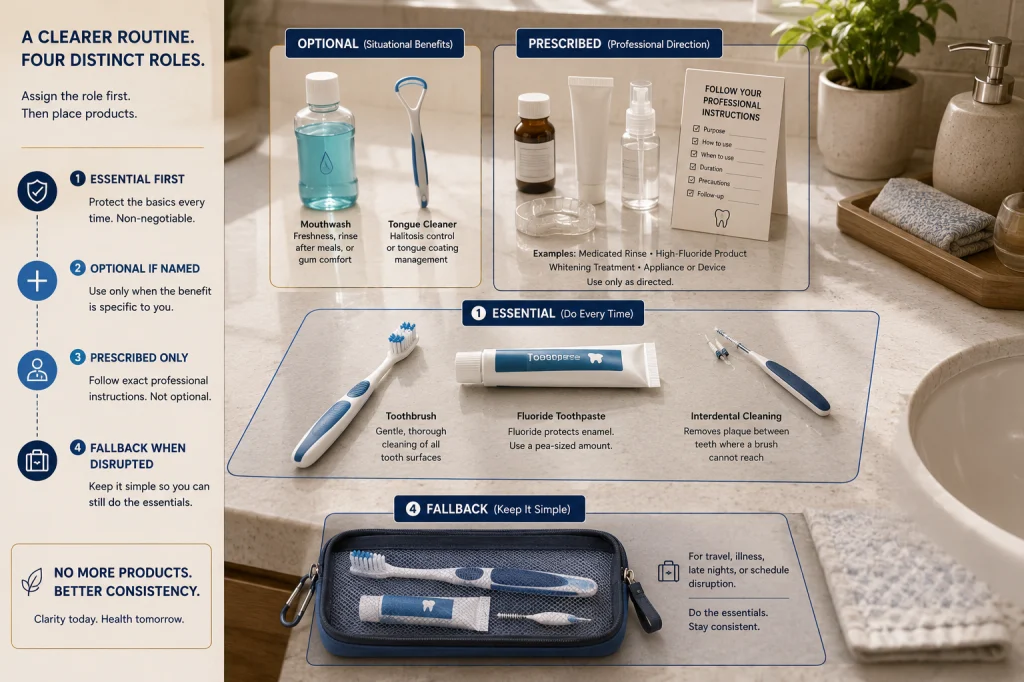
Define Foundational, Optional, Prescribed, and Fallback Steps
An essential step performs a core daily cleaning task. For most adults, this includes brushing with fluoride toothpaste and cleaning between teeth each day.
An adjunct is an optional addition that supports a particular preference or function without replacing the core work. Mouthwash and tongue cleaning often fit this category.
A prescribed step comes from an individual dentist, hygienist, orthodontist, physician, or other qualified professional. Prescription fluoride, medicated rinses, whitening treatment, and condition-specific devices stay outside the default routine.
A sequence is the order in which the selected steps are completed. An active ingredient is the component responsible for a product’s stated therapeutic function. A fallback is the smallest workable version used during travel, illness, late nights, or schedule disruption.
| Routine layer | Role | Examples | Decision rule |
|---|---|---|---|
| Essential | Cleans the main tooth surfaces and spaces | Brushing with fluoride toothpaste, interdental cleaning | Protect these tasks before adding anything else |
| Optional | Adds a specific preference or function | Mouthwash, tongue cleaning | Include only when the benefit is specific and useful |
| Prescribed | Addresses an individual risk, condition, or treatment plan | Medicated rinse, high-fluoride product, treatment device | Follow the exact professional instruction |
| Fallback | Preserves the core routine during disruption | Brush, fluoride toothpaste, chosen interdental tool | Keep it simple enough to complete anywhere |
Start With Surface Coverage, Not Product Count
A crowded sink does not prove that every relevant surface is being cleaned. Brushing covers exposed tooth surfaces, while interdental cleaning reaches between teeth and around contacts that a toothbrush may not clean well.
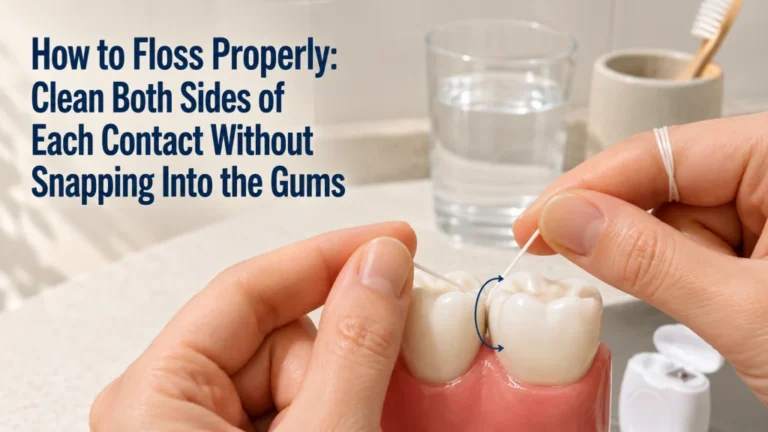
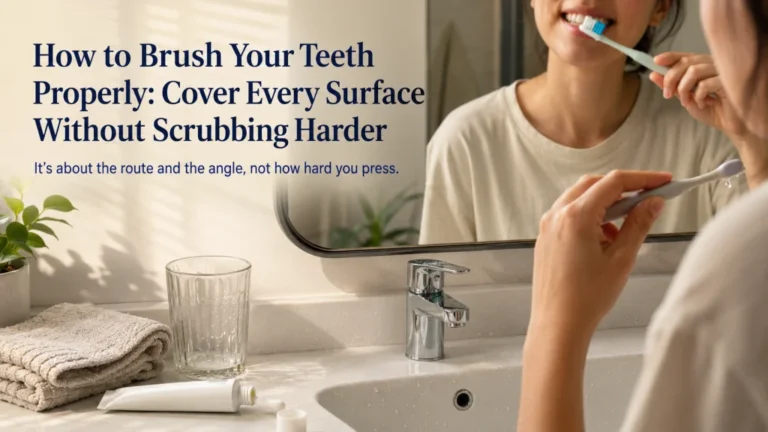
Build the routine around those two roles first. The article on how to brush your teeth properly owns detailed surface coverage and technique. The guide to how to floss properly handles string-floss technique and contact cleaning.
If those two jobs remain incomplete, adding rinse, breath products, or more tools can lengthen the routine without fixing the missed surface.
Build a Morning Anchor Around One Complete Brushing Session
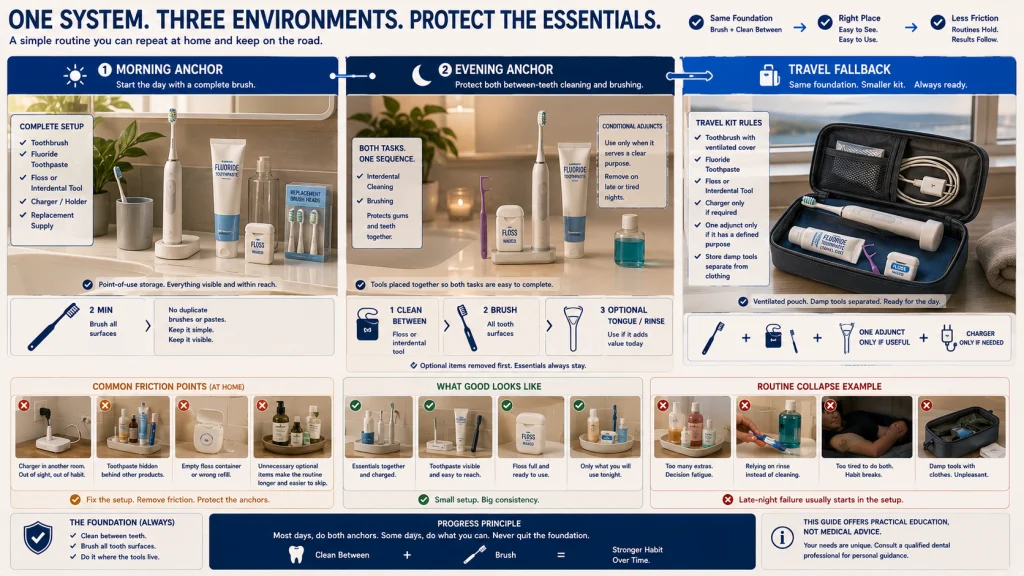
The morning anchor should be easy to start and easy to repeat. Place the toothbrush and fluoride toothpaste where the step happens, keep replacement heads or spare brushes visible enough to notice when supplies run low, and avoid surrounding the sink with duplicate products.
The exact timing can fit the person’s schedule and dental instructions. What matters is that the brushing session reaches the intended surfaces without being rushed or replaced by mouthwash.
Editorial observation: Morning routines often fail from setup friction rather than lack of knowledge. A brush that needs charging in another room, toothpaste stored behind several products, or a missing replacement head can make a simple task feel larger than it is.
Build an Evening Anchor Around Brushing and the Daily Interdental Step
The evening routine often carries more work because it commonly includes the day’s interdental cleaning. Keep the chosen interdental tool beside the brushing setup so both tasks feel like one sequence rather than separate projects.
Keep the sequence short enough to survive a late night. When the routine repeatedly collapses at the end of the day, remove optional steps before weakening the essential ones.
| Routine point | Foundational task | Conditional step | Storage cue |
|---|---|---|---|
| Morning | Complete brushing session with fluoride toothpaste | Optional adjunct if label and purpose fit | Brush, paste, and charger or holder ready at point of use |
| Evening | Interdental cleaning plus complete brushing | Optional tongue cleaning or labeled rinse | Floss or chosen tool visible beside the brush setup |
| Travel fallback | Brush, fluoride toothpaste, chosen interdental tool | Only what is easy to pack and clearly needed | Dedicated ventilated case or pouch |
Treat Brush-Versus-Floss Order as Secondary to Thorough Completion
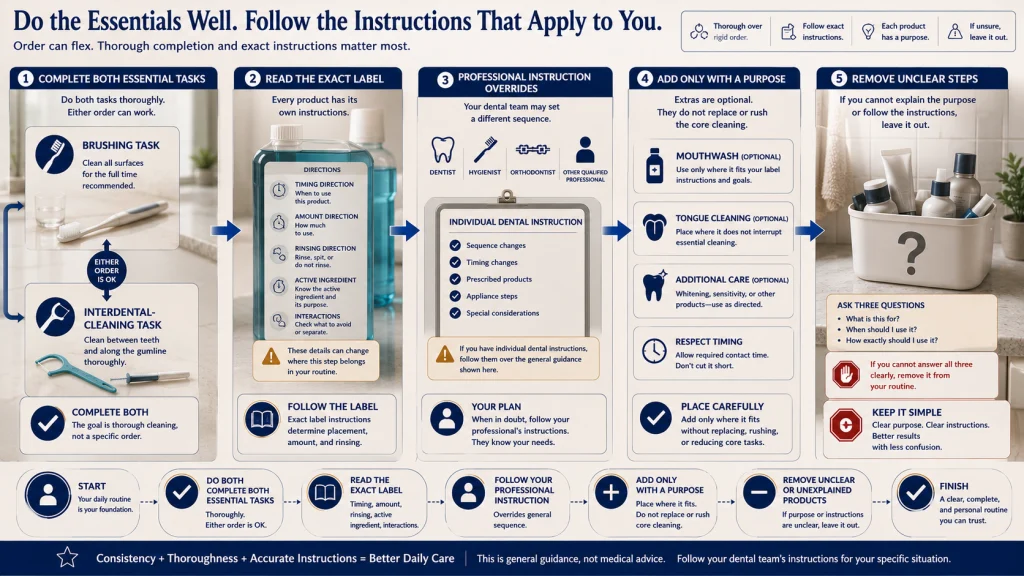
People often search for one perfect brush-floss order. In an ordinary routine, completing both tasks thoroughly and consistently matters more than copying a rigid sequence from another person.
Order becomes more specific when a dentist, hygienist, orthodontist, or product label gives an individual instruction. A prescribed rinse, appliance routine, or active ingredient may need a particular place in the sequence.
- Identify the essential tasks that must happen.
- Read the exact label for timing, rinsing, and interaction directions.
- Follow individual dental instructions when they differ from a general routine.
- Place optional steps where they do not replace or rush the core cleaning.
- Remove a product whose purpose cannot be explained clearly.
Add Mouthwash Only for a Defined Purpose
Mouthwash is not a substitute for brushing or cleaning between teeth. Its place depends on whether the product offers a cosmetic function, a therapeutic function, an individual prescription, or no useful addition at all.
Use do you need mouthwash to evaluate the purpose, active ingredients, label timing, age limits, and whether the rinse adds anything that the current routine lacks.
Editorial observation: A rinse can create recurring friction through bottle size, cap cleaning, storage, travel leakage, and refill cost. Those details matter only after the product earns a place in the routine.
Keep Tongue Cleaning Optional
Tongue cleaning may fit as a preference step, but it is not a universal requirement for every adult routine. It should not become forceful scraping, a breath guarantee, or a reason to delay brushing and interdental cleaning.
Use how to clean your tongue for the difference between a brush and scraper, light technique, cleaning and storage, and the point at which irritation means the step should stop.
Keep Whitening and Treatment Products Outside the Default Routine
Whitening agents, high-fluoride products, medicated rinses, chlorhexidine, and treatment devices should not appear in an ordinary baseline routine. They have separate indications, directions, limits, and risks.
Do not add a prescribed product to someone else’s routine or change the timing because a general checklist uses a different order. Follow the exact professional and product-specific directions.
Boundary: This article does not prescribe whitening treatment, high-fluoride toothpaste, medicated rinses, anesthetic products, or treatment devices.
Rinse, Air-Dry, Separate, Charge, and Replace Tools as Directed
A routine includes what happens after cleaning. Rinse reusable tools according to their directions, allow them to air-dry, keep them from contacting other household brushes, and store them where moisture does not remain trapped.
Charge powered tools on a schedule that fits the household. Replace brush heads, floss supplies, interdental tools, batteries, or device parts according to current directions and visible wear.
Editorial observation: Refill visibility matters. A routine often disappears when the last floss container is empty, the powered brush dies, or replacement heads are stored somewhere nobody checks. Keeping one backup visible can reduce interruptions without turning the sink into storage.
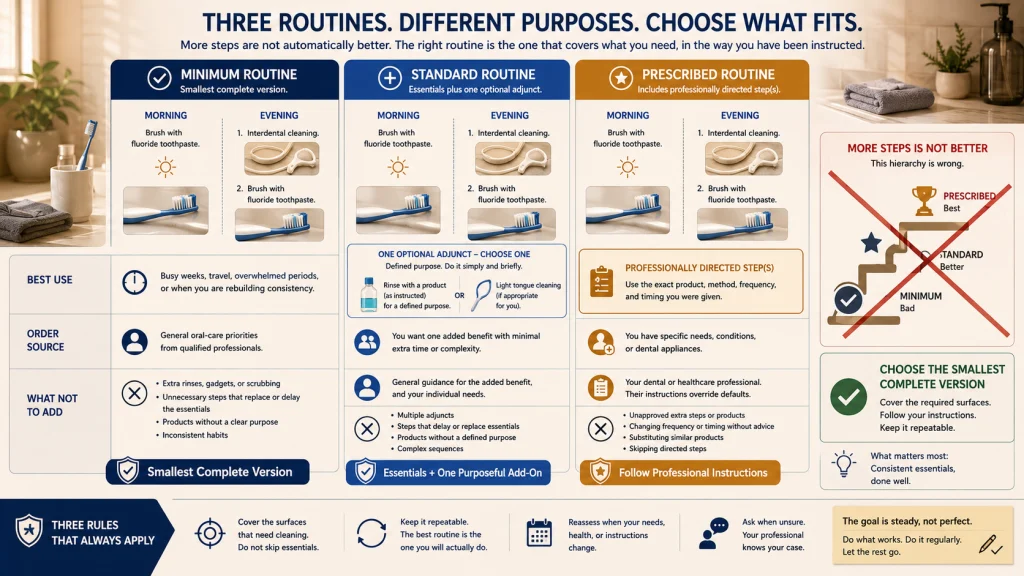
Build Minimum, Standard, and Prescribed Versions
| Version | Included tasks | Best use |
|---|---|---|
| Minimum | Morning brushing, evening interdental cleaning, evening brushing | Busy weeks, low-friction setup, or rebuilding consistency |
| Standard | Minimum version plus one optional step with a clear benefit | Stable routine with a defined need or preference |
| Prescribed | Essential cleaning plus individually directed products or appliance steps | Professional instructions that must override the default sequence |
Do not treat the standard or prescribed version as better merely because it contains more steps. The right version is the smallest one that covers the needed surfaces and follows individual instructions.
Build a Travel Fallback That Protects the Foundation
A travel kit does not need to reproduce the entire bathroom. Pack a toothbrush, fluoride toothpaste, and the chosen interdental tool in a clean, ventilated case or pouch.
- Toothbrush with a protective but ventilated cover
- Fluoride toothpaste in a suitable travel size
- Floss or the chosen interdental tool
- Charger only when the powered brush requires it
- One labeled adjunct only when it serves a specific purpose
- Clean storage that separates damp tools from clothing
Duplicate the same basic arrangement used at home so the fallback does not require a new sequence. Optional items should be the first things removed when space is limited.
Review the Routine After Two Weeks
Use a short review period to find friction and missing surfaces. Do not change every product during the review.
| Review question | What it may reveal | Next action |
|---|---|---|
| Which step is repeatedly skipped? | Poor timing, hidden storage, or excessive complexity | Move the tool, shorten the sequence, or remove an optional step |
| Which surface is still hard to reach? | Technique or tool mismatch | Use the appropriate brushing or interdental workflow |
| Which product remains unused? | No clear benefit or poor routine fit | Remove it unless professionally directed |
| Which step causes irritation? | Excess pressure, overuse, ingredient issue, or another concern | Stop the irritating step and seek guidance when symptoms persist |
| Which supply runs out unexpectedly? | Refill visibility or recurring-cost problem | Create a simple replacement cue |
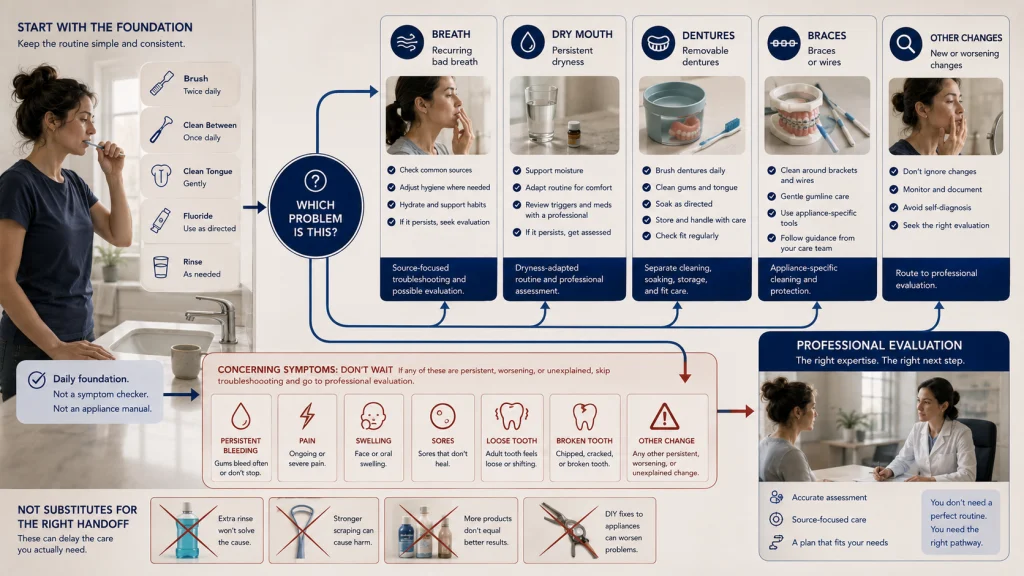
Route Symptoms and Appliances to the Correct Workflow
- Persistent bad breath requires source-focused troubleshooting and possible evaluation.
- Ongoing dry mouth needs a routine adapted to dryness and a check for professional evaluation.
- Dentures require a separate brushing, soaking, storage, and fit routine.
- Braces require cleaning around brackets, wires, and appliance-specific instructions.
- Persistent bleeding, pain, swelling, sores, loose teeth, broken teeth, or other changes require appropriate professional evaluation.
The broader oral hygiene guide routes those decisions without turning this routine page into a symptom checker or appliance manual.
Write Down the Foundation, Optional Step, Order Source, Storage, and Fallback
A clear routine can be written in six lines: essential brushing, essential interdental cleaning, one optional step, any prescribed step, the source of the order, and the travel fallback.
Keep tools visible where they are used, store them so they can dry, maintain refills, and remove duplicate products that add work without adding value. Individual dental instructions always take priority over a general sequence.
For the larger hygiene system, return to personal hygiene for adults.
FAQs
🪥 What belongs in a basic oral hygiene routine?
The foundation is brushing with fluoride toothpaste and cleaning between teeth each day. Optional and prescribed steps come after those roles are clear.
🧵 Should I floss before or after brushing?
Thorough completion matters more than copying one rigid order unless a dentist, hygienist, or product label gives a specific instruction.
💧 Is mouthwash required every day?
No. Mouthwash is an adjunct with a defined cosmetic, therapeutic, or prescribed role. It does not replace brushing or interdental cleaning.
👅 Does tongue cleaning have to be included?
No. Tongue cleaning is optional and should use a light technique. It should not delay the foundational steps or become a promise to solve every breath concern.
🌙 What should the evening routine include?
Use an evening anchor that includes the daily interdental-cleaning step and a complete brushing session. Add only clearly useful optional or prescribed steps.
🧳 What should go in a travel oral-care kit?
Pack a toothbrush, fluoride toothpaste, and the chosen interdental tool in clean, ventilated storage. Add only an adjunct with a defined role.
🔋 How should powered tools fit the routine?
Charging, replacement heads, travel cases, storage, and recurring cost should fit the bathroom and schedule. A powered feature does not replace surface coverage.
🚩 When should a routine problem become a professional-care question?
Persistent bleeding, pain, swelling, sores, dry mouth, bad breath, loose teeth, broken teeth, or another new or worsening change requires appropriate evaluation.