Body odor after a shower does not automatically mean the shower failed or that the body was not cleaned well enough. The source may be underarm skin, another external area, a towel, clothing, footwear, a product mismatch, or sweat returning after the routine. Troubleshoot one layer at a time instead of scrubbing harder or stacking several new products. Seek qualified evaluation when odor changes suddenly, persists despite reasonable care, comes with severe sweating or night sweats, or appears with rash, pain, swelling, drainage, fever, sores, discharge, or urinary symptoms.
Start With Five Separate Post-Shower Checks
A person steps out of the shower, dries off, gets dressed, and notices odor again. It is easy to blame the shower immediately. A better first step is to separate five possible sources: underarm skin, another external body area, the towel, a confirmed clean shirt, and a previously worn shirt.
| Check | What to notice | What it may change |
|---|---|---|
| Underarm skin before dressing | Whether odor is already present on clean, dry skin | Focus on washing, drying, re-sweating, or product fit |
| Another external area | Whether the source is actually a fold, scalp, foot, or another location | Move the troubleshooting to the correct body area |
| Clean towel | Whether odor appears during drying | Separate skin odor from retained towel odor |
| Confirmed clean shirt | Whether odor appears only after dressing | Check fabric, fit, heat, and re-sweating |
| Previously worn shirt | Whether the smell returns immediately from the fabric | Treat the textile as a separate source |
Odor after dressing does not prove that the skin stayed dirty. Troubleshooting begins by locating the source before changing the routine.
Define the Pattern Before Trying to Fix It
Persistent odor means the smell remains despite a reasonable routine. Rapid return means the skin or clothing seems fresh at first but odor comes back sooner than expected. Source location means identifying where the odor begins rather than treating the entire body as one problem.
Retained textile odor comes from a towel, shirt, bra, sock, footwear, or another fabric that carries odor back into the routine. Re-sweating means perspiration resumes after the shower because of heat, clothing, activity, stress, or timing. Product failure may actually be a category mismatch, an application error, or a direction that was not followed.
An unexplained change is different from a familiar pattern. A sudden, persistent, or otherwise unusual odor change may need evaluation rather than another hygiene experiment.
Locate the Moment the Odor Appears
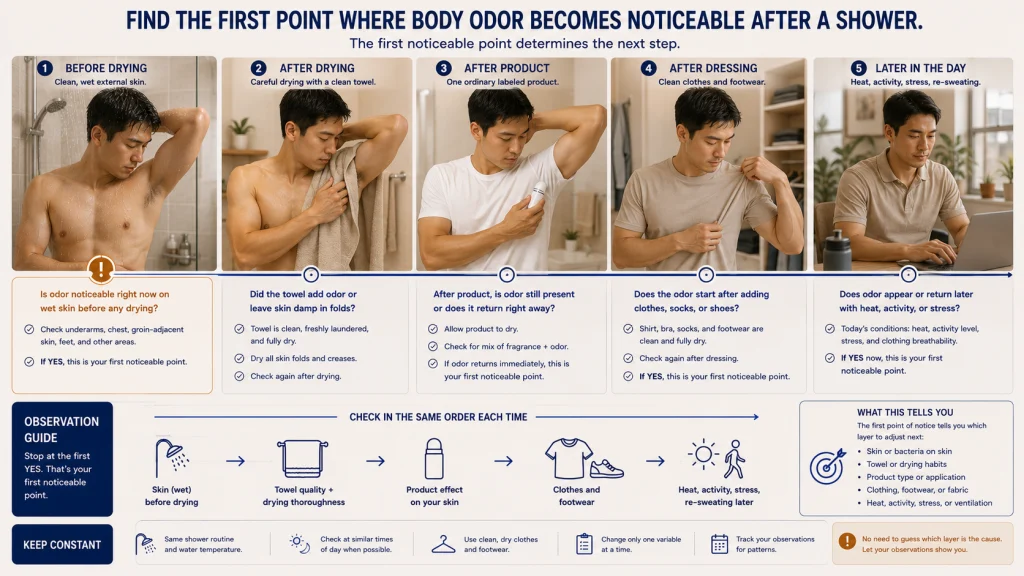
The timeline narrows the search. Check the same routine at distinct points instead of relying on one memory after everything is finished.
| Timeline point | What to check | Most useful next layer |
|---|---|---|
| Before drying | Whether odor remains on wet skin | Target areas, cleanser use, rinsing, and source location |
| After drying | Whether the towel adds odor or the skin remains damp | Towel condition and careful drying |
| After product | Whether odor changes, mixes with fragrance, or returns quickly | Product category, label, amount, and timing |
| After dressing | Whether odor starts with a shirt, bra, sock, or footwear | Textile and clothing handoff |
| Later in the day | Whether heat, activity, stress, or fabric traps new sweat | Re-sweating pattern and product fit |
Write down the first point at which the odor is clearly noticeable. That one detail can prevent unnecessary changes to every other layer.
Separate Skin, Product, Textile, Body Area, and Environment
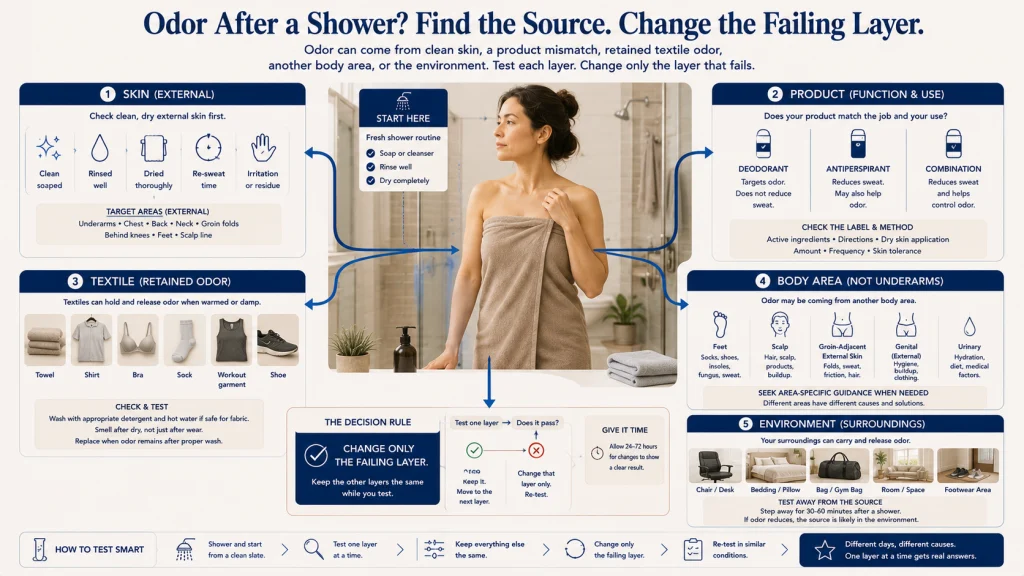
A useful decision tree starts with location and timing.
| Layer | Question | Route |
|---|---|---|
| Skin | Is odor present on clean, dry external skin before product or clothing? | Review target areas, rinsing, drying, re-sweating, and skin symptoms. |
| Product | Is the item deodorant, antiperspirant, or a combination, and was it used as labeled? | Check function and application instructions. |
| Textile | Does a towel, shirt, bra, sock, or shoe carry the smell back? | Move the problem to clothing and towel care. |
| Body area | Is the source actually the feet, scalp, groin-adjacent skin, genitals, or another area? | Use area-specific hygiene or qualified guidance. |
| Environment | Could the room, chair, bedding, bag, or footwear be the source? | Test the body away from the suspected environment. |
Key decision: Change the layer that fails the test. Do not assume the skin is responsible simply because the odor is noticed after a shower.
Audit the Shower Method Without Scrubbing Harder
Review the routine in order: target areas, cleanser, friction, rinsing, and residue. Ordinary odor-prone areas may need direct washing rather than relying on water running over them. At the same time, more friction is not automatically more effective.
- Target areas: Wash the underarms and other ordinary external odor-prone areas that fit the routine.
- Cleanser: Use a suitable everyday cleanser according to its directions rather than adding a harsh treatment.
- Friction: Use gentle hand pressure or a clean tool without scraping or repeatedly abrading the skin.
- Rinsing: Remove cleanser and visible residue fully.
- Product buildup: Notice whether a thick leave-on product remains and whether the normal wash removes it comfortably.
Repeated aggressive washing can create irritation without identifying whether the odor came from skin, fabric, or re-sweating. For the general washing sequence, review how to shower properly.
Dry the Body and External Folds Carefully
Moisture left in the underarms or external skin folds can mix with heat, friction, clothing, and a leave-on product. Pat the area dry with a clean towel rather than rubbing until the skin feels raw.
Check the towel itself before assuming the skin is still the source. A towel that smells musty when damp can transfer that impression during an otherwise reasonable routine.
Editorial observation: Drying is easy to overlook because the routine feels finished once the water stops. In practice, a damp fold, a towel used too many times, or clothing pulled on immediately can blur the line between skin odor and textile odor.
Test With a Confirmed Clean Shirt and Towel
Use a towel and shirt that are known to be clean, fully dried, and free from retained odor. Check the body before dressing, then again after putting on the shirt. This simple comparison shows whether the smell appears before or after fabric contact.
A garment can smell neutral while dry and release odor as it warms or becomes damp. That is a textile problem, not proof that the body was poorly washed. Clothing, towels, bras, socks, workout gear, and footwear need their own care process.
Note: This article identifies the handoff but does not solve laundry chemistry, washer maintenance, or fabric-specific odor removal.
Confirm Whether the Product Is Deodorant, Antiperspirant, or Both
A deodorant is selected for odor control. An antiperspirant is selected for sweat reduction. A combination product may provide both functions. Similar packaging can hide these different jobs.
If the main problem is dampness and the product is deodorant only, repeated fragrance application may not address the goal. If the product is antiperspirant, the exact Drug Facts and directions control where, when, and how it should be used.
Use the comparison of deodorant and antiperspirant functions before deciding that a product has failed.
Follow the Exact Antiperspirant Label
Application timing, skin condition, amount, drying, and reapplication should come from the exact package. Bedtime advice, dry-skin advice, and post-shower timing are not universal instructions that override the label.
Check whether the underarms are dry and intact, whether shaving has caused irritation, and whether the product has had time to set before dressing. A thick layer may add residue and fabric transfer without correcting a timing or category mismatch.
For the full label-led sequence, review how to apply antiperspirant.
Record Heat, Activity, Stress, Clothing, and Re-Sweating
Odor that returns later may follow new perspiration rather than incomplete washing. Record the conditions without trying to diagnose the cause.
- How long after the shower the odor returns
- Room temperature and humidity
- Exercise, commuting, housework, or another activity
- Stressful events or a warm environment
- Tight, layered, or low-breathability clothing
- Whether the same product and amount were used
A consistent pattern can show whether the problem appears only after heat or movement. Sudden, severe, nocturnal, or highly disruptive sweating belongs to evaluation rather than self-diagnosis.
Route Foot, Genital, and Urinary Odor to the Correct Path
Foot odor involves socks, shoes, moisture, skin condition, and footwear care. Genital or urinary odor involves different anatomy and safety boundaries. Neither should be folded into an underarm troubleshooting routine.
Do not apply fragrance or a general body product inside genital structures, on mucosa, on sores, or onto irritated skin. Discharge, urinary symptoms, pain, swelling, sores, or persistent intimate odor require qualified guidance.
For expanded external deodorant claims, use the area checks in the whole-body deodorant guide without treating “whole body” as permission for intimate or internal use.
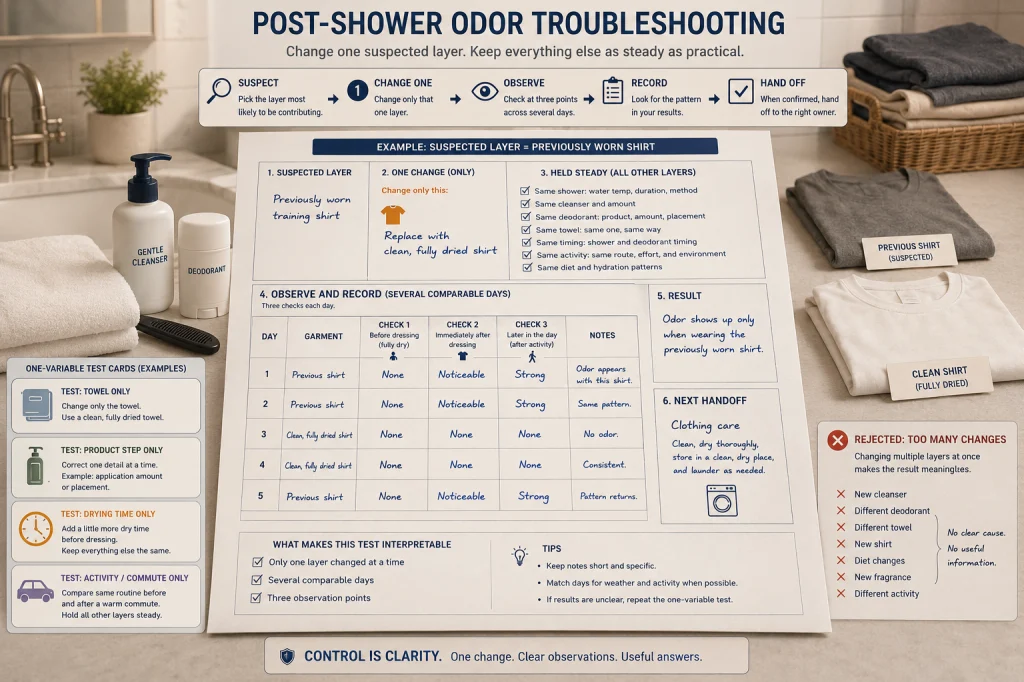
Change One Variable for Several Comparable Days
One-variable testing makes the result easier to interpret. Keep the rest of the routine stable and choose one layer to test.
| Test field | Example |
|---|---|
| Suspected layer | Previously worn shirt |
| Variable changed | Use a confirmed clean, fully dried shirt |
| Variables held steady | Same shower, towel, product, timing, and activity |
| Observation point | Before dressing, immediately after dressing, and later |
| Result | Odor appears only with the previous shirt |
| Next handoff | Move the problem to clothing care |
Other useful single tests include changing the towel, correcting one application step, allowing more drying time, or checking odor before and after a warm commute. Avoid changing cleanser, product, towel, shirt, and diet in the same trial.
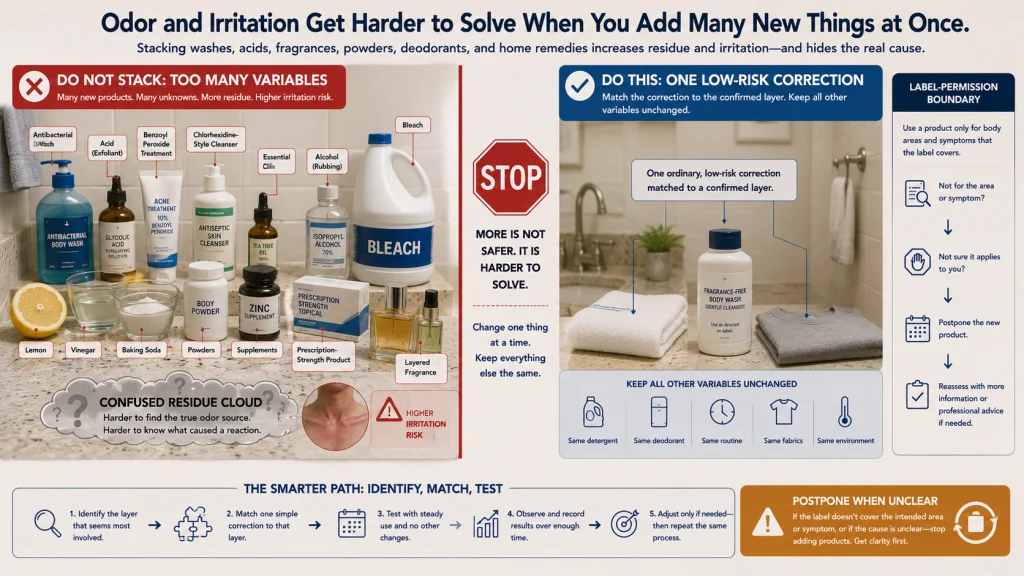
Do Not Stack Multiple New Washes, Acids, Fragrances, Powders, and Deodorants
Layering several new products can increase residue and irritation while making the source harder to identify. It also creates confusion about which product helped, which one failed, and which one caused a reaction.
Safety warning: Do not self-prescribe antibacterial washes, acids, benzoyl peroxide, chlorhexidine, essential oils, alcohol, bleach, lemon, vinegar, baking soda, supplements, or prescription-strength products for unexplained odor.
Choose one ordinary, low-risk correction at a time. When a product label does not cover the intended area or symptom, postpone use rather than improvising.
Stop Repeated Washing When the Skin Becomes Irritated
Tightness, burning, itching, rash, cracking, or pain means the routine is harming the skin. More scrubbing, hotter water, and repeated showers can worsen the irritation without solving the odor source.
Stop the aggressive routine, avoid adding new leave-on products to damaged skin, and seek appropriate guidance when symptoms are significant or do not settle.
Note: Persistent odor is not evidence of laziness or poor character. The goal is to locate the failing layer, not to punish the skin with a harsher routine.
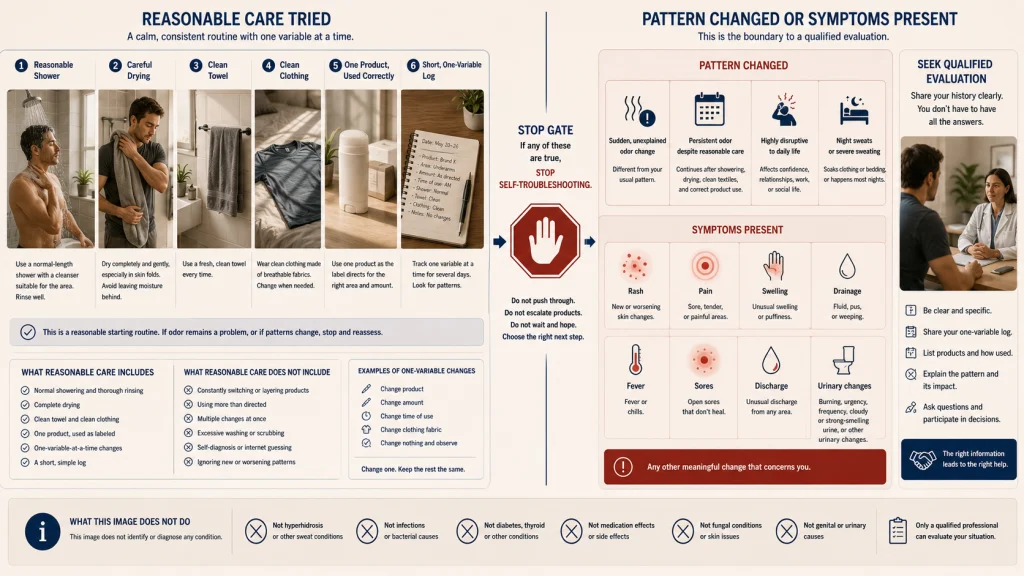
Seek Evaluation for Changed, Severe, or Persistent Patterns
A product or shower adjustment is no longer enough when odor changes suddenly, sweating occurs at night, perspiration becomes severe, the issue disrupts daily life, or odor persists despite reasonable washing, drying, clean textiles, and correctly labeled product use.
Evaluation boundary: Seek qualified evaluation for sudden or unexplained odor, severe or nocturnal sweating, persistent symptoms, rash, pain, swelling, drainage, fever, sores, discharge, urinary symptoms, or another meaningful change.
This article does not diagnose hyperhidrosis, infection, diabetes, thyroid disease, metabolic conditions, medication effects, fungal conditions, or genital and urinary causes. It also cannot determine how other people perceive the odor.
Identify the Timing, Source, Tested Layer, and Stop Point
Begin by locating when the odor appears and where it starts. Test skin, drying, product, clothing, towel, footwear, and body area as separate layers. Change one variable for several comparable days, then hand the problem to the correct routine instead of escalating every product at once.
Stop self-troubleshooting when washing causes irritation or when the odor pattern is sudden, persistent, severe, intimate, urinary, wound-related, or accompanied by other symptoms.
For the larger routine, use the bathing and body odor guide and the broader personal hygiene guide.
FAQs
🧭 Why do I still smell after a shower?
The source may be skin, incomplete drying, re-sweating, a product mismatch, a towel, clothing, footwear, or another body area. Check when the odor first appears before changing the routine.
👕 Can a clean-looking shirt bring odor back?
Yes. Some fabrics smell neutral while dry and release retained odor when warmed or damp. Compare a confirmed clean shirt with the suspected garment before blaming the shower.
🚿 Should I shower again right away?
Not automatically. First locate the source and check the towel, shirt, product, and re-sweating timeline. Repeated washing can irritate the skin without solving a textile or product problem.
🧼 Should I use antibacterial soap?
Do not self-prescribe antibacterial or medicated washes for unexplained odor. Use a reasonable everyday routine and seek guidance when the pattern is persistent, changed, severe, or accompanied by symptoms.
💧 Could I be sweating again after the shower?
Yes. Heat, activity, stress, clothing, and timing can trigger new perspiration. Record when the odor returns and what happened between the shower and that point.
🧴 What if my deodorant is not working?
Confirm whether the product is deodorant, antiperspirant, or a combination, then read the exact directions. The issue may be the wrong function, timing, amount, skin condition, or retained textile odor rather than simple product failure.
🩲 Can I use whole-body deodorant for intimate odor?
Do not use it inside genital structures or on mucosa, sores, discharge, wounds, or irritated skin. Persistent genital or urinary odor requires the correct intimate or medical route.
🚩 When should persistent odor be evaluated?
Seek evaluation for sudden odor change, night sweats, severe sweating, daily-life disruption, persistent unexplained odor, or symptoms such as rash, pain, swelling, drainage, fever, sores, discharge, or urinary changes.