Stress Journal: Track Context, Response, and Cost Without Recording Your Whole Day
Stress Journal

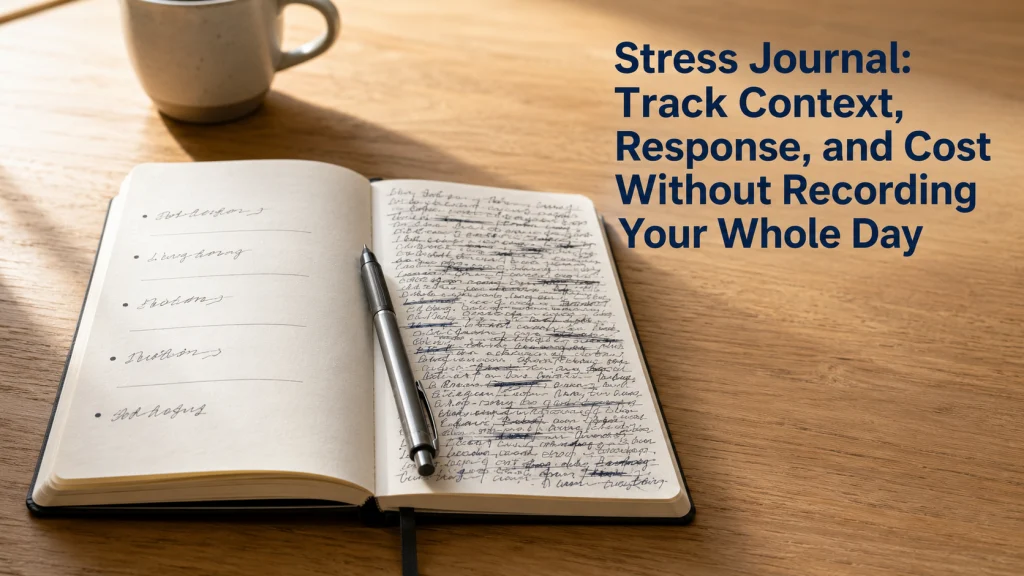
A stress journal works best when it records a few comparable details instead of every thought from the day. Use five fields: context, signal, response, immediate effect, and later cost. Log either specific stressful events or one brief daily check-in, then wait until you have seven entries before reviewing for patterns. Stop the exercise if


Stress Triggers: Find the Pattern Before You Blame the Most Obvious Event

Stress Triggers

Stress triggers are easier to identify when you look beyond the final visible event. Map the immediate spark, the background load that made it matter, the meaning attached to the situation, and the limits on what could be changed. Then check whether the pattern repeats, look for counterexamples, and choose one small observation or adjustment.

Signs of Stress: Build Your Personal Early-Warning Pattern Without Self-Diagnosing

Signs Of Stress

Signs of stress are easier to recognize as changes from your own usual pattern than as a universal symptom list. Notice what shifts across thoughts, emotions, behavior, and physical comfort, then connect those changes to timing, context, clustering, and daily function without assuming stress is the cause. Choose a small early action before the pattern

Stress vs Anxiety: Use the Pattern to Decide What Kind of Help Comes Next

Stress Vs Anxiety

Stress and anxiety can feel similar, so one sensation is not enough to tell them apart. A more useful distinction looks at what started the experience, whether it eases when the situation changes, and how much it is affecting work, sleep, relationships, or ordinary choices. A clear external pressure may point toward a stress response,