How to Stop Feeling Overwhelmed: Reduce the Decision Load Before Solving the Whole Problem
How To Stop Feeling Overwhelmed

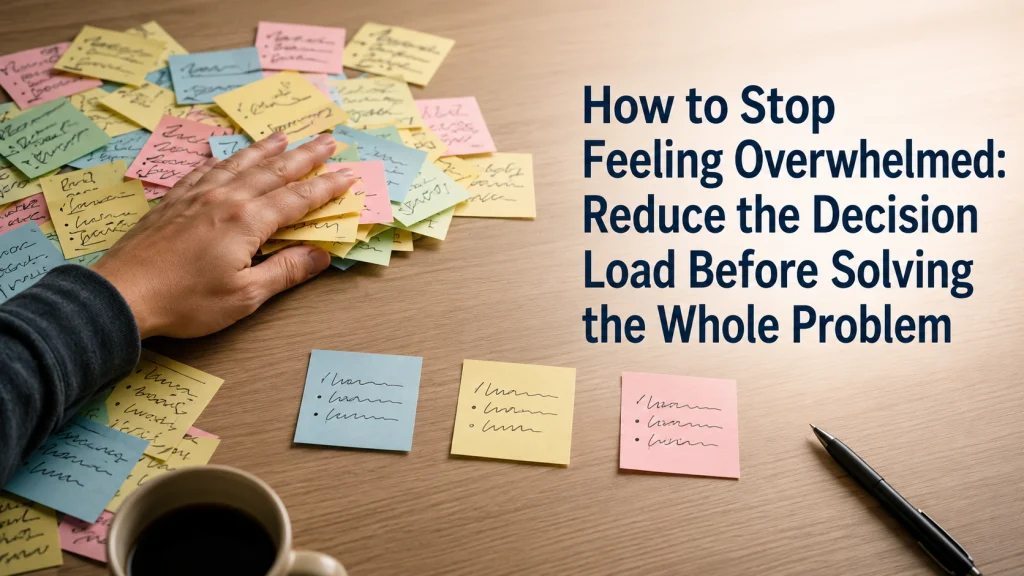
When everything feels urgent, the first job is not solving the whole situation. It is reducing the number of decisions competing for the next ten minutes. Protect safety and essential responsibilities, stop new inputs, write every open loop in one rough list, sort only into now, today, and later, then choose one physical next action.
Stress Management Plan: Prepare Responses for Low, Medium, and High-Stress Days

Stress Management Plan

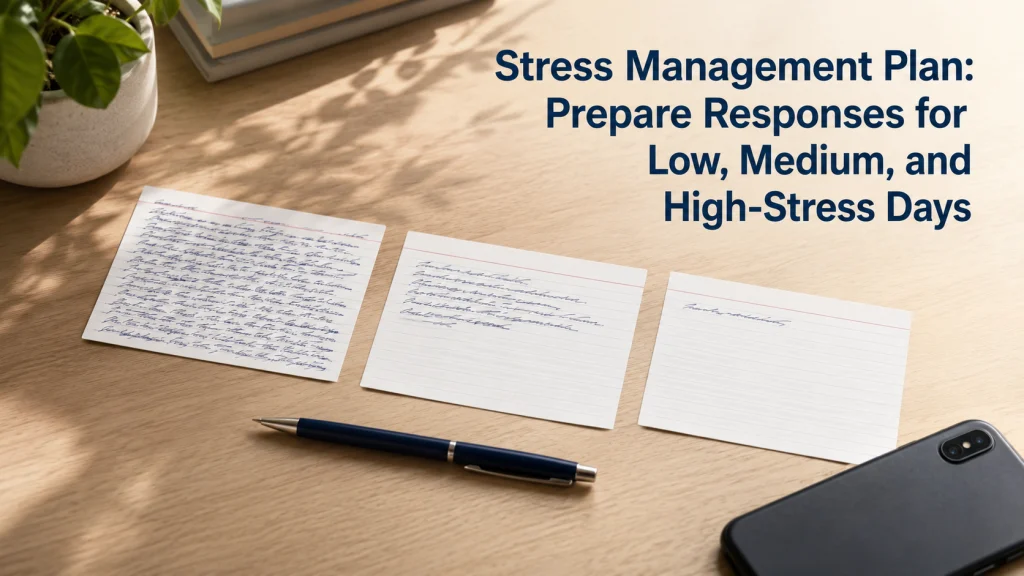
A personal stress plan should reduce decisions when attention, time, and patience are already limited. Build three functional levels, low, medium, and high stress, then pair one action for the source with one action for the stress response. Add a minimum version for busy or disrupted days, prepare support and environmental cues in advance, and

Stress Journal: Track Context, Response, and Cost Without Recording Your Whole Day

Stress Journal

A stress journal works best when it records a few comparable details instead of every thought from the day. Use five fields: context, signal, response, immediate effect, and later cost. Log either specific stressful events or one brief daily check-in, then wait until you have seven entries before reviewing for patterns. Stop the exercise if

Stress Triggers: Find the Pattern Before You Blame the Most Obvious Event

Stress Triggers

Stress triggers are easier to identify when you look beyond the final visible event. Map the immediate spark, the background load that made it matter, the meaning attached to the situation, and the limits on what could be changed. Then check whether the pattern repeats, look for counterexamples, and choose one small observation or adjustment.

Signs of Stress: Build Your Personal Early-Warning Pattern Without Self-Diagnosing

Signs Of Stress

Signs of stress are easier to recognize as changes from your own usual pattern than as a universal symptom list. Notice what shifts across thoughts, emotions, behavior, and physical comfort, then connect those changes to timing, context, clustering, and daily function without assuming stress is the cause. Choose a small early action before the pattern

Coping Skills for Stress: Choose the Response That Fits the Stressor

Coping Skills For Stress

Coping skills for stress are useful only when they fit the stressor, the amount of control available, and the delayed consequence of the response. Begin by naming what is happening, noticing your signals, and deciding whether the next step should change the source, steady the response, create a short pause, or prepare for a recurring