Whole House Ventilation Systems: Compare Exhaust, Supply, Balanced, HRV, and ERV by Home and Climate

Whole House Ventilation Systems

Whole house ventilation systems are not the same as ordinary heating and cooling circulation. Begin by identifying the home’s existing outdoor-air path, local exhaust fans, controls, ducts, filters, and manuals. Then compare exhaust-only, supply-only, balanced, HRV, and ERV categories by pressure effects, distribution, climate, moisture, controls, maintenance, noise, service access, and professional-design requirements. Do not

When to Open Windows for Ventilation: Check Outdoor Air, Humidity, Weather, Pollen, and Safety First

When To Open Windows For Ventilation

There is no universal schedule for opening windows. The decision depends on why the home needs ventilation, whether outdoor air is suitable at that moment, whether a safe inlet and outlet can be created, and what condition will trigger a review. Check current smoke or hazard alerts, temperature, humidity, weather, pollen conditions, security, and opening

How to Ventilate a House: Create a Safe Air-In and Air-Out Path for the Actual Activity

How To Ventilate A House

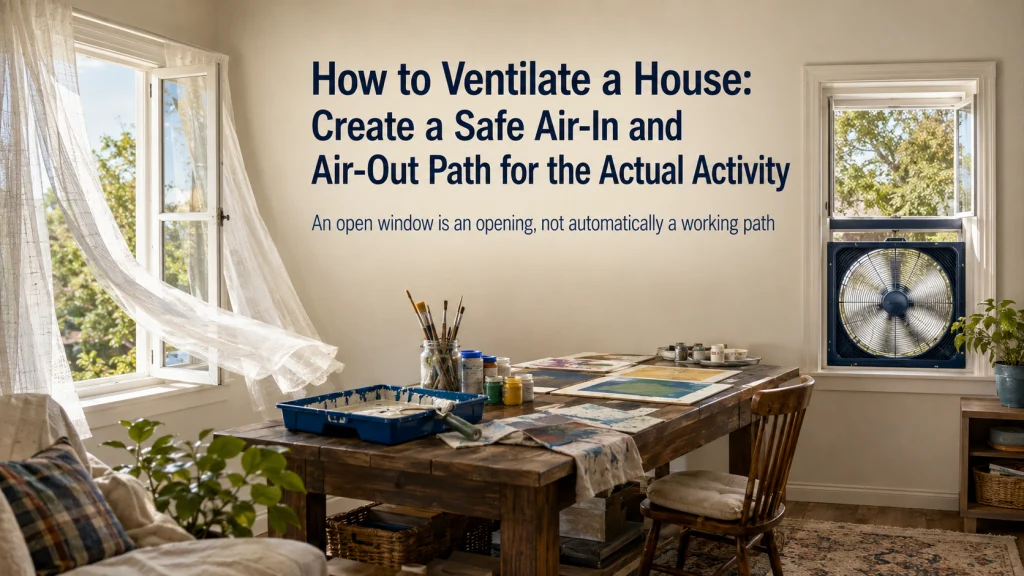
Ventilating a house means creating a useful path for outdoor air to enter and indoor air to leave. One cracked window may provide only an opening, while a separated inlet and outlet can create a clearer route through the room. Start with the source event, check whether outdoor conditions and the opening are safe, then

How to Improve Indoor Air Quality at Home: Start With the Source, Then Ventilate and Filter

How To Improve Indoor Air Quality At Home

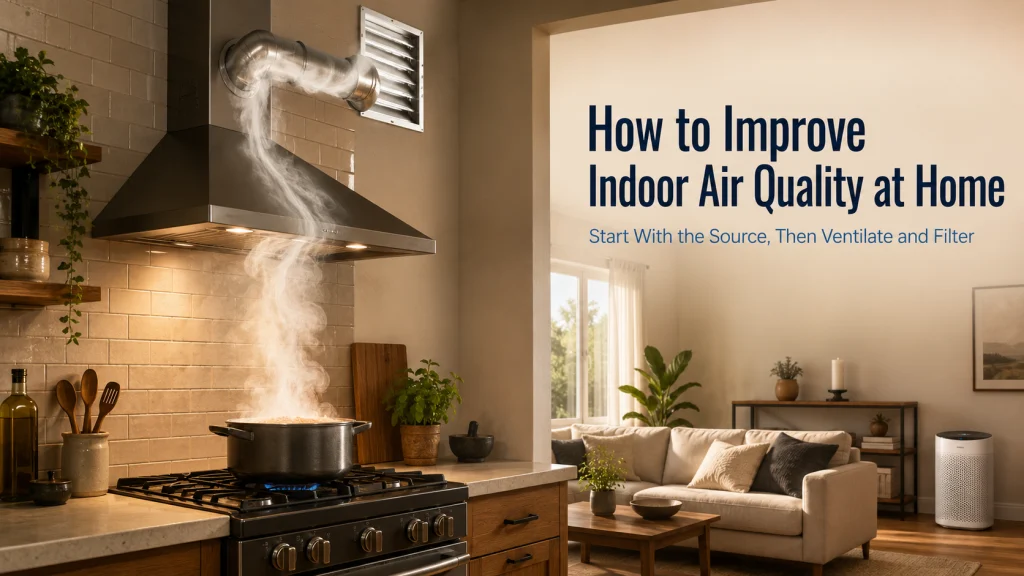
Improving indoor air quality at home begins by noticing what changes before reaching for a product. Handle alarms, smoke, gas, combustion, and severe symptoms first, then connect the room condition with a source, activity, or air pathway. Reduce what can be controlled, use local exhaust where moisture or pollutants are created, bring in outdoor air

What Is Indoor Air Quality: Sources, Pathways, Ventilation, Moisture, Particles, and Daily Change

What Is Indoor Air Quality

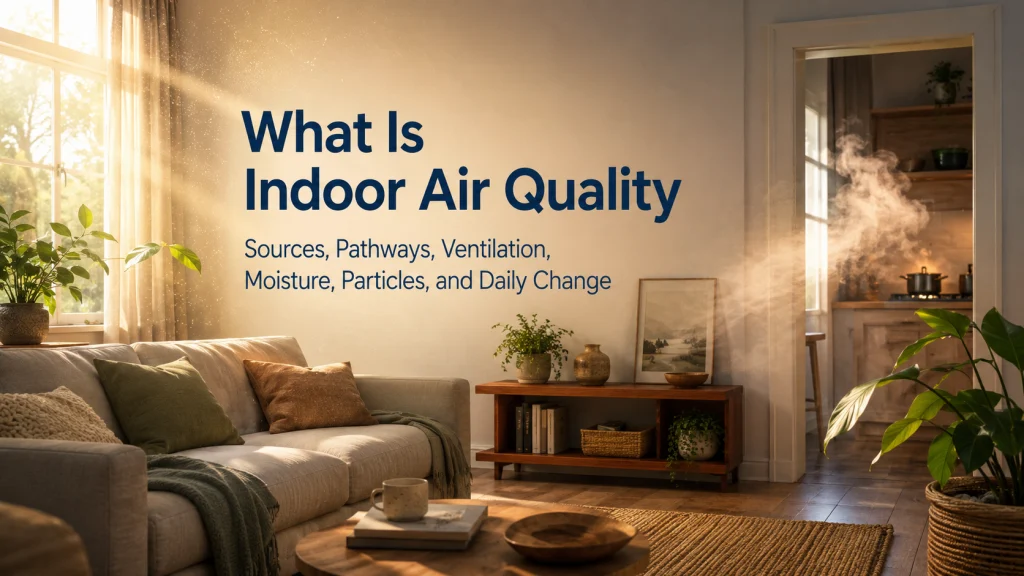
Indoor air quality is not a permanent grade attached to a room. The same living room can feel ordinary in the morning, stuffy during a gathering, affected by dinner cooking, and refreshed later when suitable outdoor air moves through it. Those changes come from sources, pathways, building conditions, and the controls acting on them. Smell,

Indoor Air Quality and Home Ventilation: Control Sources, Move Air Intentionally, and Know When Outdoor Air Helps

Indoor Air Quality

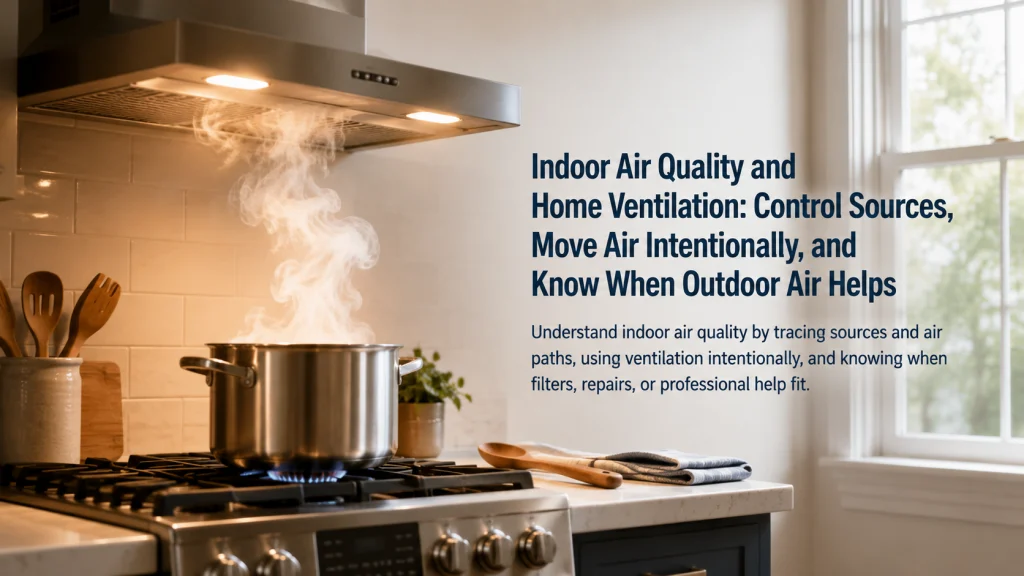
Indoor air quality problems do not all have the same first solution. A lingering odor may call for removing a source, using local exhaust, bringing in suitable outdoor air, or adding supplemental air cleaning, depending on where the condition begins and how it moves. Start by identifying the source, pathway, room, timing, and existing ventilation