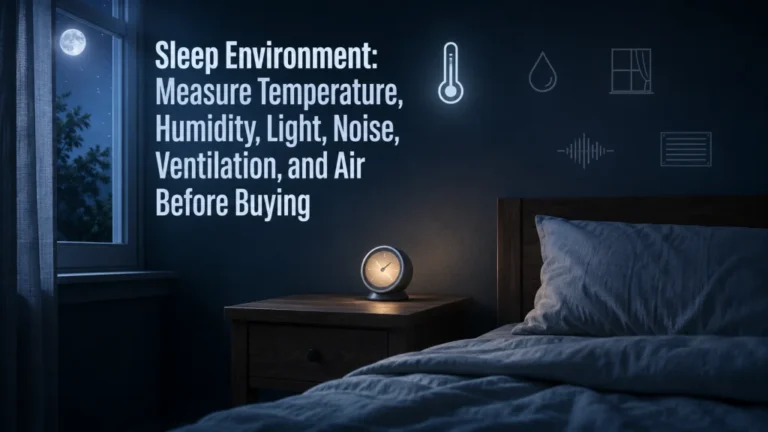
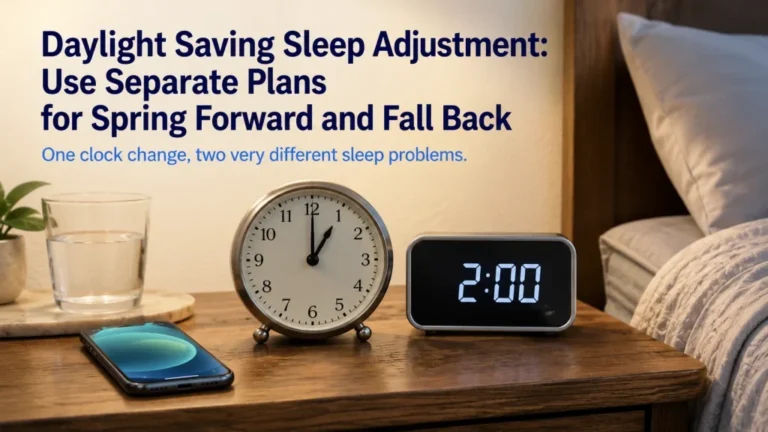
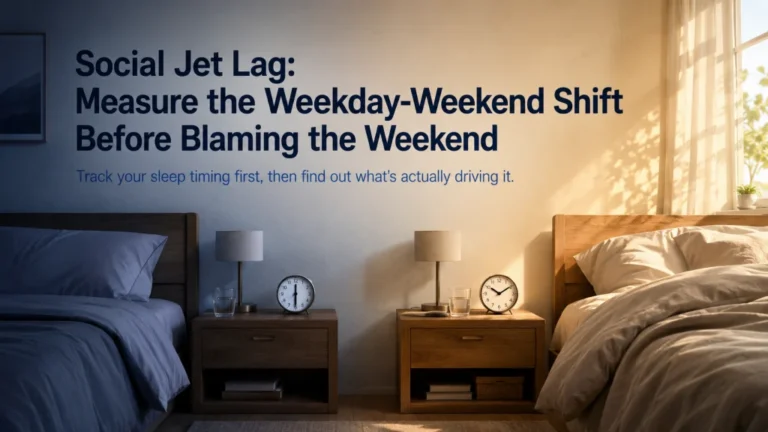
Morning light for sleep works best as a repeatable timing opportunity linked to when you wake, not as one universal clock time or minute count. Ordinary daylight, bright indoor light, sunrise alarms, and clinical light-therapy devices are different tools with different limits. Build the routine around season, weather, housing, mobility, work, and safety, then track whether it supports alertness and a steadier sleep schedule. Never look directly at the sun, and seek qualified guidance for persistent schedule problems, significant mood symptoms, eye concerns, or questions about therapeutic light devices.
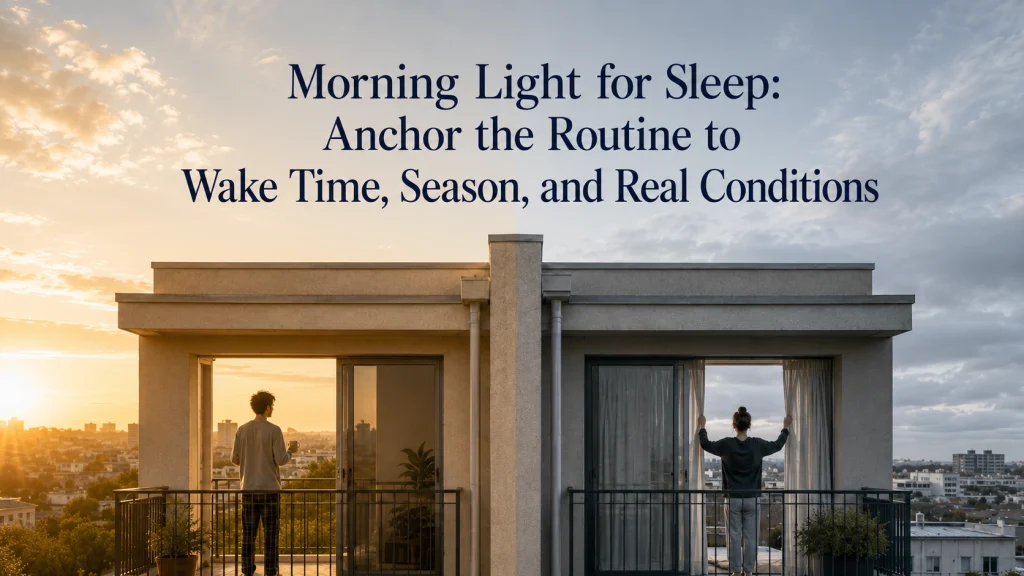
The Same Door and Wake Time Can Lead to Different Light
At 7 a.m. in midsummer, the front door opens onto a bright street. The air is already warm, the sky is clear, and an ordinary walk begins in full daylight.
At the same door and the same 7 a.m. wake time in midwinter, the street may still be dim. Clouds, snow, rain, nearby buildings, or a high latitude can make the light opportunity look completely different even though the clock has not changed.
| Condition | Midsummer Morning | Midwinter Morning |
|---|---|---|
| Wake time | 7 a.m. | 7 a.m. |
| Outdoor conditions | Bright daylight may already be available. | Daylight may be weak, delayed, blocked, or absent. |
| Practical option | Walk, porch, balcony, courtyard, or outdoor commute | Use the brightest safe available setting and reassess when daylight becomes available. |
| Main question | Can the opportunity be repeated after waking? | What realistic alternative fits darkness, weather, access, and safety? |
A useful light routine must respond to conditions, not copy one universal minute count.
Starting rule: Link one safe light opportunity to wake time, then adapt the location and duration to the actual environment.
The complete sleep guide places light beside schedule, activity, meals, caffeine, stress, and bedroom conditions. The healthy sleep habits framework helps keep the morning routine connected to the rest of the day.
Understand Light as a Timing Signal
The body’s daily timing system uses patterns of light and darkness as information about when daytime has begun and when evening is approaching. Morning light is not a sleeping pill used at night. It is part of the daytime pattern that helps organize alertness and sleep timing.
NIEHS describes light as a strong synchronizer of the light-dark cycle and notes that natural morning light helps regulate the biological clock and daytime alertness. Its sleep and light discussion also places morning exposure beside consistent wake times and reduced bright light in the evening.
Timing matters because light received at different parts of the day does not carry the same practical meaning. A repeatable opportunity soon after waking can reinforce the start of the active period, while bright evening exposure can tell the brain and body that the active period is continuing.
This does not mean one cloudy morning ruins the schedule. Judge the routine by what happens across ordinary mornings, including imperfect ones, rather than by whether a single exposure felt ideal.
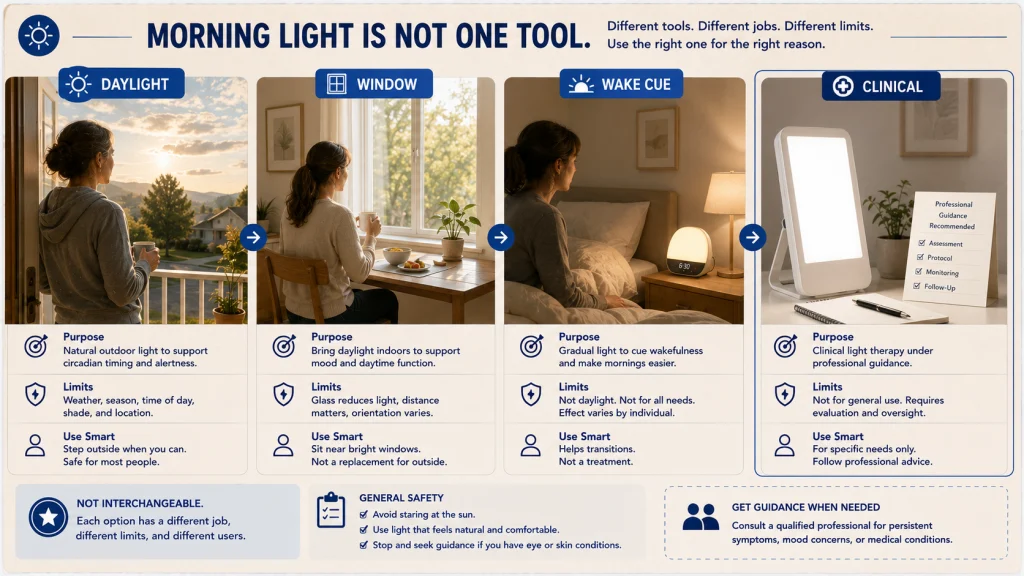
Separate Ordinary Daylight, Indoor Light, Sunrise Alarms, and Clinical Light Therapy
These options are often grouped together under the phrase morning light, but they differ in source, intensity, timing control, purpose, and safety requirements.
| Light Type | Ordinary Use | Main Limitation |
|---|---|---|
| Outdoor daylight | A walk, porch, balcony, courtyard, outdoor task, or commute after waking | Changes with season, weather, shade, latitude, access, and safety |
| Bright window area | Breakfast, reading, planning, or another morning task near available daylight | Glass, orientation, distance, nearby buildings, and cloud cover affect the exposure. |
| Ordinary indoor lighting | Supporting visibility and alertness when outdoor light is not available | Indoor brightness varies widely and should not be assumed equivalent to outdoor daylight. |
| Sunrise alarm | A gradual wake cue or room-light routine | It is a product feature, not proof of therapeutic intensity or clinical suitability. |
| Clinical light therapy | A structured intervention using a device and protocol for a defined clinical purpose | Timing, intensity, health history, eye considerations, and other factors may require professional guidance. |
A small pilot light-therapy trial used a specified device, schedule, and clinical population. Its limited sample and therapy protocol should not be converted into a household rule for ordinary daylight or a reason to self-treat insomnia.
Product-selection observation: A device with impressive specifications is irrelevant when the reader cannot use it consistently, the setup conflicts with the morning routine, or the intended use requires clinical guidance.
Define the Goal Before Choosing the Light Opportunity
Morning light can be added for several practical reasons. Choose one rather than expecting the routine to solve every sleep or mood concern.
Morning alertness: Create a clearer transition from bed to the active part of the day.
Schedule consistency: Pair wake time with a repeatable environmental cue.
Support for an earlier routine: Add morning light while keeping the rest of the sleep-wake schedule stable enough to review.
Write the goal in observable language. “Stand on the balcony after breakfast and notice whether I feel more alert during the first work hour” is easier to review than “fix my body clock.”
The goal should remain within ordinary routine guidance. Persistent insomnia, a suspected circadian-rhythm disorder, seasonal affective disorder, depression, or another clinical concern requires appropriate professional assessment rather than a self-designed light plan.
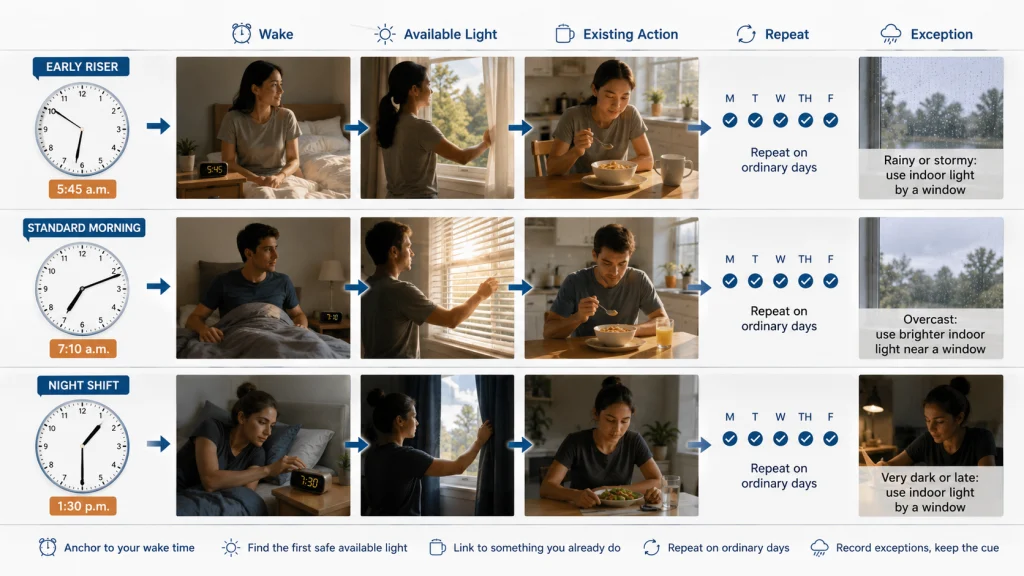
Anchor the Opportunity to Wake Time
A universal instruction such as “get light at 7 a.m.” ignores people who wake at 5 a.m., 9 a.m., noon after a night shift, or at changing times across the week. The usable anchor is the start of the person’s active period.
Build the sequence in this order:
- Record the actual wake time.
- Identify the first safe period when light is available.
- Choose an action that already happens near that period.
- Use the same cue on ordinary days.
- Record exceptions rather than treating them as failure.
A controlled study of young adults with late schedules compared an advanced sleep-wake schedule paired with morning short-wavelength light or very dim light. Both groups shifted earlier, and the brighter-light group did not show a larger shift in that small protocol. The study’s findings reinforce that morning light should not be separated from wake time, sleep timing, and the full daily light-dark pattern.
For ordinary use, the lesson is not to copy the study’s equipment or schedule. It is to treat wake time and consistent daily timing as part of the exposure.
Avoid One Universal Minute Target
Advice prescribing the same five, ten, twenty, or thirty minutes for everyone creates a level of precision the ordinary routine cannot support. Duration is only one part of the exposure.
The amount of light reaching the eyes can change with:
- Outdoor brightness and cloud cover
- Season, latitude, and sunrise timing
- Shade from trees, roofs, balconies, or surrounding buildings
- Whether the person is outdoors or behind glass
- Distance and orientation relative to a window or indoor source
- Time since waking
- Mobility, eyewear, eye health, medication, and individual sensitivity
Without measuring intensity at the eyes and accounting for timing and individual factors, the minute count cannot describe the whole exposure. Use a feasible opportunity, record the conditions, and compare the pattern rather than chasing a universal number.
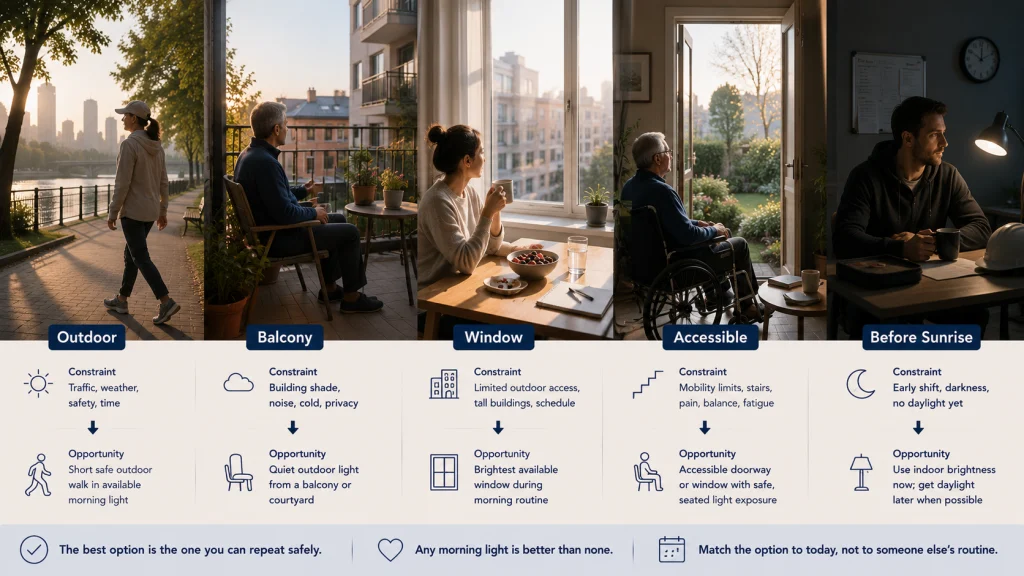
Choose a Daylight Option That Fits the Constraint
The best option is not the most impressive one. It is the safest available source that can be repeated without creating a new barrier.
| Constraint | Possible Opportunity | Limitation to Record |
|---|---|---|
| Safe outdoor access | Short walk, porch task, pet care, garden check, or outdoor breakfast | Weather, footing, heat, cold, air quality, and traffic |
| Balcony or courtyard | Stand or sit in the brightest safe open area after waking. | Building shade, orientation, privacy, and seasonal darkness |
| Apartment without outdoor access | Use the brightest window-adjacent area for breakfast or planning. | Window direction, distance, glass, neighboring buildings, and weak winter light |
| Morning commute | Walk part of the route, wait outdoors safely, or use an outdoor transfer. | Driving does not provide the same opportunity as being safely outdoors, and glare must not interfere with vision. |
| Mobility limits | Use a safe seated porch, doorway, window area, or accessible outdoor location. | Transfers, temperature, supervision needs, and fall risk |
| Very early wake time | Use available indoor brightness, then add ordinary daylight when it becomes safely accessible. | Darkness means the first step may not provide the same exposure as daylight. |
An outdoor walk can combine light with movement, but exercise is not required for the light opportunity. A person who cannot walk outside may still build a repeatable wake-linked routine around the brightest safe location available.
Plan for Cloudy Weather, Dark Winters, Apartments, Mobility Limits, and Early Shifts
Advice about morning light can feel discouraging when the bedroom faces an alley, the building blocks the sky, walking outside is difficult, or work begins before dawn. The routine should include a normal version and a constrained version so that real conditions do not erase the plan.
- Cloudy weather: Keep the wake-linked opportunity, record the conditions, and use the brightest safe outdoor setting available.
- Dark winter mornings: Separate the wake cue from the later daylight opportunity instead of pretending darkness is bright sun.
- Apartments: Identify which room, window, balcony, courtyard, or building exit receives the most usable light.
- Mobility limits: Reduce transfers, distance, cold exposure, and fall risk before increasing duration.
- Early shifts: Use practical indoor brightness after waking and review when outdoor daylight becomes available during the active period.
- Safety concerns: Do not walk in darkness, severe weather, unsafe heat or cold, poor air quality, or hazardous surroundings merely to complete the routine.
The constrained version is not a failed copy of the summer routine. It is the version that lets someone in a dark apartment, during a painful week, or on an early shift keep the morning cue without pretending the conditions are the same.
Pair Light With an Existing Morning Action
Consistency becomes easier when the light opportunity is attached to something that already happens. The cue should come from the routine rather than another notification that can be dismissed.
Possible pairings include:
- Drink the usual morning beverage near the brightest safe window.
- Take the dog outside after waking.
- Check the porch, garden, or mailbox.
- Eat breakfast on a balcony or near an open, bright area when conditions allow.
- Walk part of the commute.
- Review the day beside the brightest available morning light.
Choose one pairing. Adding a walk, new breakfast, meditation session, detailed journal, and several alarms at the same time makes it difficult to tell whether the light routine itself is sustainable.
Coordinate Morning Light With a Quieter Evening Light Pattern
A bright morning opportunity works within a full light-dark pattern. A person can spend time outside after waking and still keep the evening highly stimulating with bright room lighting and screens close to sleep.
Keep the evening side of the pattern practical: use a consistent sleep schedule when possible, create quieter time before bed, reduce unnecessary bright artificial light near the intended sleep period, and keep the bedroom appropriately dark.
Keep this step simple:
- Use the normal wake time as the morning anchor.
- Reduce unnecessary bright light as the intended sleep period approaches.
- Keep the bedroom appropriately dark for sleep.
- Record evenings with unusual screen, work, travel, or room-light exposure.
This section does not repeat the full phone-use strategy. Its purpose is to prevent a strong evening light pattern from being ignored while morning daylight receives all the attention.
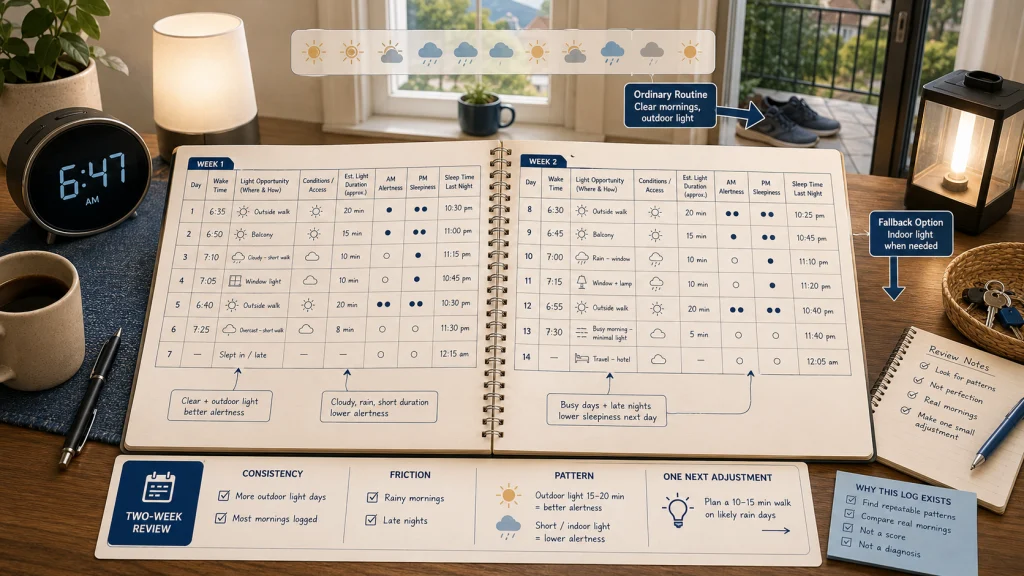
Use a Two-Week Wake-and-Light Log
The log is not a scorecard for good and bad mornings. It should reveal whether the chosen opportunity still fits when clouds, sleep loss, work, mobility, or access make the day less convenient.
| Day | Wake Time | Light Opportunity | Conditions | Estimated Duration | Morning Alertness | Evening Sleepiness | Sleep Timing |
|---|---|---|---|---|---|---|---|
| 1 to 3 | Record actual time | Walk, balcony, porch, window, courtyard, commute, or indoor fallback | Clear, cloudy, dark, shaded, wet, hot, cold, or restricted | Estimate without treating it as a clinical dose | Low, moderate, or high | When the first clear sleepiness appeared | Bedtime attempt, sleep onset estimate, and wake time |
| 4 to 7 | Keep wake anchor reasonably stable | Repeat the chosen opportunity | Record changes | Estimate | Record | Record | Note unusual evening light, caffeine, travel, or stress |
| 8 to 10 | Record | Use normal or constrained version | Record | Estimate | Record | Record | Compare the broader timing pattern instead of celebrating one unusually good night |
| 11 to 14 | Record | Repeat the most feasible version | Record | Estimate | Record | Record | Review consistency, friction, and next adjustment |
At the end, ask whether the light opportunity happened near the intended wake anchor, which conditions repeatedly blocked it, and whether morning alertness or sleep timing showed a useful pattern. Do not use the log to diagnose a circadian disorder or mood condition.
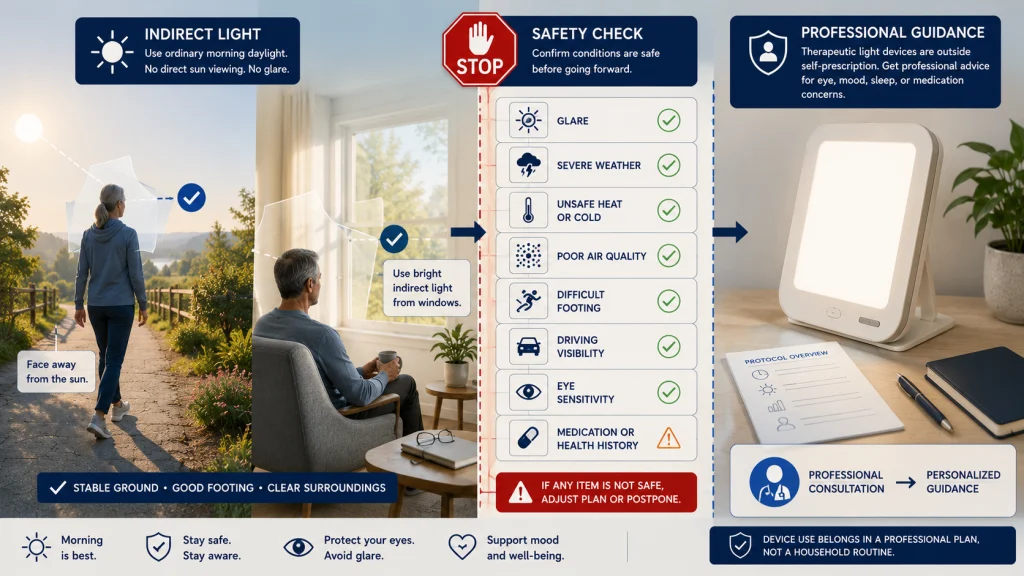
Protect the Eyes and Keep Therapeutic Devices Outside Self-Prescription
Light safety: Never look directly at the sun. Avoid glare that interferes with walking, driving, balance, or vision. Do not stay outdoors in unsafe weather, temperature, air quality, or surroundings merely to complete a light routine.
Ordinary daylight exposure and clinical bright-light therapy are not interchangeable. Therapeutic devices may involve specific intensity, distance, timing, duration, health screening, eye considerations, medication review, and monitoring.
Do not use a device to self-treat insomnia, a circadian-rhythm disorder, seasonal affective disorder, depression, or an eye condition. A sunrise alarm or bright lamp sold for home use does not establish that it is appropriate for a clinical purpose.
People with eye disease, significant light sensitivity, a history of certain mood episodes, or medications that affect light sensitivity should ask the appropriate qualified professional before using a therapeutic device.
Seek Guidance for Persistent Schedule, Mood, Eye, or Sleep Problems
A routine daylight opportunity may support ordinary timing and alertness, but it should not delay evaluation when the problem is persistent, severe, or outside lifestyle scope.
Seek qualified guidance when:
- The sleep schedule remains substantially delayed, irregular, or difficult to control.
- Insomnia or excessive sleepiness persists despite adequate opportunity for sleep.
- Mood symptoms are significant, worsening, seasonal, or affecting safety and daily function.
- Light exposure triggers eye pain, visual changes, severe headache, agitation, or another concerning reaction.
- A clinician has diagnosed a sleep, mood, neurological, or eye condition.
- You are considering a therapeutic light device for a disorder.
Urgent mood symptoms, suicidal thoughts, sudden visual loss, severe eye pain, confusion, or another acute medical concern requires immediate appropriate help.
Choose One Wake-Linked Light Opportunity You Can Repeat
Begin with the actual wake time, then choose the safest available outdoor or window-adjacent opportunity that fits the season, housing, mobility, commute, and weather.
Pair it with one existing morning action, keep the evening light pattern reasonably quiet, and use the two-week log to notice what survives an ordinary week. The routine should fit the life that is actually being lived, not an ideal morning designed around clear skies and unlimited time.
A practical routine can change with winter, clouds, work, or access while keeping the same purpose. What matters is a wake-linked opportunity that remains usable across changing conditions, not a universal prescription or a device that promises more than the routine can safely deliver.
FAQs
🌅 How does morning light support sleep timing?
Light helps signal the beginning of the active period to the body’s daily timing system. A consistent wake-linked opportunity may support alertness and a more regular light-dark pattern.
⏰ Should morning light happen at the same clock time every day?
Anchor it to the person’s wake time rather than one universal hour. Record schedule changes, shift work, travel, and seasonal darkness that alter the opportunity.
☀️ How many minutes of morning sunlight do I need?
There is no universal minute target in this article. Intensity, timing, weather, season, location, glass, shade, and individual factors change the exposure.
☁️ Does cloudy morning light still count?
Cloudy conditions change brightness but do not make the routine meaningless. Use the brightest safe available opportunity, record the conditions, and compare repeated patterns.
🪟 Is sitting near a window the same as going outside?
Not necessarily. Window direction, distance, glass, shade, buildings, weather, and season affect the exposure. A window can be a practical option or fallback without being treated as identical to outdoor daylight.
🌃 What if I wake before sunrise?
Use available indoor brightness as a wake cue, then add ordinary daylight when it becomes safely accessible. Record that the first part of the routine occurred in darkness.
💡 Is a sunrise alarm the same as light therapy?
No. A sunrise alarm is a wake feature. Clinical light therapy uses a defined device and protocol for a specific purpose and may require qualified guidance.
👁️ Is it safe to look toward the sun?
Never look directly at the sun. Avoid glare that affects vision or safety, and seek professional guidance for eye concerns or therapeutic-device questions.