Ergonomic Desk Setup: Adjust the Chair, Input Zone, Screen, and Work Surface in a Practical Order
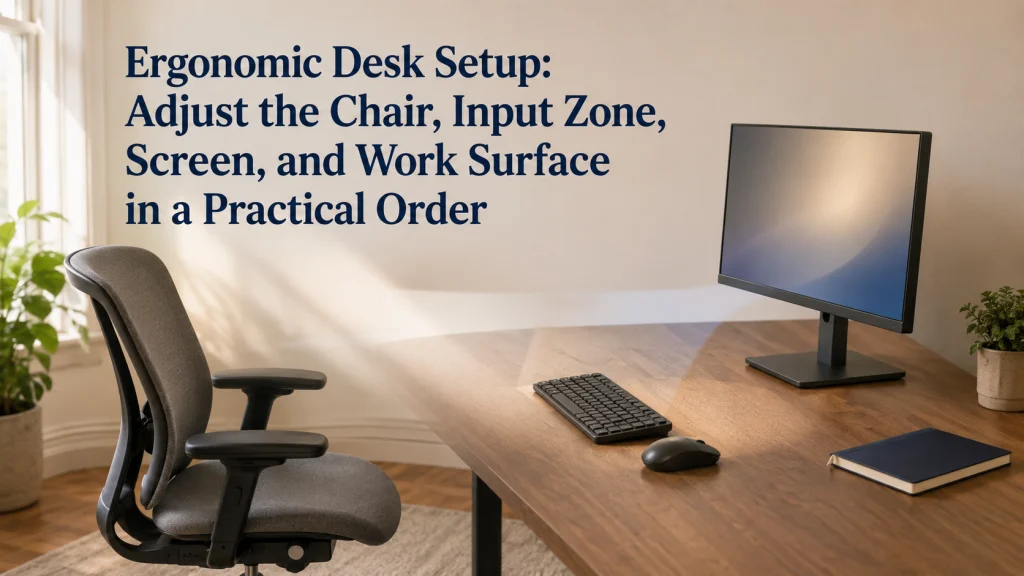
Ergonomic Desk Setup

An ergonomic desk setup is easier to keep when the adjustments happen in a dependable order. Start with the work that must happen, clear enough space to sit close, and establish stable chair and foot support before placing the keyboard, mouse, and screen. Then add documents, calls, and secondary devices according to how often they
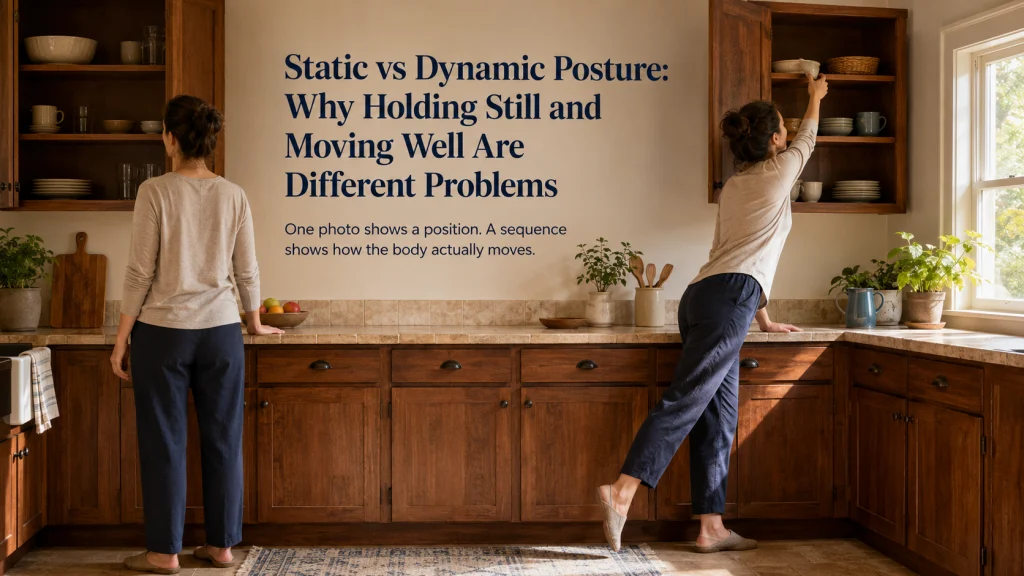

Static vs Dynamic Posture: Why Holding Still and Moving Well Are Different Problems

Static Vs Dynamic Posture

Static posture describes how the body is organized while a position is being held. Dynamic posture describes how support, balance, reach, timing, and force change while the body moves. Many household tasks are mixed because they combine stillness, transitions, and repeated movement. A chair or cushion may change contact during sitting, but it cannot automatically

Neutral Spine Position: Find a Comfortable Middle Without Flattening or Overarching Your Back

Neutral Spine Position

A neutral spine position is a comfortable reference that keeps the spine’s natural curves without pressing the back flat or forcing a larger arch. It is not one angle to copy or a pose to hold from morning to night. The useful position changes with the task, the support under the body, and the amount

What Is Good Posture: A Comfortable, Adaptable Position, Not a Military Pose

What Is Good Posture

Good posture is not a rigid shape that everyone should hold from morning to night. It is a position that fits the task, feels manageable, uses support where it helps, and leaves room to move. Alignment can be a useful starting point, but a photograph cannot tell you how hard someone is working to hold

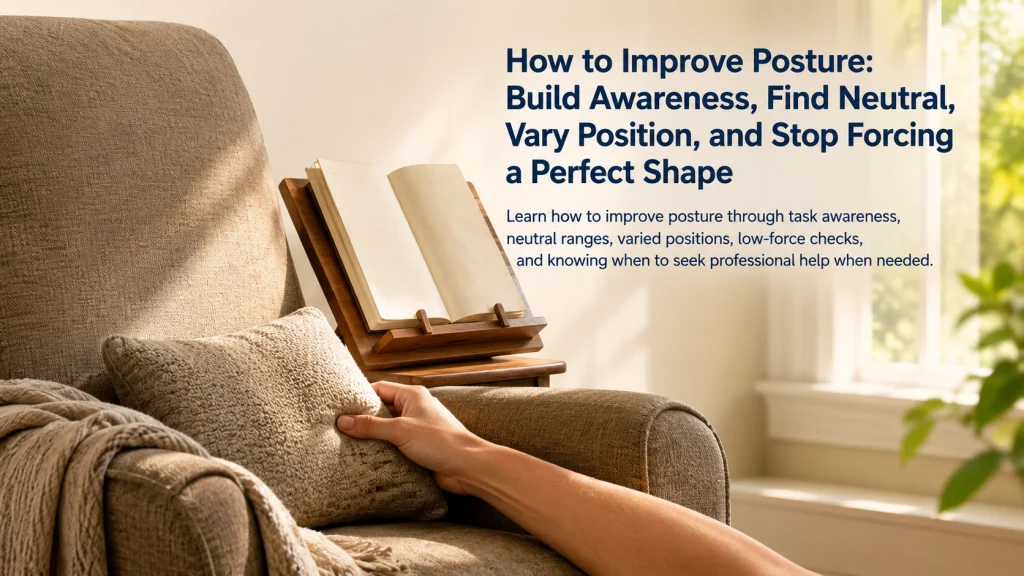
How to Improve Posture: Build Awareness, Find Neutral, Vary Position, and Stop Forcing a Perfect Shape

How To Improve Posture

Learning how to improve posture starts with awareness, support, effort, and position changes, not with forcing the body into one fixed shape. Notice what task you are doing, where the body is supported, how hard you are working to hold the position, and how long you stay there. Choose one observable variable, make a low-force