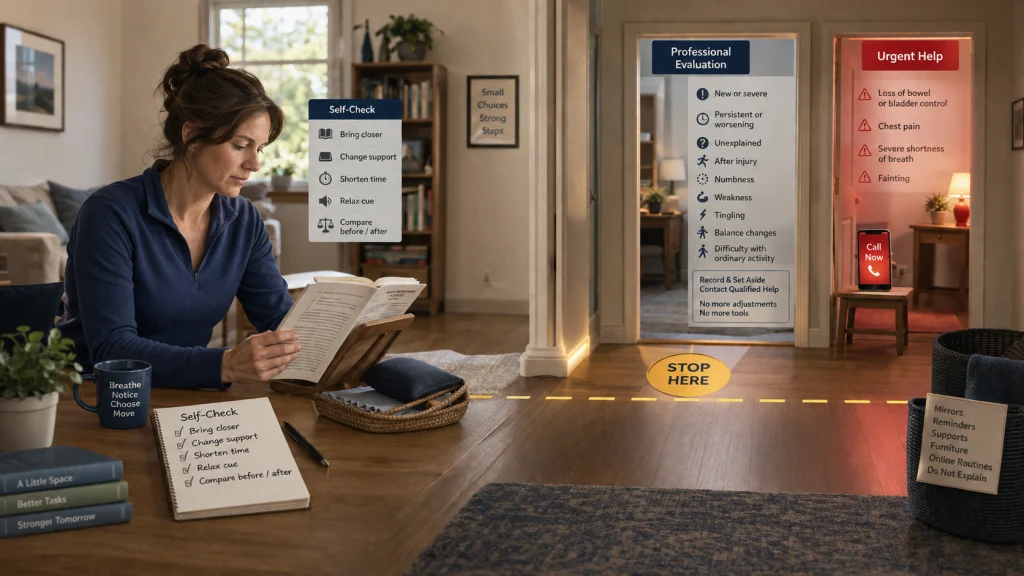
Learning how to improve posture starts with awareness, support, effort, and position changes, not with forcing the body into one fixed shape. Notice what task you are doing, where the body is supported, how hard you are working to hold the position, and how long you stay there. Choose one observable variable, make a low-force adjustment, and review whether the task becomes easier to continue. Stop self-guided troubleshooting when symptoms are new, severe, persistent, worsening, unexplained, or affecting normal function.
Three Familiar Cues, Three New Problems
One note says, “Pull your shoulders back.” The person obeys, but the upper body becomes tense and the arms no longer move freely. A second note says, “Sit completely straight.” That shape lasts for a few minutes before attention returns to the book, screen, or conversation. A third says, “Brace your core.” The person holds more effort than the task requires and soon feels tired of monitoring every breath and movement.
None of these moments proves that a cue is always wrong. They show why a cue without context can create another problem or disappear as soon as concentration moves elsewhere. The useful replacement is not a longer list of body-part instructions. It is four questions: What task are you doing? What support is available? How much effort are you using? How long have you been there?
| Common correction note | What can happen next | Better first question |
|---|---|---|
| Shoulders back | The arms or upper body may feel held instead of available for the task | Can the arms reach and move without extra effort? |
| Sit completely straight | The position may require constant attention and disappear within minutes | What support would let the task continue with less effort? |
| Brace the core | The person may add tension that the current activity does not need | How much effort is actually required right now? |
Key decision: Replace broad correction commands with a specific observation about task, support, effort, or time. A small change is easier to evaluate when you know what it is meant to improve.
The broader posture and ergonomics decision guide can help when the difficulty may belong to a workstation, prolonged sitting or standing, lifting, equipment, or a particular room and activity. This page focuses on foundational body-positioning questions.
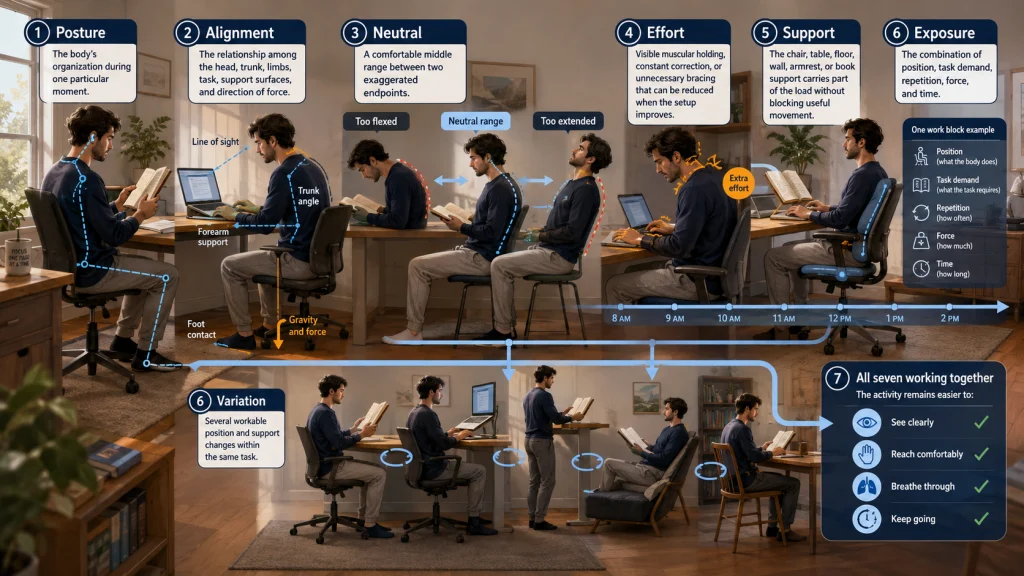
Seven Terms That Make Posture Advice More Useful
Posture advice becomes confusing when several different ideas are treated as though they mean the same thing. These terms separate what the body looks like from what the task demands and how the position feels over time.
| Term | Practical meaning |
|---|---|
| Posture | The position and organization of the body during a particular moment or activity |
| Alignment | How body regions relate to one another and to the task, support, and direction of force |
| Neutral | A workable middle range that does not require an exaggerated end position |
| Effort | The muscular attention or tension used to maintain or change a position |
| Support | A surface or object that carries part of the body’s load without blocking the task |
| Exposure | The combination of position, task demand, repetition, force, and time |
| Variation | Changing position, support, movement, or task demands instead of remaining fixed |
These definitions prevent one visible shape from carrying too much meaning. A position can look organized yet require more effort than necessary. Another may look relaxed but become tiring when held through a long task. The question is not only where each body part sits. It is whether the whole arrangement fits what you are doing now.
Ask What Good Posture Needs to Do
A useful position supports the activity in front of you. Reading a page, washing dishes, waiting in line, and talking with someone across a table do not ask the body to solve the same problem. A position that works for one task may interfere with another.
Instead of trying to look correct from the outside, notice whether you can see, reach, breathe normally, and move without holding unnecessary tension. Then notice whether the support under you matches the task. A deep sofa may feel comfortable for conversation but make close reading awkward because the book has nowhere to rest. The first adjustment may be the book, the support, or the duration, not a command aimed at the shoulders.
Use the guide to understand what good posture means when you need a practical definition that changes with the task rather than a universal checklist.
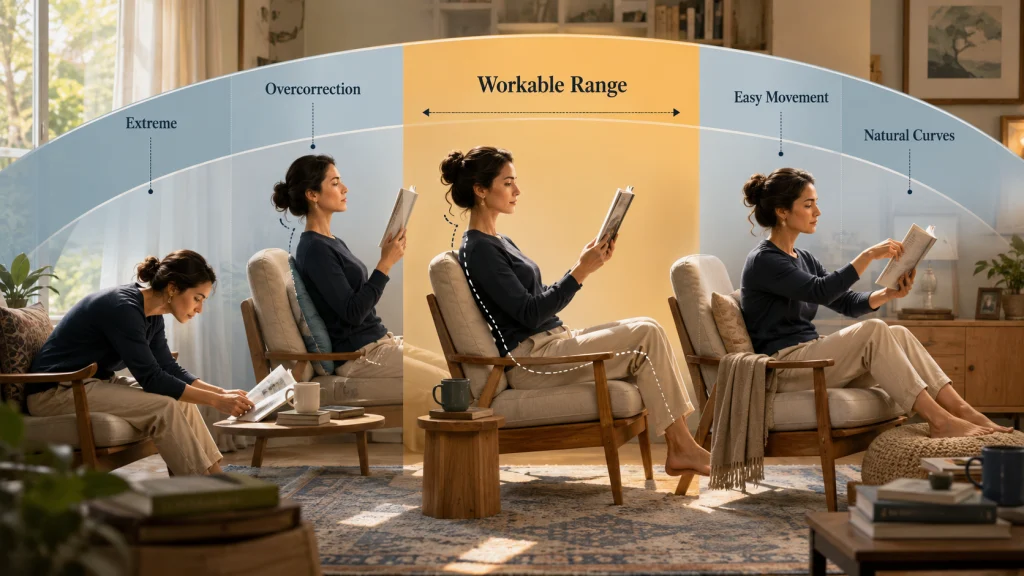
Find Neutral Without Flattening Every Natural Curve
Neutral is a range, not a rigid pose. It usually feels more like reducing an extreme than creating a dramatic new shape. The body can keep its natural curves while the head, trunk, pelvis, and limbs remain available for the activity.
Overcorrection often begins with a reasonable intention. Someone notices a rounded position, pulls far in the opposite direction, and then tries to hold that endpoint. The new position may look more upright, but the effort needed to maintain it becomes the main experience.
A gentler experiment is to move slowly between two obvious extremes, then settle somewhere in the middle where breathing and movement remain easy. Do not force a particular shoulder, rib, pelvis, chin, or abdominal position. Use the separate guide to explore a neutral spine position when natural curves and overcorrection are the main source of confusion.
Separate Position Quality From Time Spent Still
A calm, well-supported position can still become tiring when it is held for a long time. That does not automatically mean the starting position was poor. The body may simply need a change in load, contact, direction, or movement.
Static posture describes a position held with relatively little movement. Dynamic posture describes how the body organizes itself while moving. Everyday life moves between both. Standing to prepare food includes still moments, reaching, turning, stepping, and carrying. Reading includes sitting, shifting, lifting the book, and looking away.
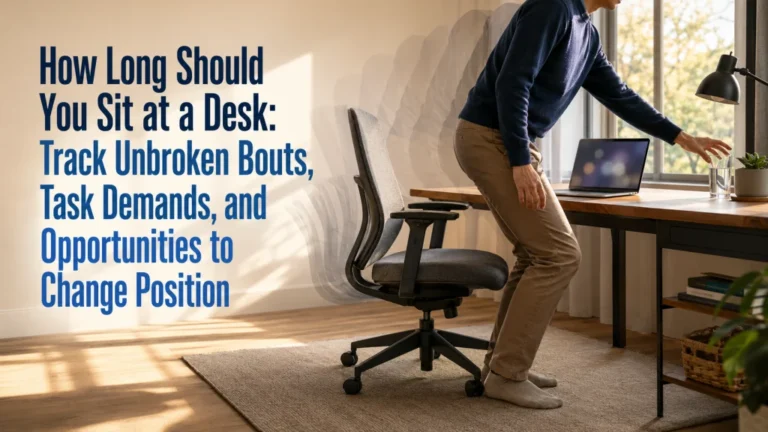
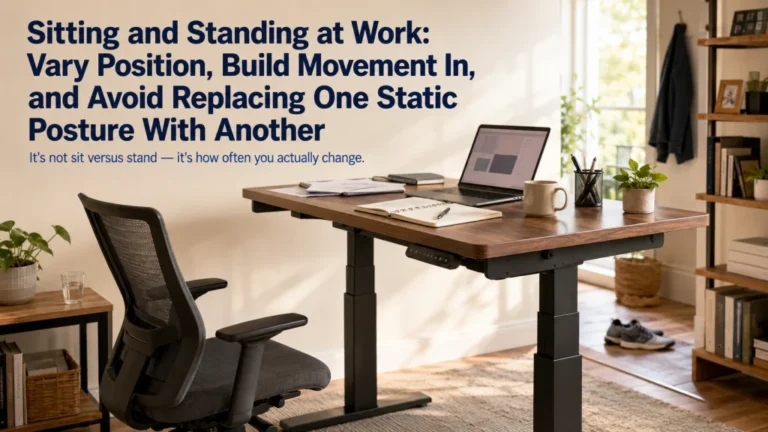
Use static and dynamic posture to understand why stillness and movement should be observed separately. When the main problem is how long sitting or standing continues without change, move to the guide on sitting, standing, and position changes.
Use Mirrors, Walls, and Photos as Clues, Not Verdicts
A mirror can show that one shoulder is higher in a particular moment. A photo can reveal that the screen is pulling the head forward. A wall can make body contact easier to notice. None of these tools can explain the full reason by appearance alone.
The value of a check is comparison. Look once during the real task, change one variable, and look again. Raise the page, bring the work closer, change the support, or reduce the time in the position. Then ask whether effort, reach, visibility, or comfort changed. A posed photo taken while concentrating on appearance may not represent what happens ten minutes later.
Use the guide on how to check your posture when you want a non-diagnostic observation process for mirrors, wall checks, and photos.
Notice What New Discomfort Is Telling You
Trying to sit or stand differently can feel unfamiliar. Unfamiliarity alone does not tell you whether the new position is useful. The more important detail is what changed. Did the cue create muscle effort, pressure from a support, restricted movement, a harder reach, or a position that requires constant attention?
Release the correction and return to an easy baseline. Then test a smaller version or change the environment instead. A book can be supported. A task can be brought closer. A chair contact can be adjusted. A short position change may be more useful than trying harder to hold the same shape.
Use why a posture change can feel uncomfortable when a correction produces new tension or makes the task harder. This is not a reason to push through worsening or unexplained symptoms.
Treat Recurring Slouching as a Pattern With a Trigger
Many people can sit taller when reminded. The position fades because the reminder does not change what happens next. Attention returns to the task, the screen remains low, the seat remains deep, fatigue accumulates, or the body searches for support that is not available.
Instead of counting how often you forget, record what is happening just before the position changes. Are you leaning toward small text? Sliding forward to reach the floor? Curling around a phone? Settling after twenty quiet minutes? Those triggers point toward different experiments.
Use a practical slouching guide when reminders keep failing and you need to examine task setup, support, fatigue, and habit cues without treating the pattern as laziness or lack of discipline.
Challenge Claims That Promise One Shape or One Product
Posture marketing often compresses a complicated problem into a visible before-and-after image. The message may imply that one reminder, support, or body position can create a lasting habit by itself. That skips the conditions that determine whether the change can survive real life.
Editorial observation: A support can improve one contact point while also changing seat depth, heat, reach, or freedom to shift. A feature should be judged together with the chair, clothing, task, body size, available space, and willingness to adjust or maintain it. This is product-fit analysis, not a medical assessment.
A claim also deserves caution when it treats one visible posture as the cause of every symptom or promises a fixed timeline for change. Use the guide to review common posture myths when a rule, image, or product claim sounds too universal for the situation.
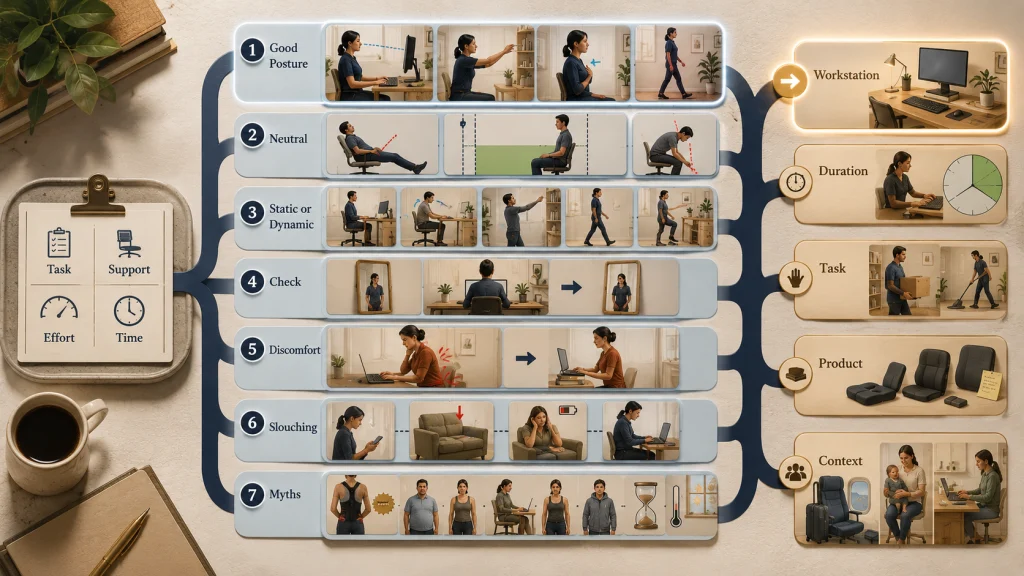
Know When the First Problem Belongs Somewhere Else
General posture awareness is only one layer of ergonomics. If the same issue appears because the screen is too low, the task lasts too long, an object is heavy or awkward, or a support changes the fit of the chair, the next decision belongs to a different type of guidance.
| What you observe first | Where the problem belongs | What not to do here |
|---|---|---|
| Screen, keyboard, pointer, desk, or chair height drives the position | Home-workspace fit | Do not solve equipment placement with body cues alone |
| The position becomes difficult mainly after a long period | Duration and position changes | Do not assume the original shape was the only problem |
| Force, carrying, reaching, or repeated hand work drives the difficulty | Task mechanics | Do not replace task analysis with a standing or sitting rule |
| A cushion, reminder, brace, or support is being considered first | Product fit and use case | Do not assume the product creates the habit by itself |
| The room, travel, caregiving, body size, or shared space limits the options | Everyday context | Do not copy a setup that cannot fit the household |
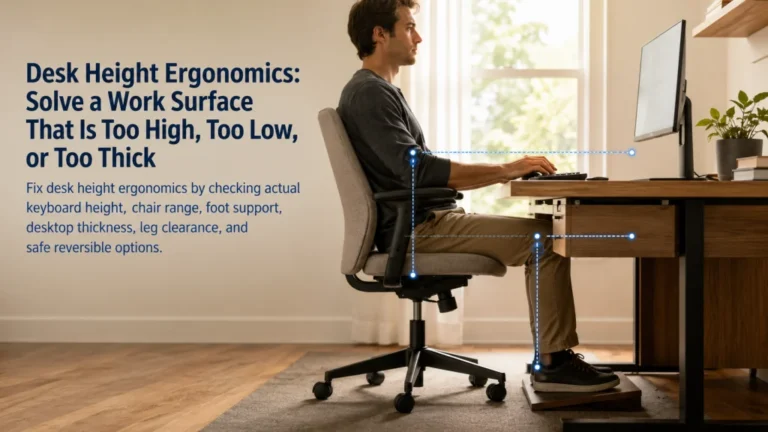
For screen, keyboard, pointer, and desk questions, use the guide to home office ergonomics. For other task, equipment, or lifestyle questions, return to the category decision guide and choose the layer that matches the real constraint.
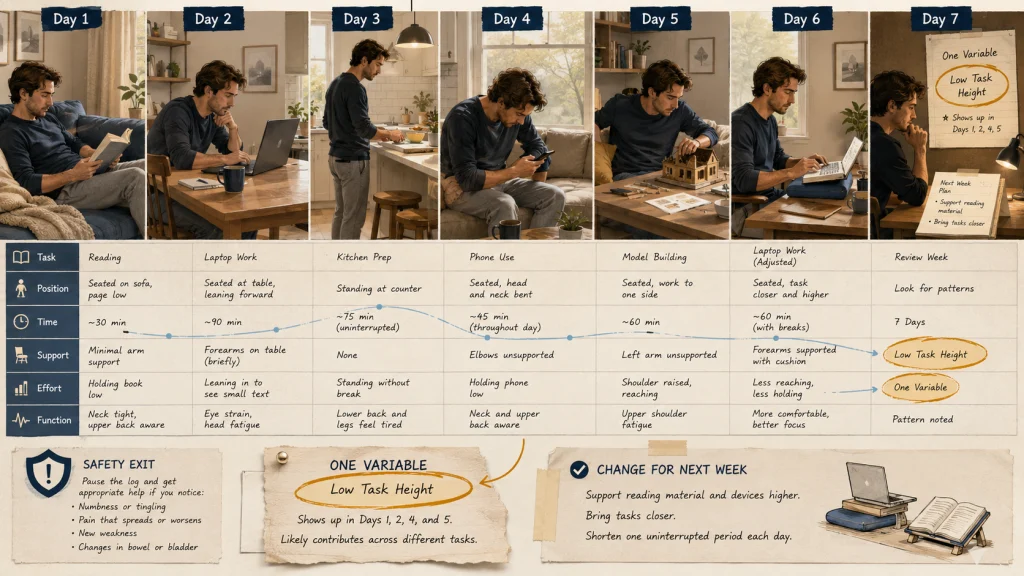
Use a Seven-Day Log Before Adding More Rules
A week of observation can reveal more than repeated attempts to remember a cue. Keep the log brief enough to use during ordinary life. Record one or two moments each day, especially when a position becomes effortful or the same correction returns.
| Day and task | Position | Duration | Support | Effort | Symptoms or function |
|---|---|---|---|---|---|
| What were you doing? | Sitting, standing, leaning, reaching, or moving | How long before you noticed a change? | What carried your weight or held the task? | Where were you working harder than expected? | What changed, and did it affect the task? |
| Repeat for seven days | Use plain descriptions, not judgments | Estimate rather than timing every minute | Include furniture, floor, wall, or hand support | Note holding, bracing, reaching, or constant correction | Stop the experiment when warning signs appear |
Practical tip: At the end of the week, circle the variable that appears most often. Choose one reversible change for the next week, such as moving the task closer, adding appropriate support, shortening one uninterrupted period, or reducing the force used to hold a cue.
Stop Self-Guided Posture Work When Symptoms or Function Change
Posture observation is not a way to diagnose spinal, joint, nerve, balance, connective-tissue, or musculoskeletal conditions. It should not replace medical assessment, rehabilitation, or individualized exercise guidance.
Safety warning: Seek appropriate professional evaluation for new, severe, persistent, worsening, or unexplained pain; numbness; weakness; tingling; balance changes; symptoms after a fall or injury; loss of bowel or bladder control; chest pain; severe shortness of breath; or fainting. Stop lifestyle troubleshooting when symptoms or functional limits suggest that general positioning advice is not enough.
Do not use this article to choose a brace or medical device, prescribe a corrective exercise program, or promise that a posture change will prevent or eliminate pain or injury. A qualified professional can assess symptoms and individual needs that cannot be understood from a home photo or position log.
Choose One Question and One Review Point
Begin with the question that best matches what you keep noticing: the meaning of good posture, natural curves, stillness versus movement, self-checking, new tension, recurring slouching, or an exaggerated claim. Record one variable, make one low-force and reversible change, and choose a review point after several ordinary uses of the task.
The useful result is not a frozen shape that demands constant attention. It is a position, support, or pattern of movement that fits the task with less unnecessary effort and still allows change. Stop the experiment and seek appropriate help when symptoms or functional changes move the problem outside general lifestyle guidance.
Explore the Posture Question You Need Next
Use the question that is blocking your next observation. Bring the real task, the support you are using, the effort you notice, and how long the position lasts.
| Your current question | Focused guide | What to observe first |
|---|---|---|
| What does good posture mean for a real task? | What good posture means | Vision, reach, support, breathing, and movement |
| Am I flattening or exaggerating a natural curve? | Finding a neutral range | The two extremes and the effort used between them |
| Is the issue the position or the time spent still? | Static and dynamic posture | When movement stops and when fatigue appears |
| What can a mirror, wall, or photo actually show? | Checking posture at home | The real task before and after one change |
| Why does a correction create new tension? | Understanding correction discomfort | Pressure, reach, restriction, and added effort |
| Why do reminders disappear within minutes? | Understanding slouching triggers | Task height, support, fatigue, and attention |
| Is a rule or product claim too universal? | Reviewing posture myths | The conditions the claim leaves out |
FAQs
🧭 What should I change first to improve posture?
Choose one observable variable connected to a real task. You might change the support, bring the task closer, reduce the effort used to hold a cue, or shorten one uninterrupted period.
🌿 Should good posture feel relaxed?
A workable position should not require more effort than the task needs, but it may still involve active support and movement. Notice whether breathing, reaching, and changing position remain available.
🪑 Is sitting straight all day the goal?
No single sitting shape needs to be held all day. Support, task fit, and position changes matter, even when the starting position feels neutral and comfortable.
📷 Can a photo tell me whether my posture is bad?
A photo can show one moment and help compare a task before and after a change. It cannot diagnose a condition or explain symptoms from appearance alone.
🧩 Why do posture reminders stop working?
A reminder changes attention for a moment but may not change screen height, reach, support, fatigue, or task duration. Look for the condition that repeatedly pulls the body back into the old pattern.
🔄 Is moving around more important than holding one position?
Movement and variation are important parts of the picture, but the task and individual situation still matter. A supported position can work well and still benefit from regular changes.
🛍️ Do I need a posture product to build a better habit?
No. First identify the task, support, effort, duration, and reason the current pattern returns. A product may change one contact point, but it does not automatically create a lasting habit or solve an unrelated setup problem.
🚩 When should I stop checking posture on my own?
Stop when symptoms are new, severe, worsening, unexplained, persistent, or affecting normal function, and seek appropriate evaluation. General posture observation is not a substitute for assessment after an injury or when neurological, balance, breathing, chest, or other serious warning signs appear.