Progressive Muscle Relaxation: Release Tension Without Clenching as Hard as You Can
Progressive Muscle Relaxation

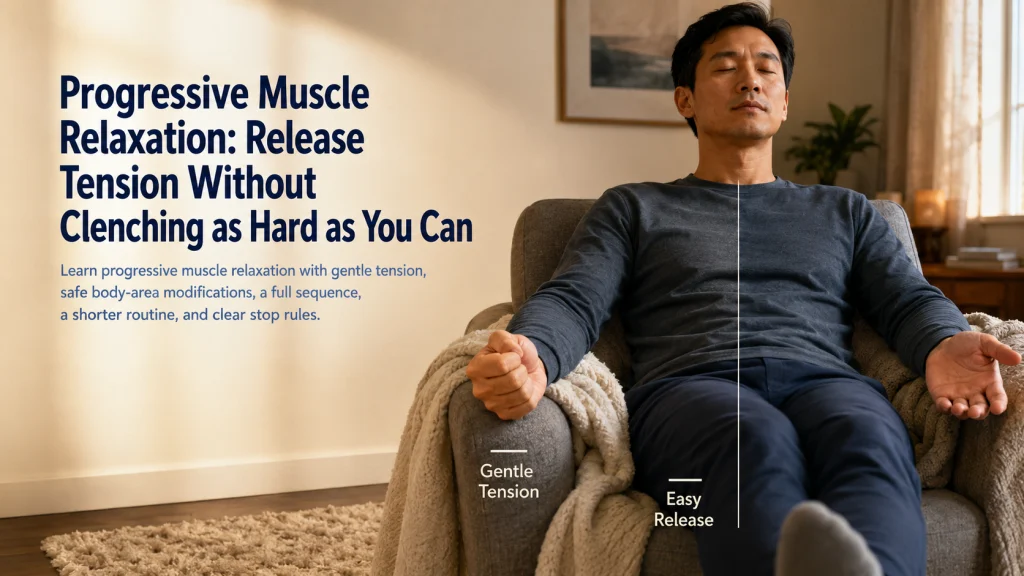
Progressive muscle relaxation uses a deliberate tense-and-release sequence to help you notice the difference between effort and letting go. The tension should be gentle enough to create contrast, not a maximum clench. Skip or modify any area that is painful, injured, cramping, recently operated, numb, weak, or medically restricted. You can use a full body
4-7-8 Breathing: Keep the Ratio Flexible When the Hold Feels Too Long

4 7 8 Breathing

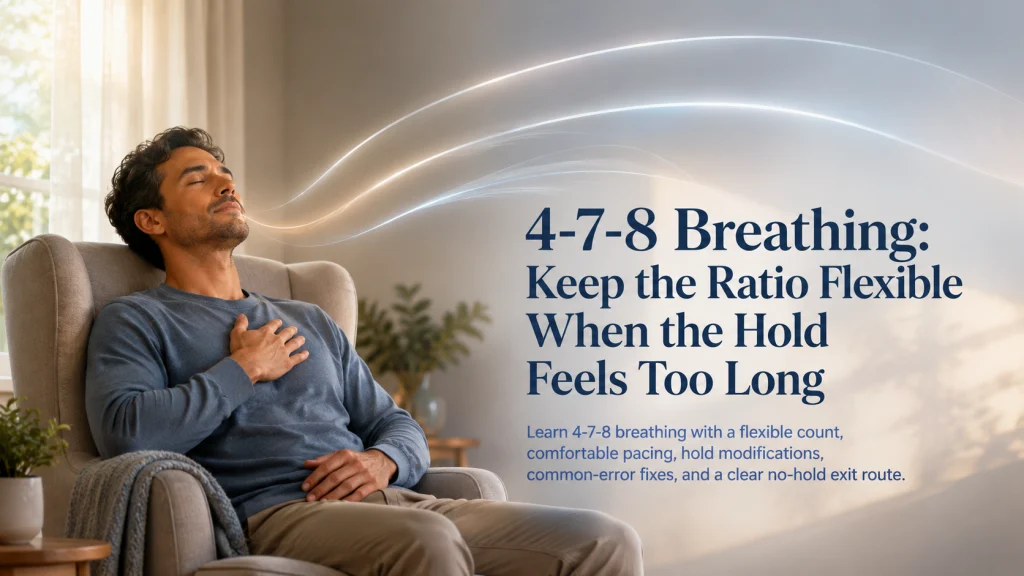
4-7-8 breathing uses an inhale, a longer hold, and an even longer exhale, but the counts do not have to equal slow clock seconds. Start at a pace that avoids air hunger, dizziness, throat tension, and forced emptying. A hold that still feels strained after the count is shortened is a reason to move to

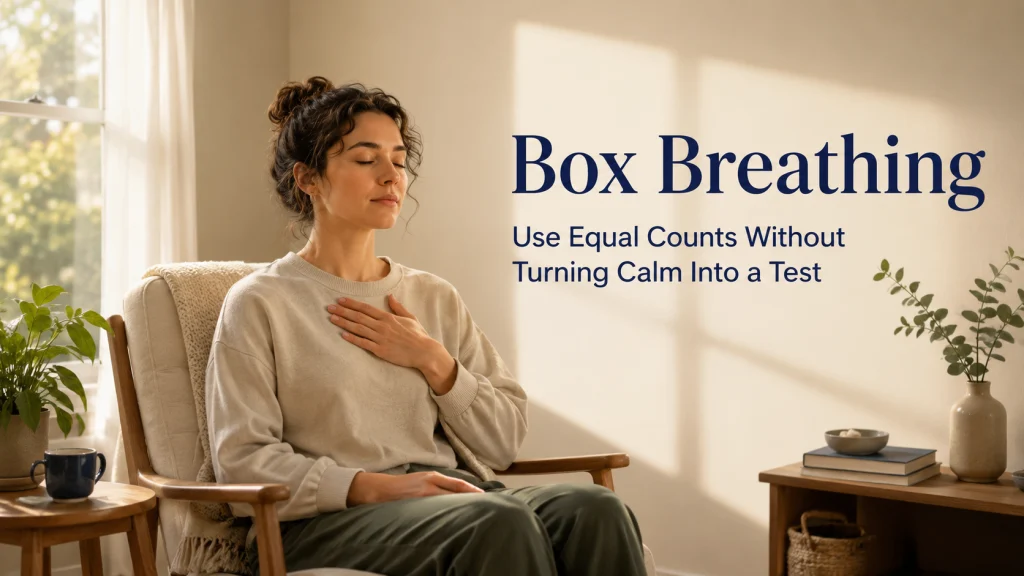
Box Breathing: Use Equal Counts Without Turning Calm Into a Test

Box Breathing

Box breathing uses four equal phases: inhale, hold, exhale, and pause after the exhale. The equal shape is the method, but the count does not have to be four and a hold should not become a test of endurance. Start with a short, comfortable rhythm, keep each breath normal-sized, and shorten or remove a hold

Diaphragmatic Breathing: Learn a Comfortable Pattern Before Adding Counts

Diaphragmatic Breathing

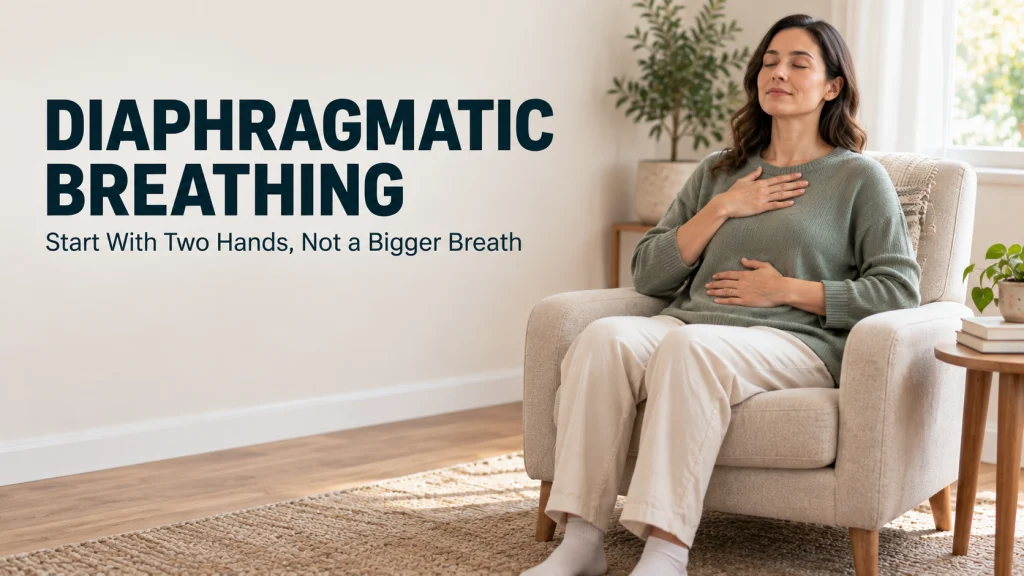
Diaphragmatic breathing is a low-effort way to practice a quieter breathing pattern before adding fixed counts or breath holds. The goal is not to take the biggest breath possible, but to reduce unnecessary shoulder and upper-chest effort while allowing gentle movement around the lower ribs and abdomen. Start in a supported position, stop if the

Breathing Exercises for Stress: Choose a Rhythm Your Body Can Follow

Breathing Exercises For Stress

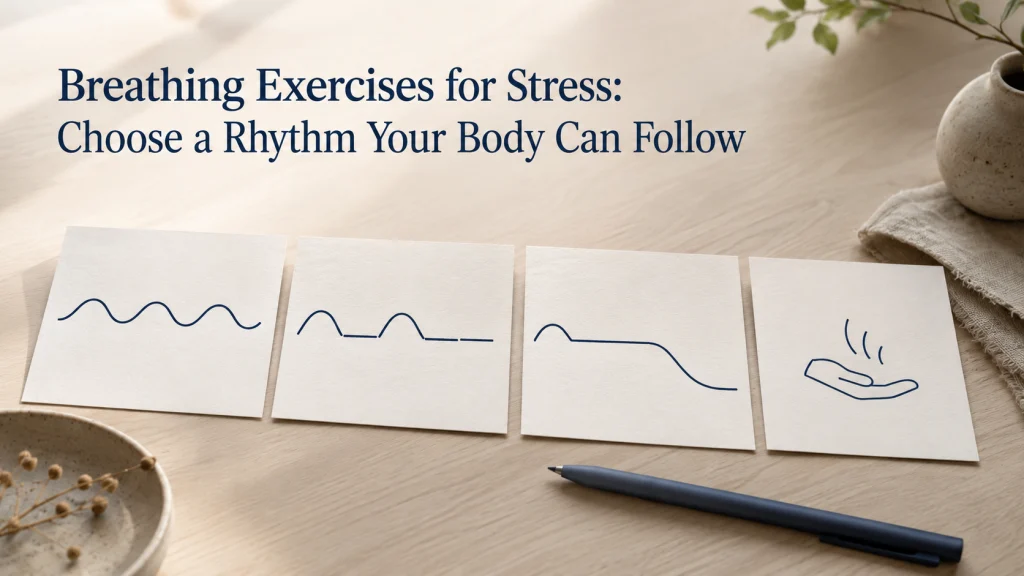
Breathing exercises for stress are easier to use when the rhythm matches your tolerance, setting, and main physical signal. A slow pattern without breath holds may suit someone who dislikes counting, while a counted sequence or muscle-release practice may fit a different situation. Stop or simplify the practice if it causes dizziness, air hunger, tingling,