Mindfulness vs Meditation: Separate the Skill From the Practice Session
Mindfulness Vs Meditation

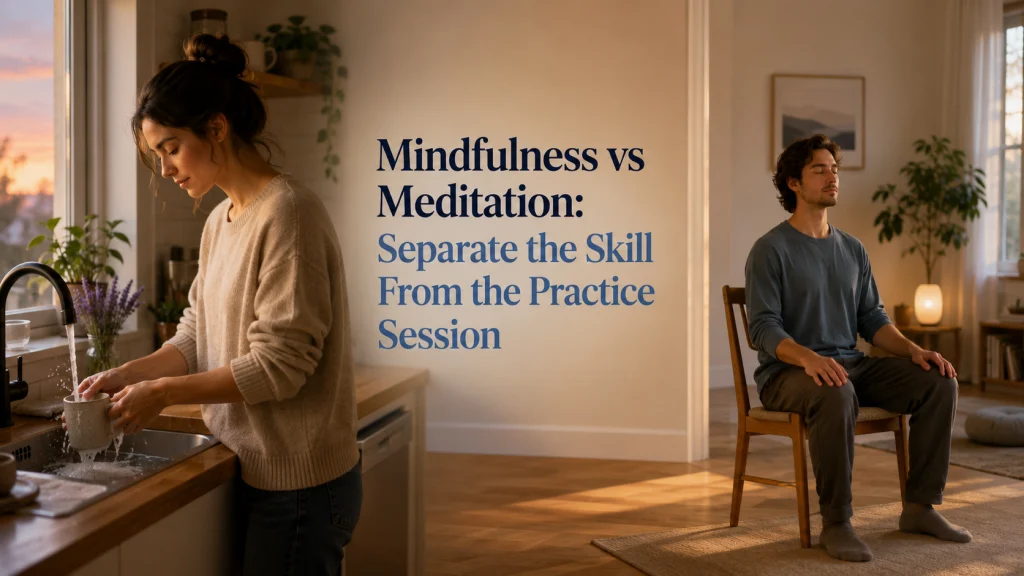
Mindfulness and meditation overlap, but they are not identical. Mindfulness is a quality of attention that can be used during ordinary activity, while meditation is a family of structured practices that may or may not use mindfulness as the main method. Choose a formal session when you want dedicated practice time, and choose an informal
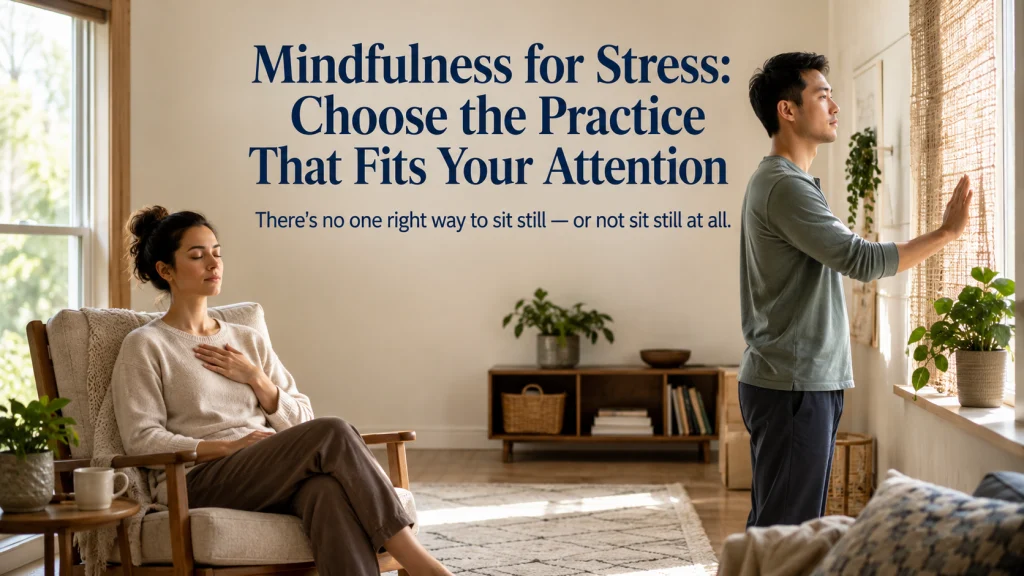
Mindfulness for Stress: Choose the Practice That Fits Your Attention

Mindfulness For Stress

Mindfulness for stress is not one required posture, one app, or one attempt to empty the mind. The shared skill is choosing where attention goes and noticing when it wanders, then selecting a practice that fits your tolerance for stillness, internal sensations, movement, imagination, time, and privacy. Some people do better with inward attention, while

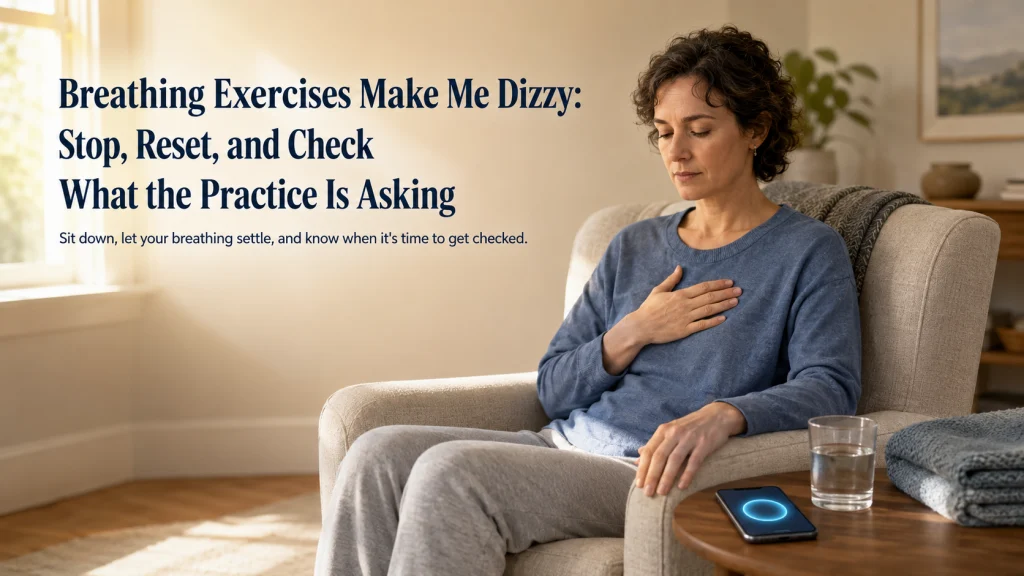
Breathing Exercises Make Me Dizzy: Stop, Reset, and Check What the Practice Is Asking

Breathing Exercises Make Me Dizzy

If a breathing exercise makes you dizzy, light-headed, tingly, or air-hungry, stop the exercise instead of trying to finish the count. Sit or lie down safely, return to ordinary uncounted breathing, and check whether urgent symptoms are present. The episode may reflect an overly deep, fast, held, or forced breathing pattern, but the pattern alone

Box Breathing: Use Equal Counts Without Turning Calm Into a Test

Box Breathing

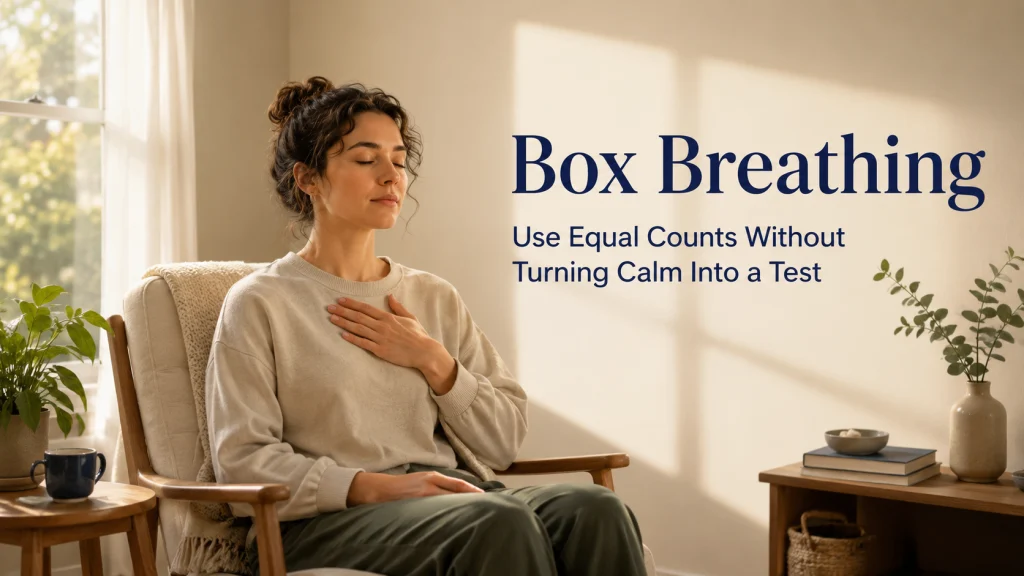
Box breathing uses four equal phases: inhale, hold, exhale, and pause after the exhale. The equal shape is the method, but the count does not have to be four and a hold should not become a test of endurance. Start with a short, comfortable rhythm, keep each breath normal-sized, and shorten or remove a hold

Diaphragmatic Breathing: Learn a Comfortable Pattern Before Adding Counts

Diaphragmatic Breathing

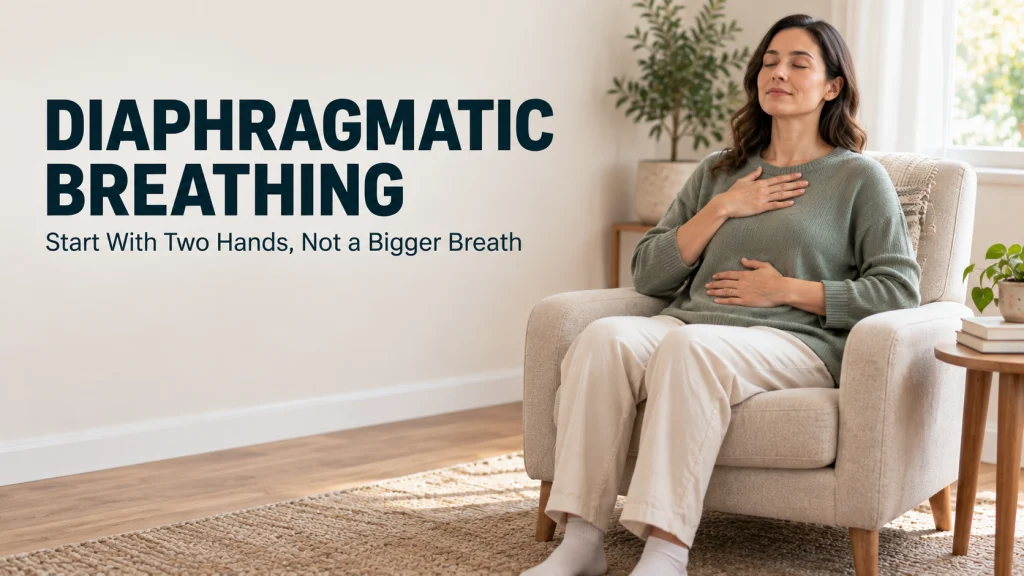
Diaphragmatic breathing is a low-effort way to practice a quieter breathing pattern before adding fixed counts or breath holds. The goal is not to take the biggest breath possible, but to reduce unnecessary shoulder and upper-chest effort while allowing gentle movement around the lower ribs and abdomen. Start in a supported position, stop if the

Breathing Exercises for Stress: Choose a Rhythm Your Body Can Follow

Breathing Exercises For Stress

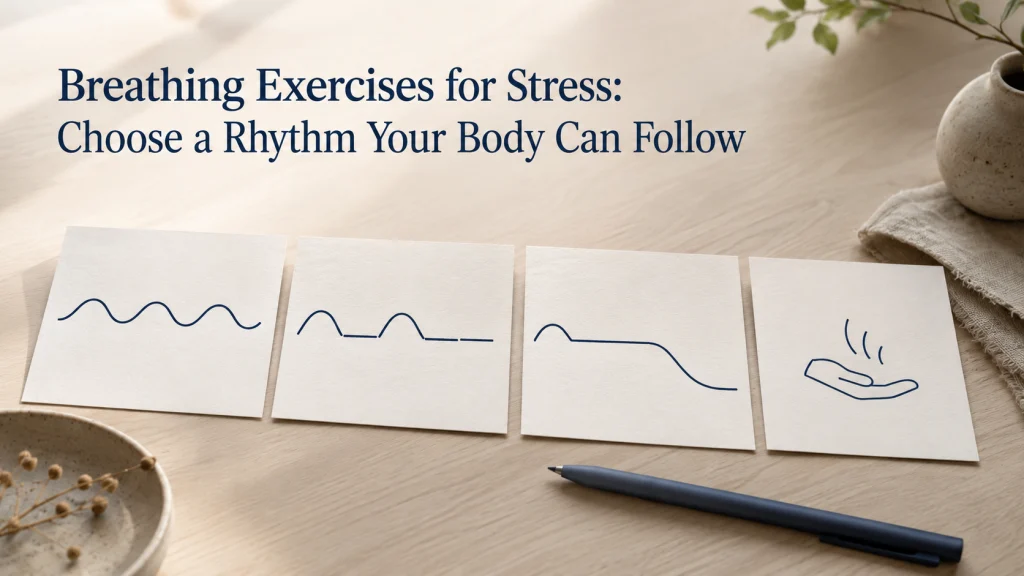
Breathing exercises for stress are easier to use when the rhythm matches your tolerance, setting, and main physical signal. A slow pattern without breath holds may suit someone who dislikes counting, while a counted sequence or muscle-release practice may fit a different situation. Stop or simplify the practice if it causes dizziness, air hunger, tingling,

How to Stop Feeling Overwhelmed: Reduce the Decision Load Before Solving the Whole Problem

How To Stop Feeling Overwhelmed

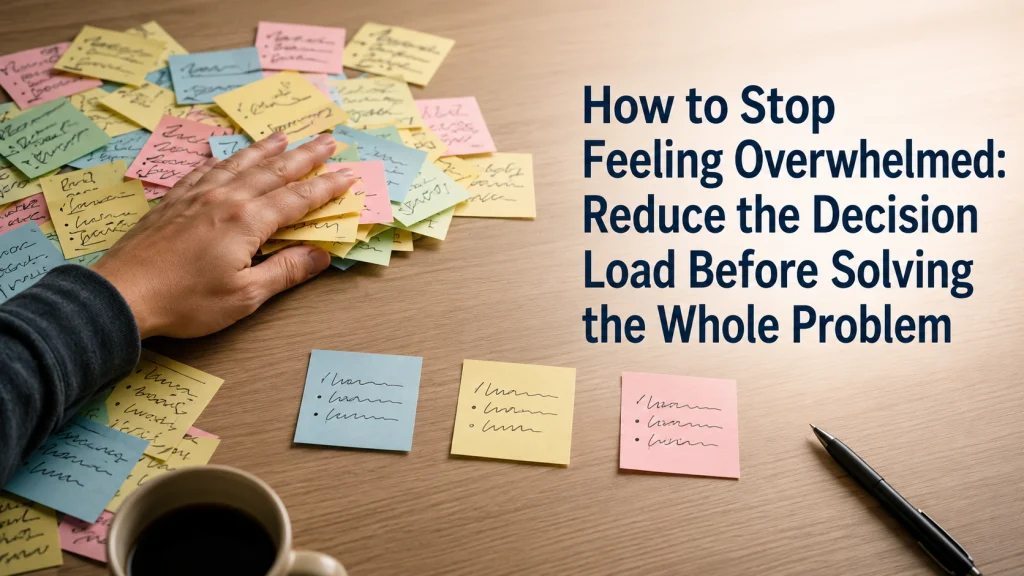
When everything feels urgent, the first job is not solving the whole situation. It is reducing the number of decisions competing for the next ten minutes. Protect safety and essential responsibilities, stop new inputs, write every open loop in one rough list, sort only into now, today, and later, then choose one physical next action.

Unhealthy Coping Mechanisms: Replace the Function, Not Just the Habit

Unhealthy Coping Mechanisms

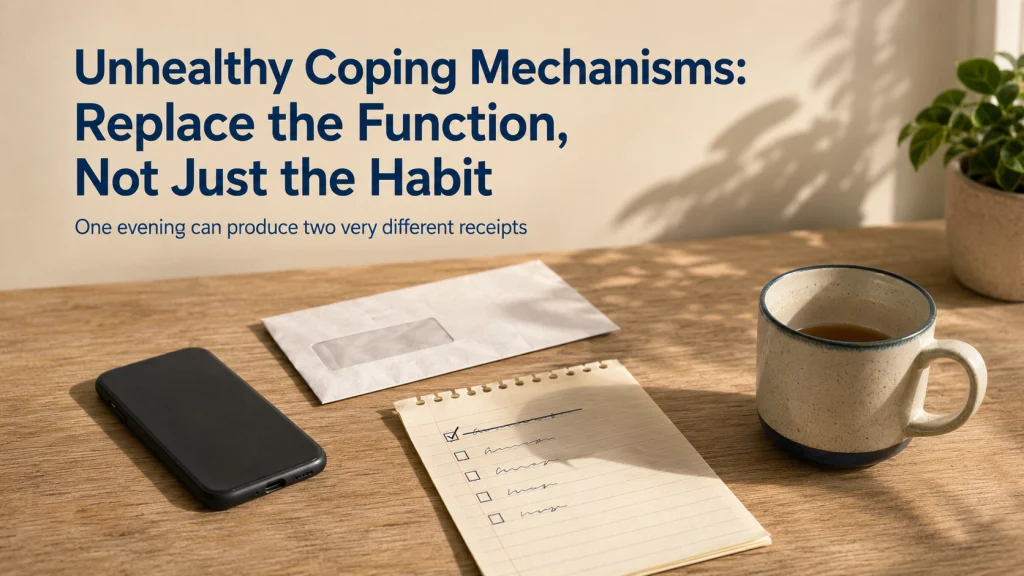
An unhealthy coping mechanism is not defined by one imperfect evening or by whether a behavior looks respectable from the outside. The useful questions are what triggered it, what job it performed, how quickly it brought relief, and what cost or risk appeared later. Lower-risk patterns may improve when you replace the function, change the

Problem-Focused Coping vs Emotion-Focused Coping: Choose by Control, Timing, and Readiness

Problem Focused Coping Vs Emotion Focused Coping

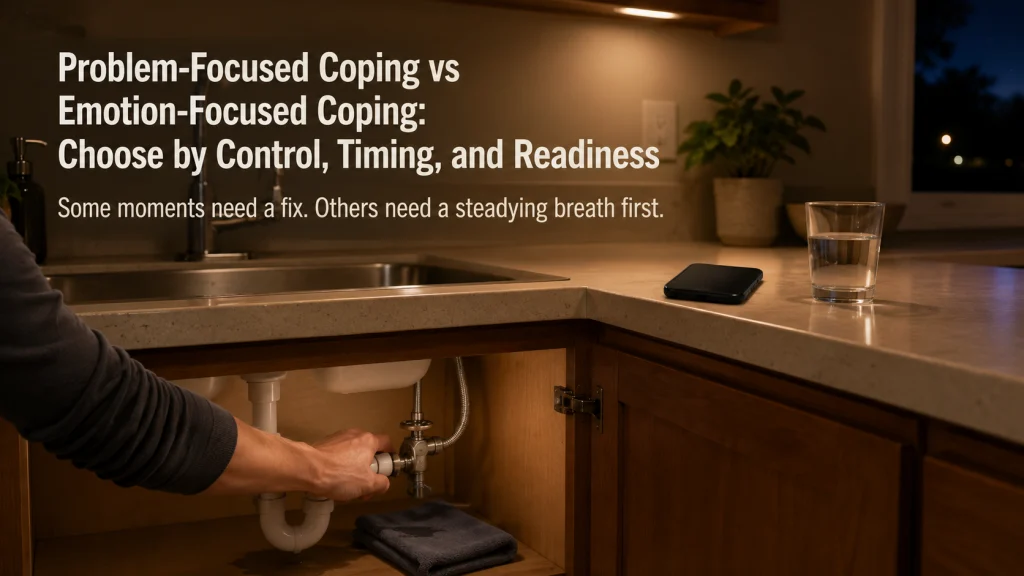
Problem-focused coping changes the part of a stressful situation that can be changed, while emotion-focused coping helps you handle the reaction happening inside you. The better choice depends on three questions: what is controllable, what must happen now, and whether you are ready to think and act. Many situations need both approaches in sequence rather

Coping Skills for Stress: Choose the Response That Fits the Stressor

Coping Skills For Stress

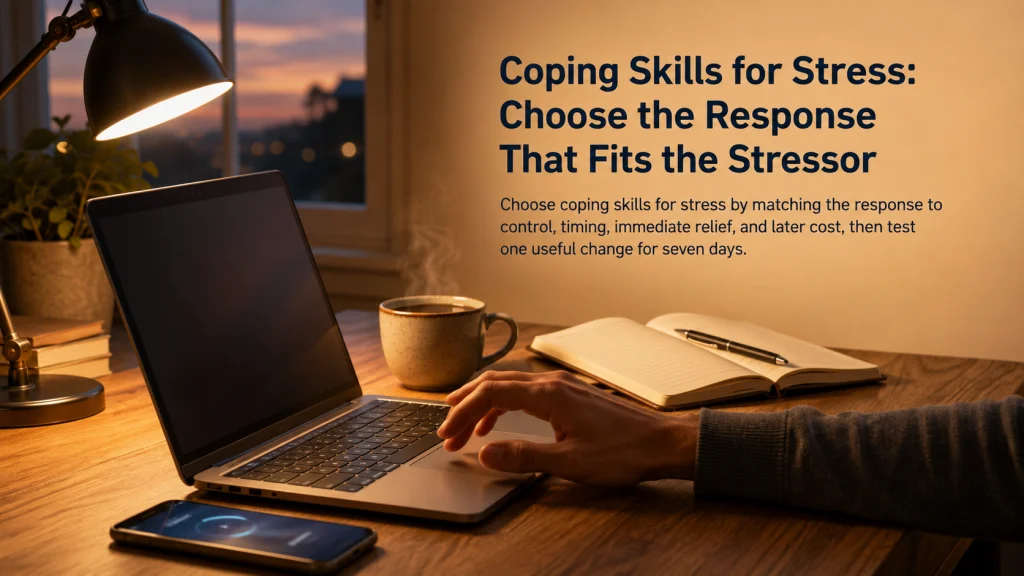
Coping skills for stress are useful only when they fit the stressor, the amount of control available, and the delayed consequence of the response. Begin by naming what is happening, noticing your signals, and deciding whether the next step should change the source, steady the response, create a short pause, or prepare for a recurring