Diaphragmatic breathing is a low-effort way to practice a quieter breathing pattern before adding fixed counts or breath holds. The goal is not to take the biggest breath possible, but to reduce unnecessary shoulder and upper-chest effort while allowing gentle movement around the lower ribs and abdomen. Start in a supported position, stop if the practice creates discomfort, and treat unexplained breathing symptoms as a reason for medical guidance rather than a relaxation challenge.
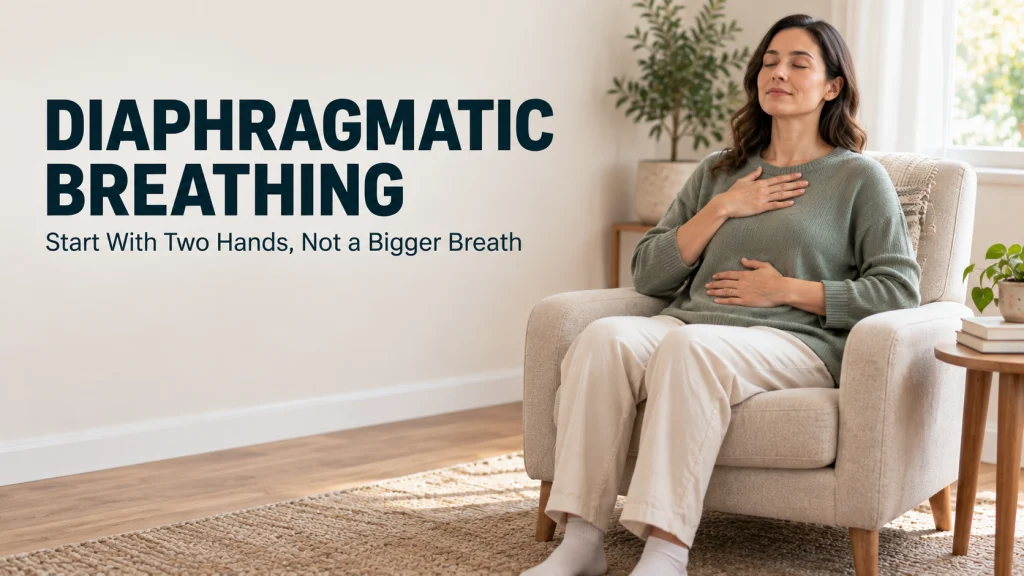
Start With Two Hands, Not a Bigger Breath
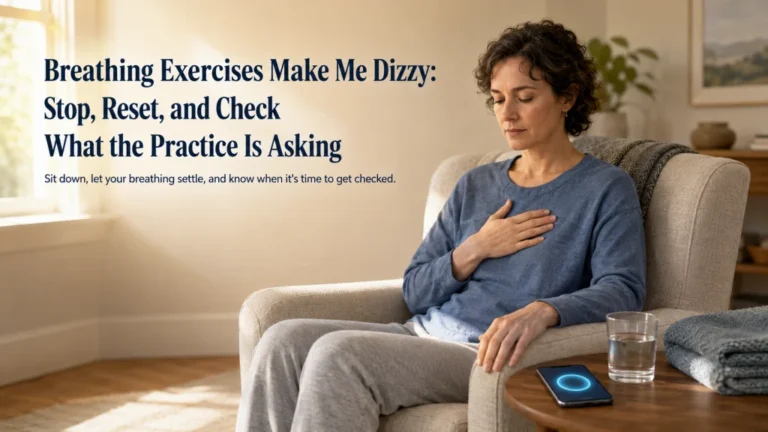
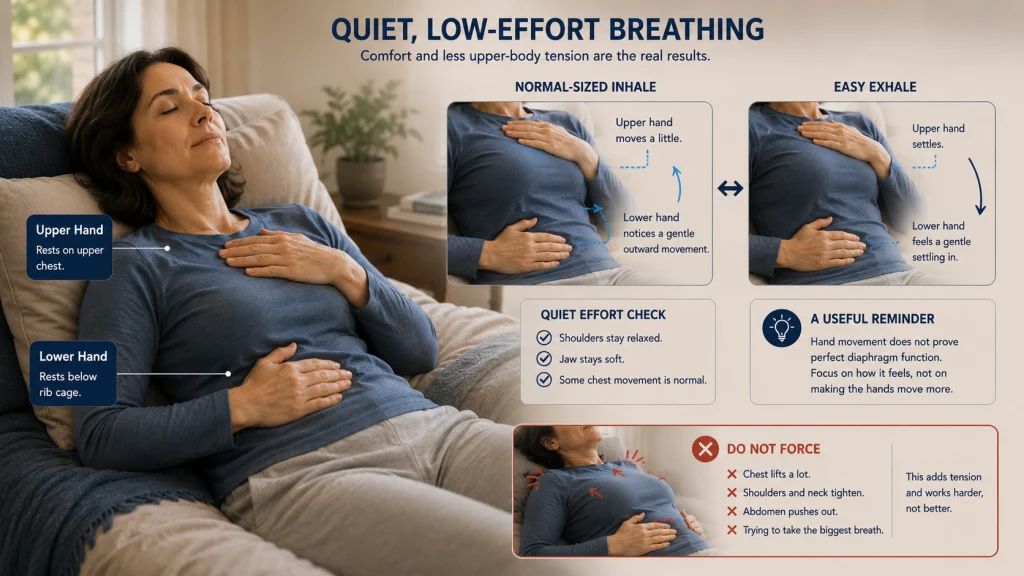
Place one hand on the upper chest and the other below the rib cage. During a comfortable inhale, the lower hand may notice gentle outward movement while the upper hand stays relatively quiet. During the exhale, the lower area settles without being squeezed flat.
This hand placement is feedback, not a performance test. Some upper-chest movement is normal, abdominal movement does not prove perfect diaphragm function, and a larger movement is not automatically better. The useful question is whether the breath feels quieter and less forced than before.
| Hand position | What to notice | What not to chase |
|---|---|---|
| Upper hand on the chest | Less lifting through the shoulders and upper chest | Complete stillness |
| Lower hand below the rib cage | Small, easy movement with the inhale and exhale | A dramatic outward push |
Use the two hands as a simple comparison. If the practice starts to feel like a contest to move the lower hand farther, return to an ordinary breath and reduce the effort.
What Diaphragmatic Breathing Means in Plain Language
Diaphragmatic breathing, sometimes called belly breathing or abdominal breathing, is a practice that shifts attention toward a calmer, lower-effort pattern. The diaphragm is involved in normal breathing whether or not you are consciously practicing, so the exercise is not about switching a muscle on for the first time.
In practical terms, the exercise asks you to let the lower rib area and abdomen move naturally while reducing extra tension in the shoulders, neck, jaw, and upper chest. It is different from taking repeated maximum inhales, holding the breath, or following a strict rhythm.
Key decision: Judge the practice by comfort and reduced effort, not by how much air you can pull in or how far the abdomen moves.
For a wider comparison of slow breathing, counted patterns, breath holds, and muscle-release methods, use the guide to choosing breathing exercises for stress. This page stays with the basic mechanics of a comfortable no-count pattern.
Run a Safety Check Before Practice
A relaxation exercise should not be used to explain away new or troubling breathing symptoms. Begin only when you can breathe comfortably at rest and can stop the practice immediately if it feels wrong.
Safety warning: Seek urgent help for chest pain, severe shortness of breath, fainting, blue lips, stroke signs, immediate danger, or thoughts of self-harm. Unexplained wheezing, persistent breathing difficulty, worsening symptoms, or symptoms that limit normal activity require qualified medical evaluation.
Diaphragmatic breathing is not pulmonary therapy and should not replace an inhaler, rehabilitation plan, medication instruction, or emergency care. Pregnancy, recent surgery, chronic conditions, disability-related limitations, or a long period of inactivity may also change which position is appropriate.
Set Up Lying Down With the Knees Supported
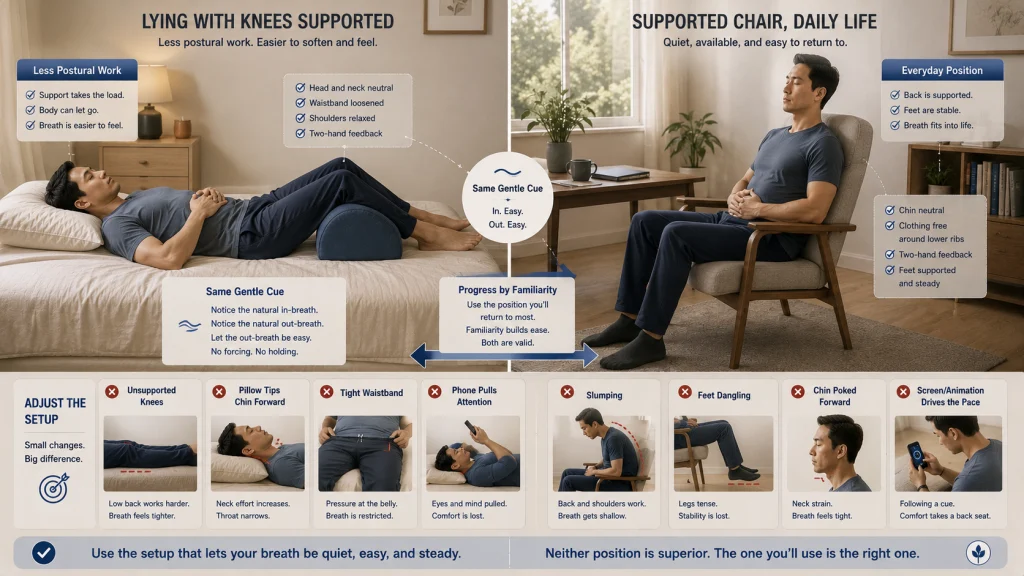
Lying down can reduce the work of holding the torso upright, which makes it easier to notice unnecessary shoulder lifting. Use a firm, comfortable surface. Bend the knees or support them with a cushion so the lower back and hips do not have to strain.
- Loosen anything tight around the waist or lower ribs.
- Rest the head and neck in a neutral, comfortable position.
- Place one hand on the upper chest and one below the rib cage.
- Let the next inhale arrive at an ordinary size.
- Notice whether the lower hand moves more easily when the shoulders stay relaxed.
Editorial observation: Setup friction can matter more than a timer or app. A tight waistband, unsupported knees, a pillow that tips the chin forward, or a screen that pressures you to match an animation can turn a simple practice into another task to perform.
Adjust the surface before adjusting the breath. A small position change is often more useful than trying harder.
Find Movement Without Pushing the Abdomen
Allow the inhale to create a small expansion around the lower ribs and abdomen. Do not deliberately shove the abdomen outward, arch the lower back, or press the hand away. Those actions can create visible movement without making the breathing pattern easier.
If both hands move, that does not mean the attempt failed. Reduce effort gradually and look for a quieter overall pattern rather than perfect isolation.
Use an Easy Exhale Without Emptying Completely
Let the exhale leave without squeezing the abdomen hard or trying to remove every last bit of air. The lower hand may settle inward as the breath leaves, while the jaw and shoulders remain loose.
A forceful exhale can make the next inhale feel urgent. That urgency may encourage a larger breath, which creates a cycle of effort instead of relaxation. Keep enough ease in the exhale that the following inhale can arrive without a gasp.
Practical tip: Think “soften” on the exhale rather than “empty.” The cue is intentionally simple and does not require counting.
Repeat Only While the Pattern Stays Comfortable
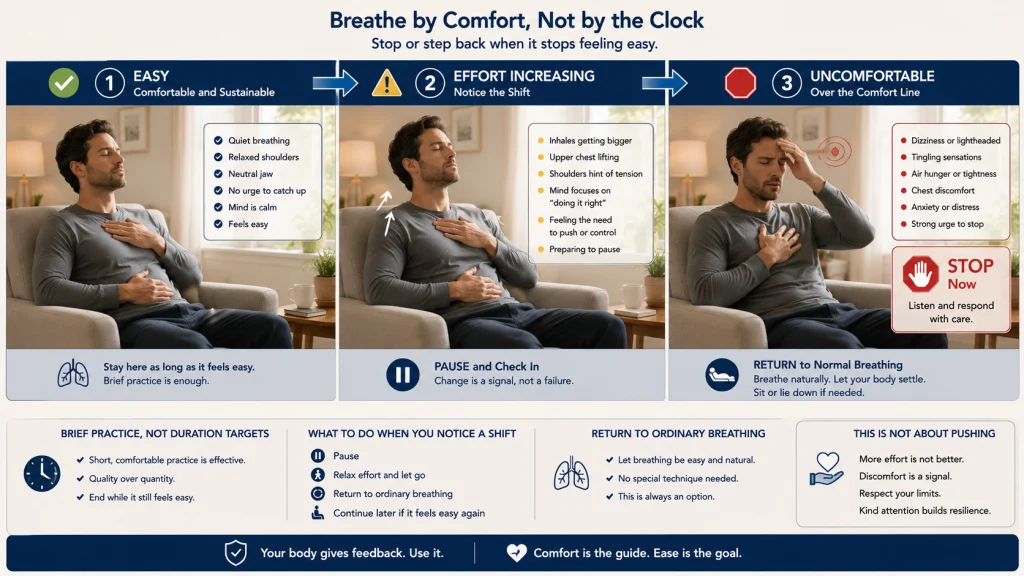
Practice for a few easy breaths, then pause and check how you feel. More repetition is not useful when the breath is getting larger, the jaw is tightening, or you are becoming light-headed.
| Comfort level | What it may feel like | What to do |
|---|---|---|
| Easy | Quiet breath, relaxed shoulders, no urge to catch up | Continue briefly, then stop while it still feels easy |
| Effort increasing | Larger inhales, more chest lifting, growing focus on performance | Return to ordinary breathing and reduce the next attempt |
| Uncomfortable | Dizziness, tingling, air hunger, pain, or distress | Stop the practice and follow the safety guidance |
This comfort scale is not a diagnostic tool. It is a practical stop rule that prevents a relaxation exercise from becoming a test of endurance.
Move to a Supported Chair
Once the lying position feels familiar, try the same pattern in a chair with the feet supported and the back resting comfortably. Sitting is more convenient for everyday use, but it also asks the torso to manage posture, clothing pressure, and gravity at the same time.
| Position | Why it may help | Common friction |
|---|---|---|
| Lying with knees supported | Reduces postural work and makes shoulder tension easier to notice | Requires floor or bed space and may not suit every body |
| Supported chair | Transfers the pattern toward work, travel, and ordinary routines | Slumping, tight waistbands, unsupported feet, or a raised chin |
Do not move to sitting because it seems more advanced. Move when the lying setup has taught you a cue that you can recognize without forcing it.
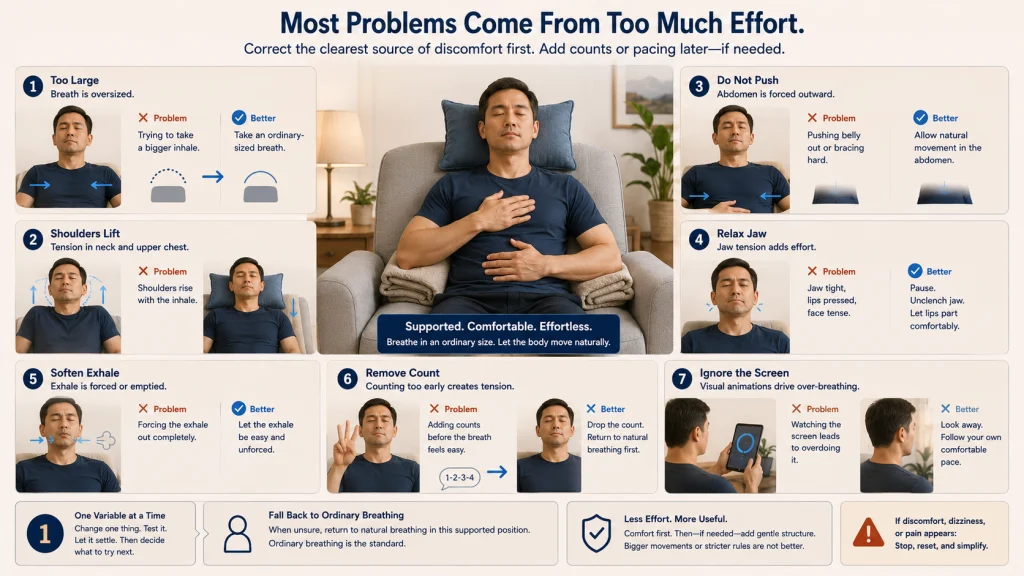
Correct Common Errors Before Adding Structure
Most early problems come from doing too much, not too little. Use this checklist to identify the first adjustment rather than trying to fix everything at once.
- The breath is too large: Return to an ordinary inhale and let the movement become smaller.
- The shoulders lift: Check head, neck, and arm support before changing the breathing cue.
- The abdomen is pushed outward: Stop pressing against the lower hand and allow natural movement.
- The jaw tightens: Pause, unclench, and restart only when the face feels neutral.
- The exhale is forced: Let it finish comfortably instead of squeezing empty.
- Counting starts too soon: Remove the count until the basic movement feels easy.
- A visual guide causes over-breathing: Look away from the screen and use your own comfortable pace.
Choose the error that most clearly changes comfort. A smaller correction is easier to repeat and easier to evaluate than a complete rebuild of posture, pace, and hand placement at once.
Add a Simple Pace Only After the Movement Feels Easy
A fixed count is optional. Before adding one, confirm that you can breathe gently without shoulder lifting, breath holding, or an urge to take a catch-up breath.
Start with a loose cue such as letting the exhale finish unhurriedly. If you later prefer equal counts and brief holds, review how box breathing is structured. For steady pacing without holds, compare the approach used in coherent breathing practice.
Note: A named pattern is not an upgrade if the count makes you strain. Return to an uncounted breath whenever structure increases effort.
Use the Pattern During Ordinary Stress Without Hiding a Symptom
Transfer the practice gradually. First use it while calm in a supported position. Then try it while sitting before a routine task, waiting for a call, or taking a short pause in a quiet space. The purpose is to recognize the cue under slightly more distraction, not to force calm on demand.
Choose a discreet cue that does not require special equipment, such as softening the shoulders and allowing one easy exhale. Stop if the situation includes unexplained shortness of breath, chest symptoms, dizziness, or a feeling that breathing itself is becoming difficult.
For broader stress decisions beyond breathing, use the guide to managing everyday stress. A breathing pattern may help with ordinary physical tension, but it does not remove the stressor or replace appropriate support.
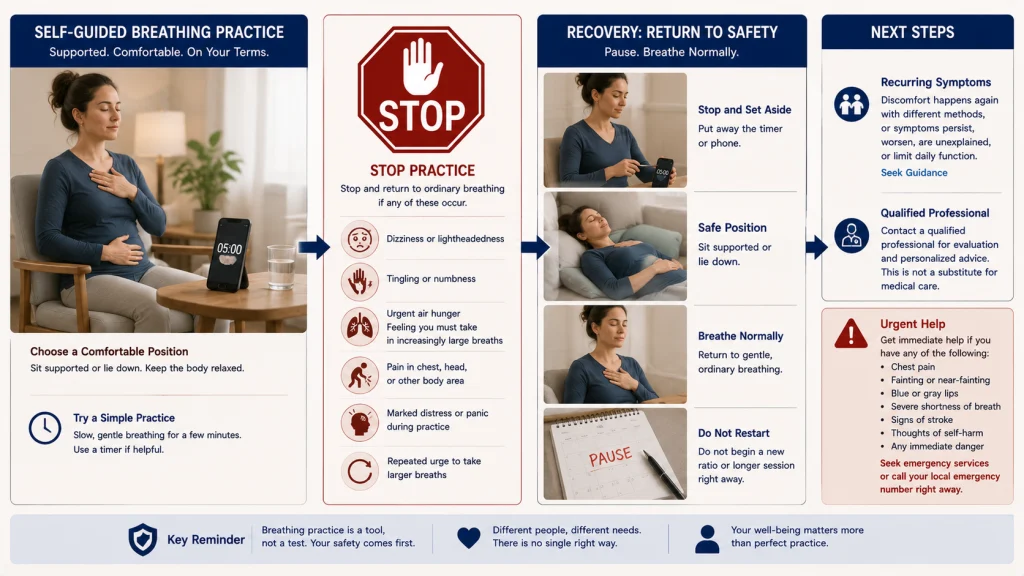
Know When to Stop and Seek Guidance
Stop the exercise if you develop dizziness, tingling, air hunger, pain, marked distress, or a strong urge to keep taking larger breaths. Sit or lie safely, return to ordinary breathing, and do not restart immediately to prove that you can complete the practice.
If discomfort keeps returning across different breathing methods, use the troubleshooting guide for dizziness during breathing exercises. Persistent, severe, worsening, unexplained, or function-limiting symptoms need qualified evaluation rather than repeated self-testing.
Safety warning: Breathing practice is not the right response to chest pain, fainting, blue lips, severe shortness of breath, stroke signs, or immediate danger. Seek urgent help instead.
Choose One Comfortable Position and One Cue
Begin either lying with the knees supported or sitting in a well-supported chair. Use one cue, such as keeping the shoulders quiet or allowing the lower ribs to move without pushing the abdomen.
Stay with that simple version until it feels ordinary. Counts, apps, and named breathing patterns can wait. The useful next step is the one that keeps the breath comfortable enough to repeat without turning it into a performance.
FAQs
🫁 Should my chest stay completely still?
No. Some chest movement is normal. The practical goal is to reduce unnecessary shoulder and upper-chest effort, not to isolate one area perfectly.
🤲 How much should my abdomen move?
Only as much as occurs comfortably with a normal-sized breath. Do not push outward against your hand or use the size of the movement as a score.
🪑 Is sitting better than lying down?
Neither position is universally better. Lying may make the basic pattern easier to notice, while a supported chair is more practical for transferring it into daily life.
⏱️ Do I need to count each breath?
No. Learn a comfortable movement first. Add a simple pace only when counting does not create strain, breath holding, or a need to catch up.
😵 Why do I feel light-headed when practicing?
The practice may have become too large, fast, or effortful, but dizziness can also have other causes. Stop, return to ordinary breathing, and seek qualified guidance if the symptom is persistent, severe, unexplained, or recurring.
📱 Can an app help me learn the pattern?
A visual cue may help some people remember to slow down, but it should not pressure you to match a pace that feels uncomfortable. Use a mute, pause, or stop control freely, or practice without a screen.