Cook once, eat twice works only when the second use is chosen before the first batch gets larger. Name the later meal, decide whether it will repeat or transform the original, separate that portion promptly, and give it a refrigerator or freezer destination. A vague “extra for later” often becomes an oversized serving bowl, an unlabeled container, or a weekday task nobody intended to finish. Plan one realistic second use, then review whether it was actually eaten before increasing the next batch.
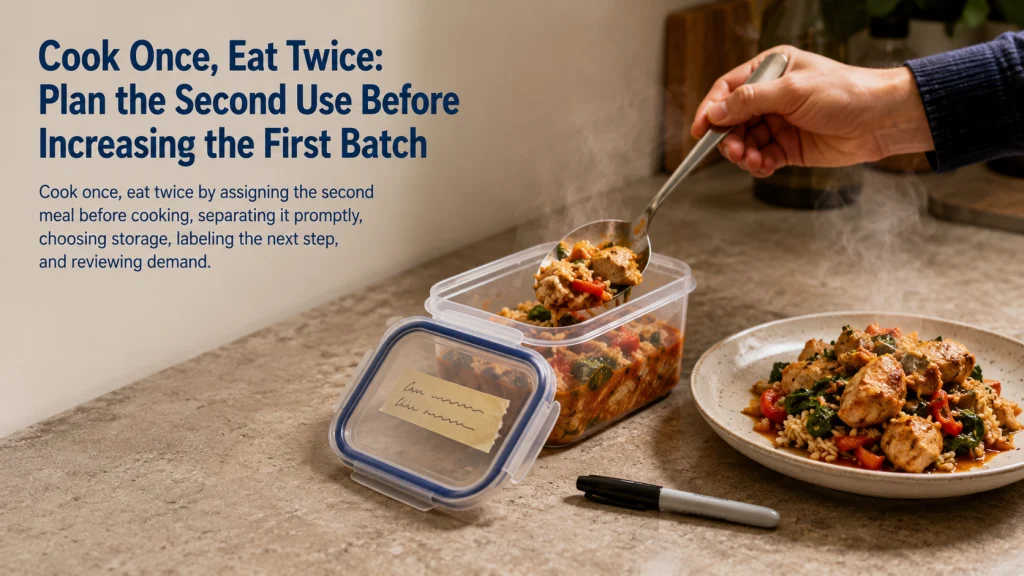
Tonight, Thursday, and the Extra With No Job
A doubled dinner reaches the stove and is divided three ways. The first portion is for tonight. The second is assigned to Thursday. The third is simply “extra,” with no date, no storage destination, and no person expecting to eat it.
| Portion | Assignment | Storage path | What happens next |
|---|---|---|---|
| Tonight | Current dinner | Serve now | The meal is complete |
| Thursday | Named second use | Refrigerator or freezer chosen before cooking | Repeat the meal or complete a defined transformation |
| No meal, date, or demand | No clear destination | Competes for space and may never be used |
Planned leftovers are planned only when the second use and storage route already exist. Cooking more food is not the plan. The plan is the later meal that the extra portion is meant to become.
Separate a Planned Extra From a Leftover, Surplus, and Transformed Second Use
A planned extra is an additional amount deliberately assigned before cooking to one later use. Its quantity, destination, and next step are known before the first meal is served.
A leftover is food remaining after a meal or cooking session. It may still be useful, but its later role was not necessarily selected in advance. A surplus is more food than the household has a realistic plan to use.
A transformed second use starts with one planned portion or main component and gives it a different later role. The transformation should already be named. “Turn it into something” is not enough when the future meal still depends on shopping, chopping, several appliances, and motivation that may not be available on the assigned day.
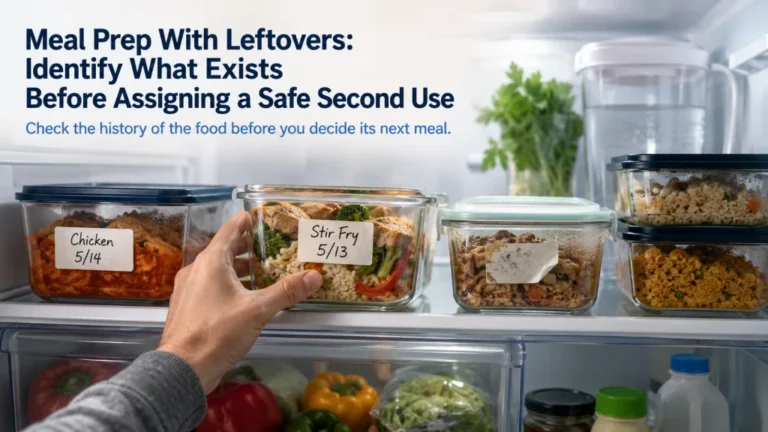
The distinction protects the scope of this method. Use meal prep with existing leftovers when the surplus already exists and needs a later plan. This article begins earlier, while the first batch can still be kept at a sensible size.
Choose the Second Use and Date Before Adjusting the Recipe
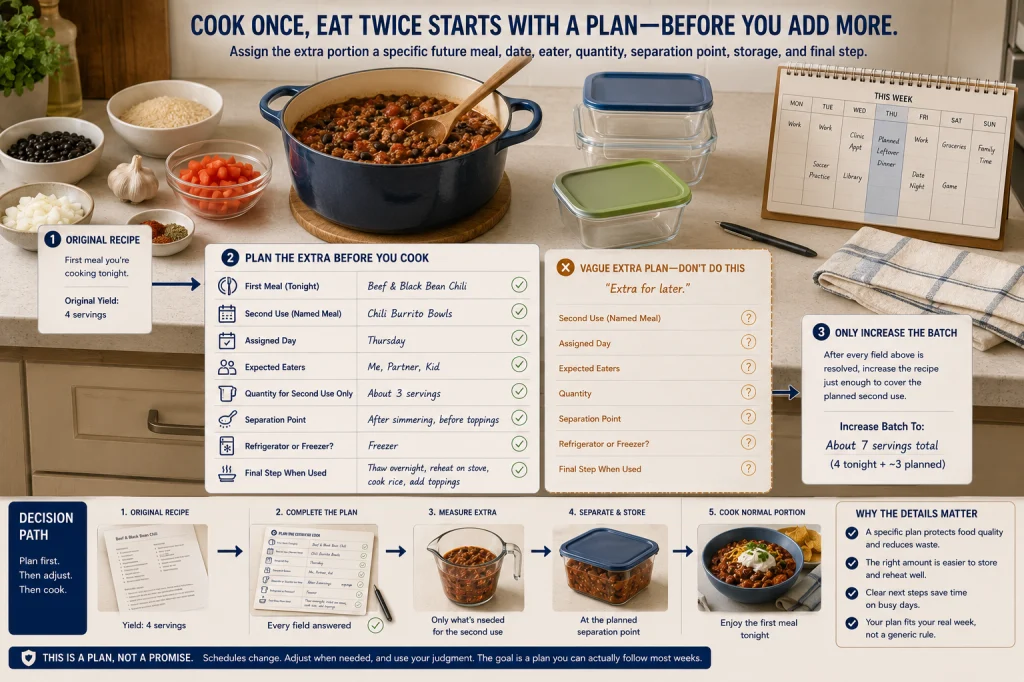
The second meal should be specific enough that another person could understand it without hearing the original plan. “Lunch later” leaves too many decisions open. “Thursday lunch, same meal, one household container, reheat according to the stored directions” gives the extra portion a real job.
Planned-extra worksheet:
First meal: What is being cooked now?
Second use: What exact meal or component will the extra become?
Assigned day: When is it expected to be used?
People expected: Who is realistically eating it?
Quantity: How much is needed for that one use?
Separation point: When will the extra leave the serving batch?
Destination: Refrigerator or freezer?
Final step: What cooking, assembly, thawing, or reheating action remains?
Write the answers before increasing the ingredients. If the date, person, or later action remains uncertain, keep the original yield or add only a smaller, clearly usable amount.
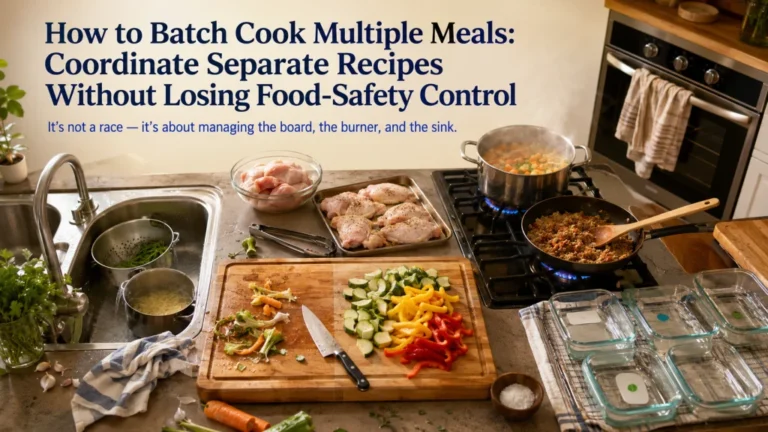
The broader batch-cooking method guide helps decide whether a planned extra, component session, make-ahead meal, or freezer batch better fits the week.
Decide Whether to Repeat the Meal or Transform One Component
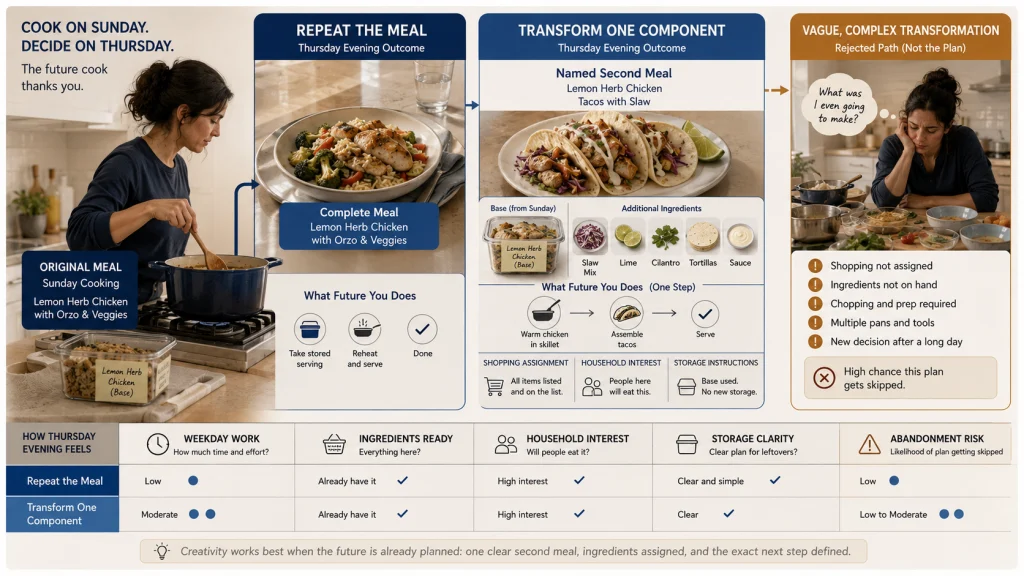
Repeating the same meal asks very little of the future cook. A transformed use can add variety, but it also adds ingredients, assembly, and another chance for the plan to stall. The decision should be made for the later day, when someone may be tired, hungry, and unwilling to turn one container into a small cooking project.
| Decision factor | Repeat the same meal | Transform one component |
|---|---|---|
| Weekday effort | Mostly serving or reheating according to the stored directions | Requires a defined assembly or cooking step |
| Additional ingredients | Usually few or none beyond the original meal | Must already be available or assigned to a shopping plan |
| Household interest | Works when repeating the meal is acceptable | May help when the same main component can support a genuinely wanted second meal |
| Storage clarity | The package can describe one complete later meal | The label must name the component and the unfinished second use |
| Risk of abandonment | Lower when the meal is already complete | Higher when transformation depends on several unassigned tasks |
Nora’s observation: When I compare a repeated meal with a more inventive transformation, I pay attention to what the second evening will actually ask of the household. A container that still needs chopping, shopping, several pans, and a new decision is not a finished plan. Repeating dinner may sound less creative, but it often keeps the promise made during the first cooking session.
This is not a leftover recipe roundup. The useful decision is whether the household wants the same meal again or has committed to one specific transformation before the extra is cooked.
Confirm the Recipe, Cookware, Cooking, and Cooling Process Can Support the Extra Yield
A larger pot or family-size recipe can make extra food feel automatic. The ingredients may fit, yet the recipe can cook differently, the pan can become crowded, and the finished food can exceed the clean containers or cooling space available. The capacity check belongs before the extra ingredients enter the pot, not after the counter is full.
Before increasing the batch, confirm:
- The recipe can be adjusted without guessing at food-safety instructions, cooking method, or doneness.
- The pot, pan, sheet, or appliance can hold the larger amount without crowding or overflow.
- The larger batch will not change cooking behavior in a way the recipe does not address.
- Enough clean containers are available before the food is finished.
- The refrigerator or freezer has an assigned space for the extra portion.
- The cooling route can handle the larger cooked amount promptly.
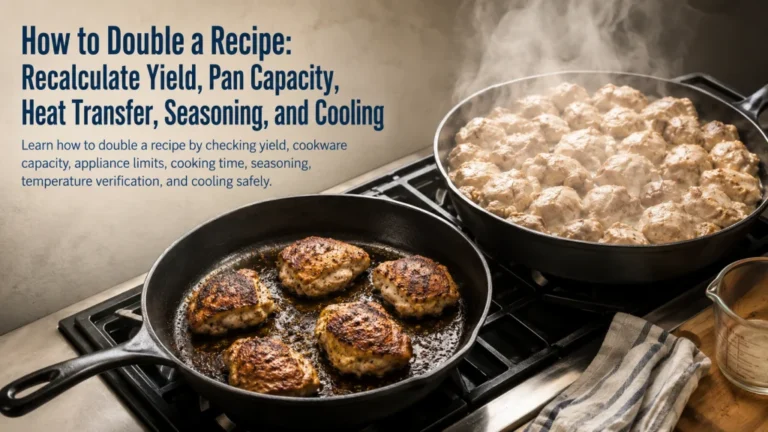
Use the guide to scaling a recipe safely and practically when the quantity itself changes. Do not assume every recipe should be doubled simply because the cookware appears large enough.
Separate the Second Portion Before the Entire Batch Is Served
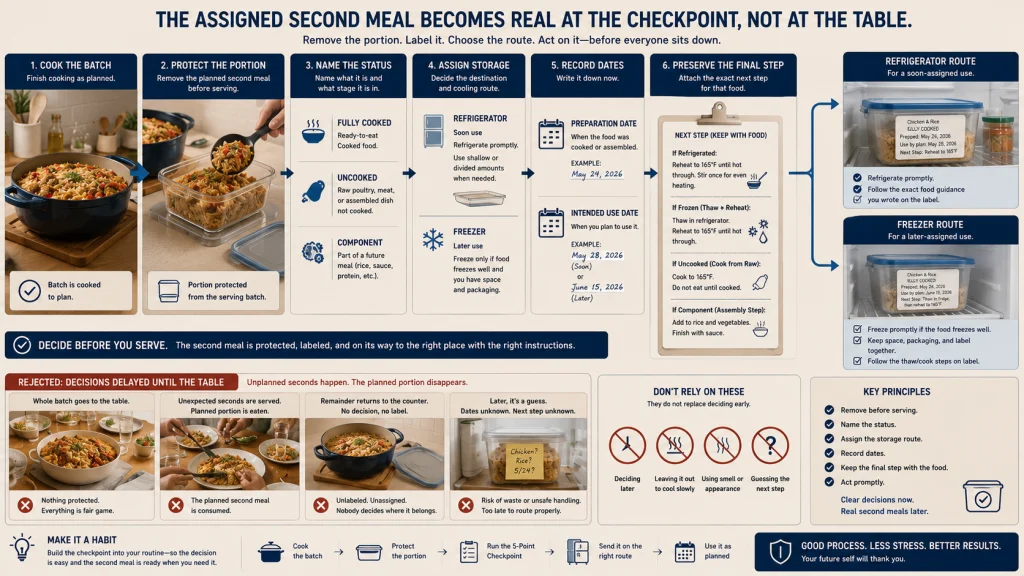
A planned extra can disappear at the table if the whole batch is presented as tonight’s dinner. People take seconds, someone packs an unexpected lunch, and the amount intended for Thursday becomes whatever happens to remain. The later meal was planned, but its portion was never protected.
Move the second portion into its assigned clean container at the planned separation point. For many cooked meals, that means after cooking and before the serving dish reaches the table. The exact moment should still follow the recipe and applicable safety guidance.
Separation and label checkpoint:
1. Portion protected
The amount for the second use has been removed from the serving batch.
2. Status named
The container says whether the food is fully cooked, uncooked, or a component.
3. Destination assigned
The refrigerator or freezer space is ready.
4. Date recorded
The preparation date and intended use date are visible.
5. Final step preserved
The next cooking, assembly, thawing, or reheating action remains with the package.
This is not about restricting how much anyone may eat. It is about making the second meal real before the first meal consumes the batch by default. When the household wants more tonight, revise the later plan rather than pretending the assigned portion still exists.
Cool, Cover, Refrigerate, or Freeze Through a Defined Safety Route
Once the second portion is separated, it becomes a storage task. This is also the moment when dinner is over, the sink is filling, and attention is moving toward children, work, or the next activity. A cooling and storage route chosen in advance prevents the future meal from being left on the counter while everyone assumes somebody else will handle it.
Handle cooked food through prompt cooling and appropriate refrigeration or freezing. Use suitable containers and divide larger amounts when needed so the cooling process is not left to one deep, crowded mass. Do not leave the extra at room temperature while deciding whether it belongs in the refrigerator or freezer.
Freezing is not a rescue step for food that was handled unsafely. Waste prevention never overrides food safety, and smell, appearance, or taste should not be used as the sole test.
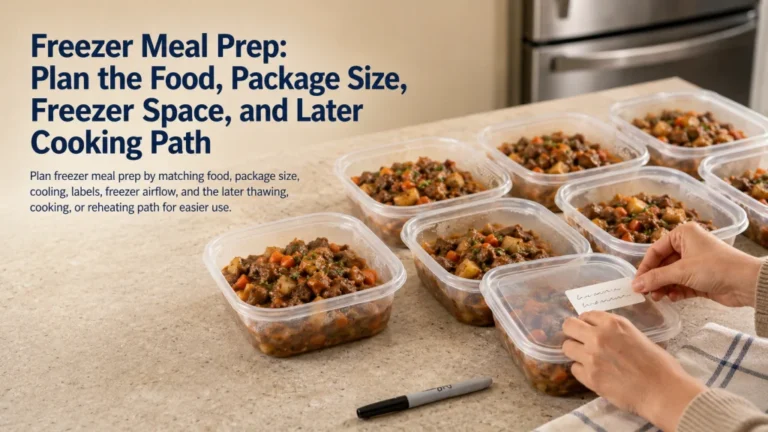
Use the freezer meal prep method when frozen storage adds package geometry, one-layer freezing, and a later-use path. Food-specific storage, thawing, reheating, and freshness decisions belong in the meal-prep storage guide.
Label the Second Use and Its Required Final Step
A label should preserve the plan after the memory of cooking day is gone. By Thursday, the person opening the refrigerator may not remember which container was meant for dinner or whether anything still needs to be cooked. “Leftovers” identifies neither the meal nor the work that remains. “Thursday dinner” is better, but it still does not say whether the food is cooked, frozen, or waiting for assembly.
A complete label can include:
- The food or component name.
- The preparation date.
- The assigned second use and intended day.
- Cooked, uncooked, or component status.
- Refrigerator or freezer destination.
- The required final cooking, assembly, thawing, or reheating step.
When the instructions are too long for the container, keep them in a clearly matched household inventory. A private code that only the original cook understands makes the second meal dependent on one person’s memory.
The wider meal-prep systems guide can help connect labels, inventory, schedules, and household roles when several planned meals move through the week.
Compare an Intentional Extra, a Freezer Extra, and Unplanned Surplus
These three containers may hold similar food, but they represent different levels of commitment. The comparison is useful because the most troublesome package is often the one that looked easiest during cooking.
| Method | Decision made before cooking | Storage path | Later burden |
|---|---|---|---|
| Intentional refrigerator extra | Second meal, date, quantity, and final step are named | Prompt cooling and refrigerated storage supported for the exact food | Usually low when the meal repeats or has one simple finish |
| Intentional freezer extra | Later use is named and the food is suitable for freezing | Cooling, freezer packaging, labeling, and later thawing or cooking path are planned | More steps, but a longer planning horizon |
| Unplanned surplus | No clear later meal or realistic demand | Stored wherever space remains | High because identity, date, quantity, and next step must be reconstructed later |
The intentional extra is not automatically better because it is larger or more efficient. It is better defined. When the second meal is uncertain, the original batch may be the more practical choice.
For the broader relationship between food planning and household waste, use the guide to meal planning that reduces avoidable surplus.
Review Whether the Second Use Was Actually Eaten
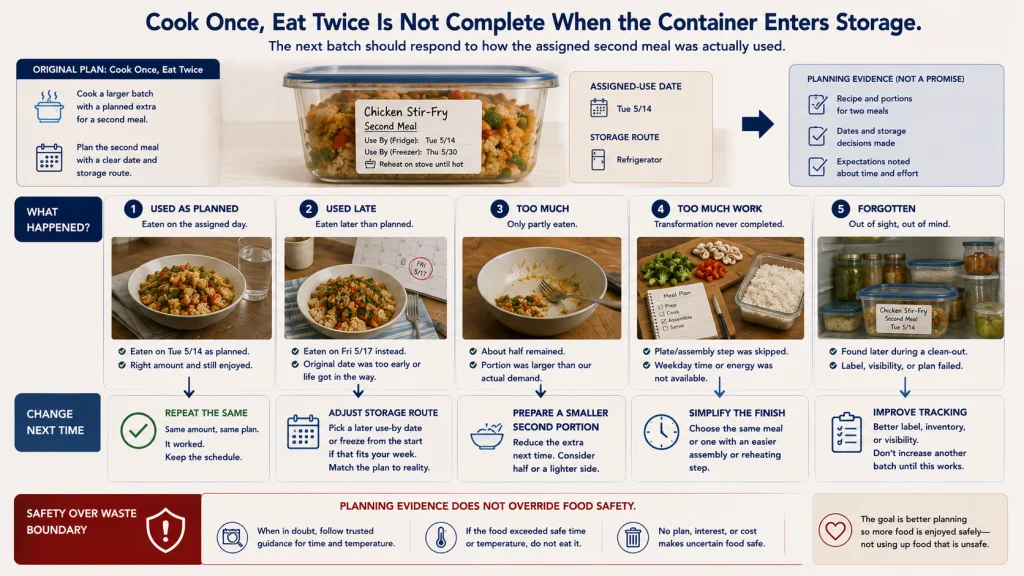
The method is not finished when the container enters storage. The revealing moment comes later, when the assigned day arrives and the household either reaches for the meal with relief or keeps moving it aside. That response should shape the next batch. Forgotten food, unwanted repetition, or an unfinished transformation points toward a smaller or simpler second use.
| Demand review | What happened | What to change next time |
|---|---|---|
| Eaten on the assigned day | The quantity and schedule fit the household | Repeat the same amount if the wider week remains similar |
| Eaten later than planned | The assigned day or storage route was unrealistic | Choose a later date, freeze from the start when appropriate, or reduce the extra |
| Only partly eaten | The planned amount exceeded actual demand | Prepare a smaller second portion |
| Transformation never completed | The weekday assembly burden was too high | Repeat the original meal or choose a simpler finish |
| Forgotten in storage | The label, inventory, visibility, or schedule failed | Improve the tracking step before increasing another batch |
Household interest is useful planning information, not a food-safety test. If the food falls outside applicable guidance or its handling history is uncertain, do not eat it simply to avoid waste.
Reduce the Next Extra When Demand Was Overestimated
Overestimating once is information. Perhaps plans changed, someone ate elsewhere, or the household simply did not want the same food again. Repeating the same oversized batch without using that information turns one imperfect week into a routine problem. The correction does not need to be dramatic.
Possible adjustments include:
- Make one smaller second portion instead of a full duplicate meal.
- Assign the extra to one person rather than assuming the whole household wants it.
- Repeat the original meal instead of planning a complicated transformation.
- Freeze the assigned portion from the start when the later date supports that route.
- Return to the original recipe yield when the second use is not predictable.
The next adjustment should answer what actually failed. If the quantity was too large, make less. If the assigned day was unrealistic, change the date or storage route. If the transformed meal remained unfinished, remove steps instead of asking the future cook to try harder.
For a complete weekly planning sequence, connect this method to how to meal prep. The extra should solve one later meal, not create another category of food that needs rescuing.
Give the Second Portion a Real Assignment Before Cooking More
Before increasing the recipe, give the second portion a date, quantity, separation point, storage destination, and final step. Decide whether the later meal repeats the original or transforms one component, then make sure the recipe and kitchen can support that specific promise.
After the second meal date, review what actually happened. When it was eaten easily, the amount may fit. When it was ignored, partly eaten, or left waiting for assembly, reduce or simplify the next extra.
Cook once, eat twice is not a promise that every larger batch saves time, money, or food. It is one deliberate agreement between today’s cooking session and a future evening when having one less decision may genuinely help.
FAQs
🍲 Is cook once, eat twice the same as making leftovers?
No. The second use is selected before cooking, including its amount, date, destination, and final step. Leftovers may exist without that advance assignment.
📅 How specific should the second-use plan be?
Name the later meal or component, expected day, people eating it, storage destination, and remaining step. “For later” is too vague to control quantity or storage.
🥘 Should the second meal repeat the first one?
It can. Repeating the meal usually requires less weekday work. Transform a component only when the later meal and its ingredients are already defined and realistic.
🍽️ When should I separate the extra portion?
Use the planned separation point that fits the recipe and applicable safety guidance. For many fully cooked meals, separating the assigned portion before serving helps protect the quantity and preserve a clear storage route.
🧊 Should the second portion go in the refrigerator or freezer?
Choose from the assigned date, food-specific guidance, freezer suitability, package, and later-use plan. Do not wait until the food has been sitting out to make the decision.
🏷️ What belongs on the label?
Include the food name, preparation date, assigned use, cooked or uncooked status, destination, and required final step. Keep longer directions in a clearly matched inventory.
📉 What if the second meal keeps going uneaten?
Reduce the amount, simplify the later meal, change the assigned day, or return to the original recipe yield. Repeatedly storing the same unwanted quantity is a demand-planning problem.
⚠️ Should I eat stored food just to prevent waste?
No. Food safety overrides waste prevention. Do not eat food beyond applicable guidance or when its handling history is uncertain, and do not use smell, appearance, or taste as the sole safety test.