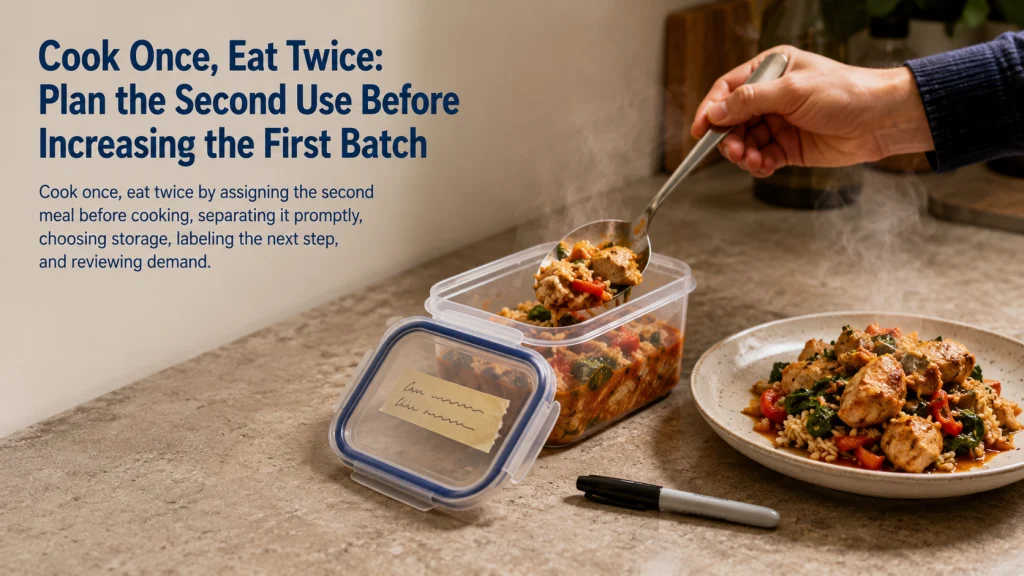
Cook Once, Eat Twice: Plan the Second Use Before Increasing the First Batch
Cook Once Eat Twice

Cook once, eat twice works only when the second use is chosen before the first batch gets larger. Name the later meal, decide whether it will repeat or transform the original, separate that portion promptly, and give it a refrigerator or freezer destination. A vague “extra for later” often becomes an oversized serving bowl, an
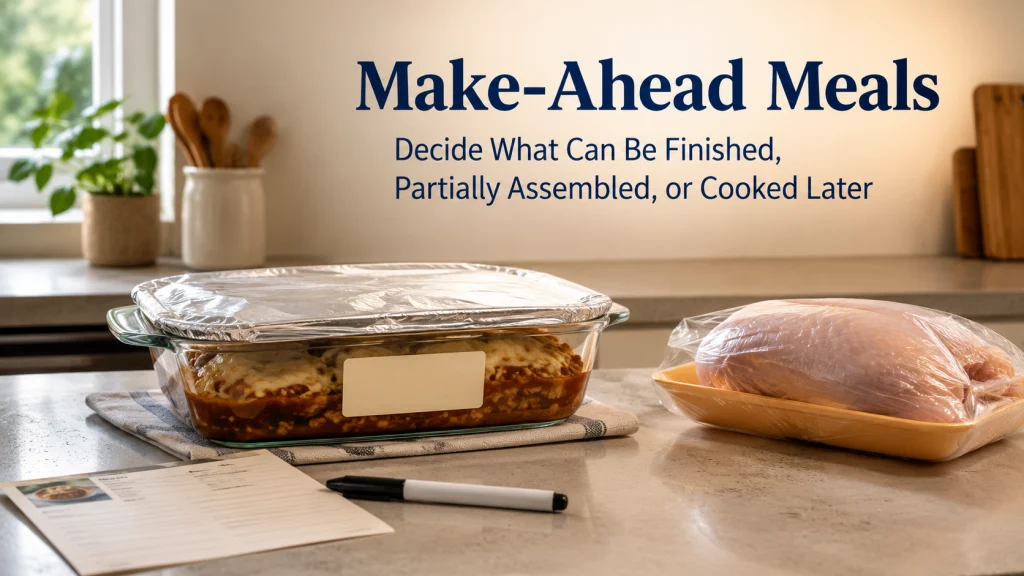
Make-Ahead Meals: Decide What Can Be Finished, Partially Assembled, or Cooked Later

Make Ahead Meals

Make-ahead meals work only when the recipe has a clear stopping point and the later cooking or serving step remains intact. A meal may be fully cooked, assembled but uncooked, partly prepared as separate components, or left at the measured-ingredient stage. Choose the stage before starting, keep raw animal foods separate from ready-to-eat ingredients, and

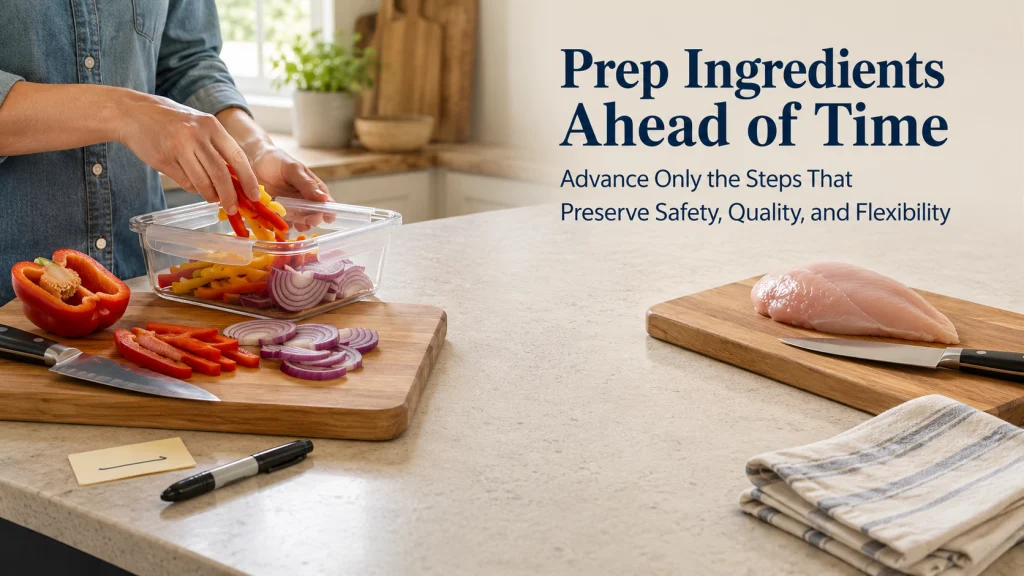
Prep Ingredients Ahead of Time: Advance Only the Steps That Preserve Safety, Quality, and Flexibility

Prep Ingredients Ahead Of Time

Prep ingredients ahead of time only when the advance step makes a named later meal easier without creating a safety, cleanup, storage, or quality problem. Start from the recipe you plan to cook, then choose a limited task such as washing sturdy produce, cutting an ingredient that holds well, measuring a dry item, or portioning

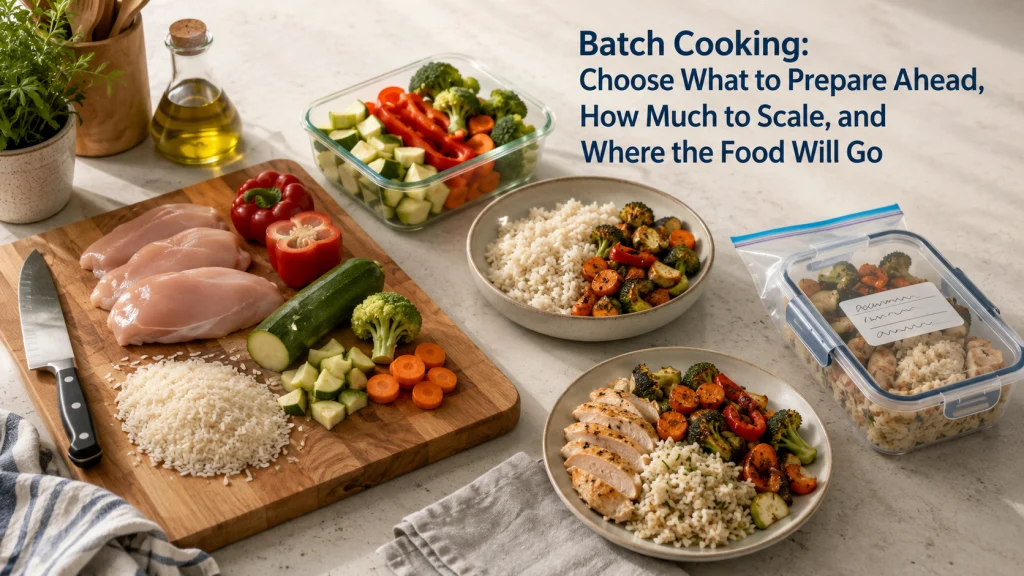
Batch Cooking: Choose What to Prepare Ahead, How Much to Scale, and Where the Food Will Go

Batch Cooking

Batch cooking works best when every extra portion has a clear job before the stove is turned on. The same ingredients can become prepped ingredients, flexible components, complete refrigerated meals, freezer portions, or an accidental surplus, and each outcome needs a different plan. Choose the method first, then confirm the intended uses, recipe yield, cooking

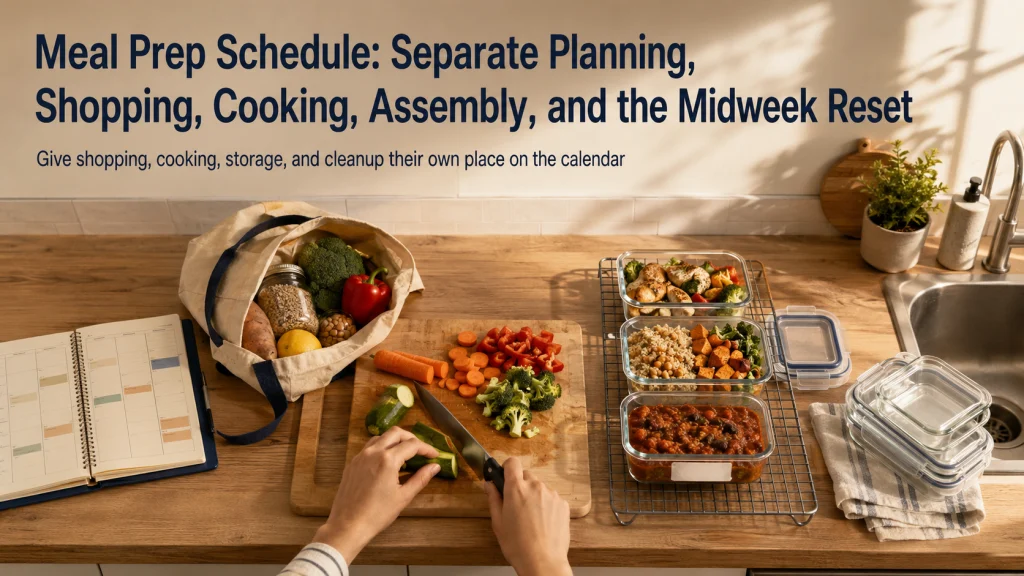
Meal Prep Schedule: Separate Planning, Shopping, Cooking, Assembly, and the Midweek Reset

Meal Prep Schedule

A meal prep schedule is a weekly cadence, not a rule that everything must happen on one day. Choose whether planning, shopping, cooking, assembly, the post-cooking handoff, the kitchen reset, and a possible midweek check belong in one block, two shorter blocks, or small rolling sessions. Put inventory before the grocery list, reserve refrigerator and

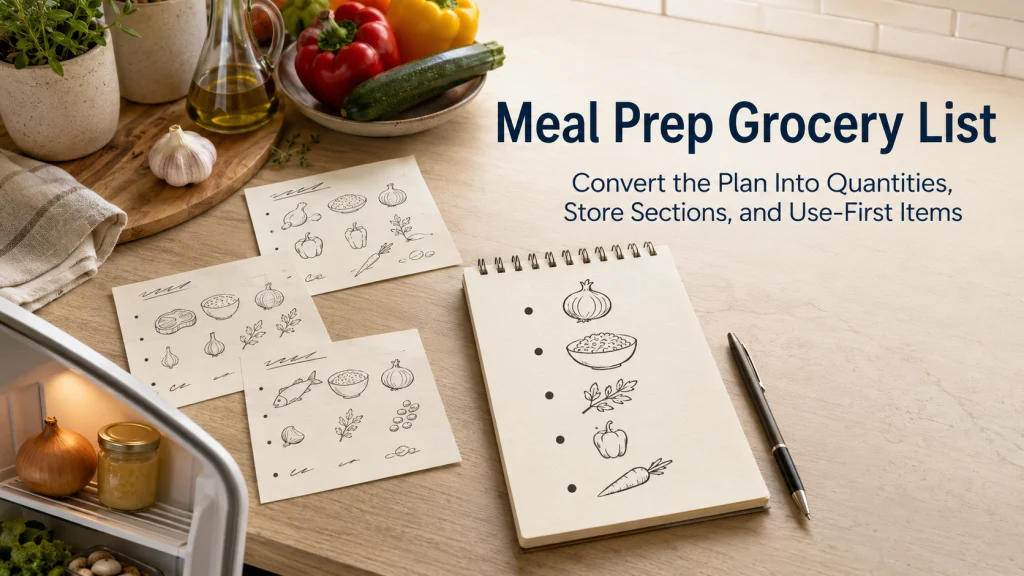
Meal Prep Grocery List: Convert the Plan Into Quantities, Store Sections, and Use-First Items

Meal Prep Grocery List

A meal prep grocery list should begin with a finished weekly plan and a quick check of what is already at home. Combine repeated ingredients across meals, subtract usable stock, and write the remaining amount in a form that makes sense at the store. Keep required items separate from optional extras and long-term stock purchases,

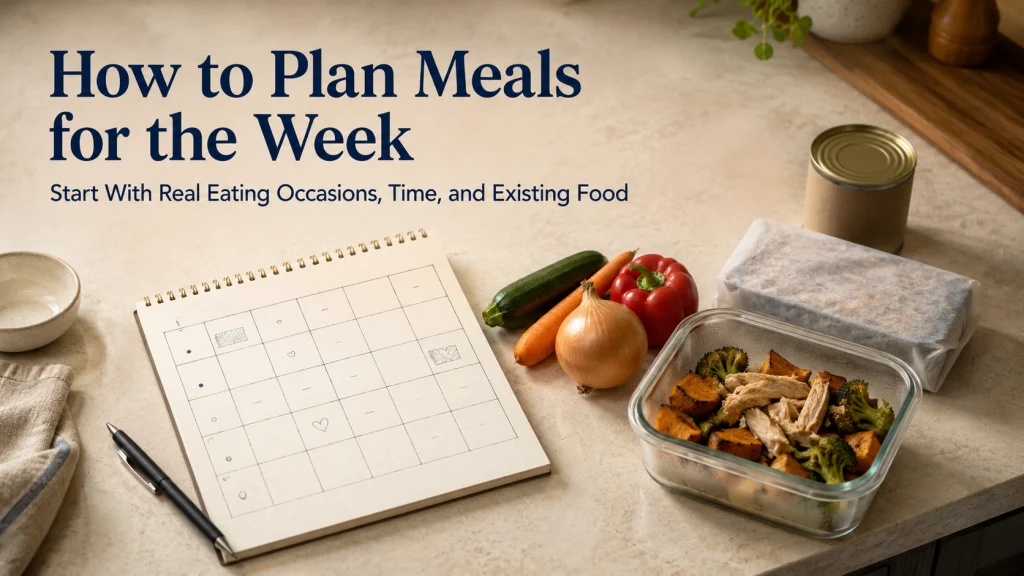
How to Plan Meals for the Week: Start With Real Eating Occasions, Time, and Existing Food

How To Plan Meals For The Week

A useful weekly meal plan starts by counting the meals that will actually happen at home, not by filling every calendar box with a new recipe. Mark meals away from home, late work periods, planned leftovers, and flexible nights before deciding what to cook. Then match meal difficulty to the time and help available, use

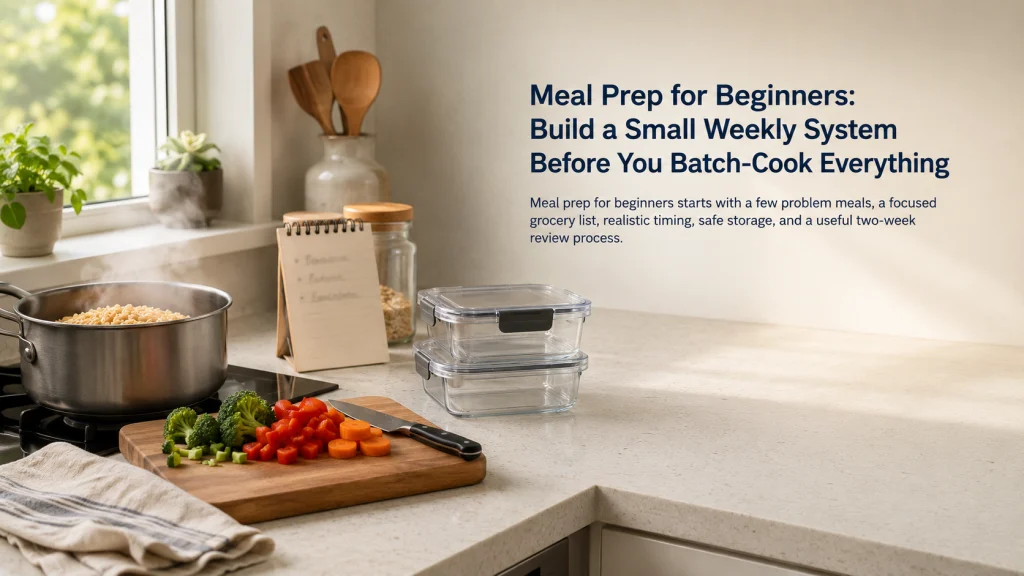
Meal Prep for Beginners: Build a Small Weekly System Before You Batch-Cook Everything

Meal Prep For Beginners

Meal prep for beginners should make an ordinary Tuesday easier, not turn the first week into a test of discipline. Start with two or three meals that repeatedly leave you rushed, undecided, or surrounded by unused ingredients, then choose the lightest preparation level that would help. Check what is already at home, build a focused