The relationship between late night eating and sleep depends on what problem is actually present. A full dinner, a planned snack, and going to bed hungry can occur at the same clock time while creating very different decisions. Separate hunger, portion, composition, timing, alcohol, caffeine, and symptoms, then test one practical change while keeping the rest of the evening reasonably stable. Persistent reflux-like symptoms, swallowing difficulty, repeated vomiting, unexplained weight change, severe pain, bleeding, or other concerning symptoms require qualified care rather than another meal-timing experiment.
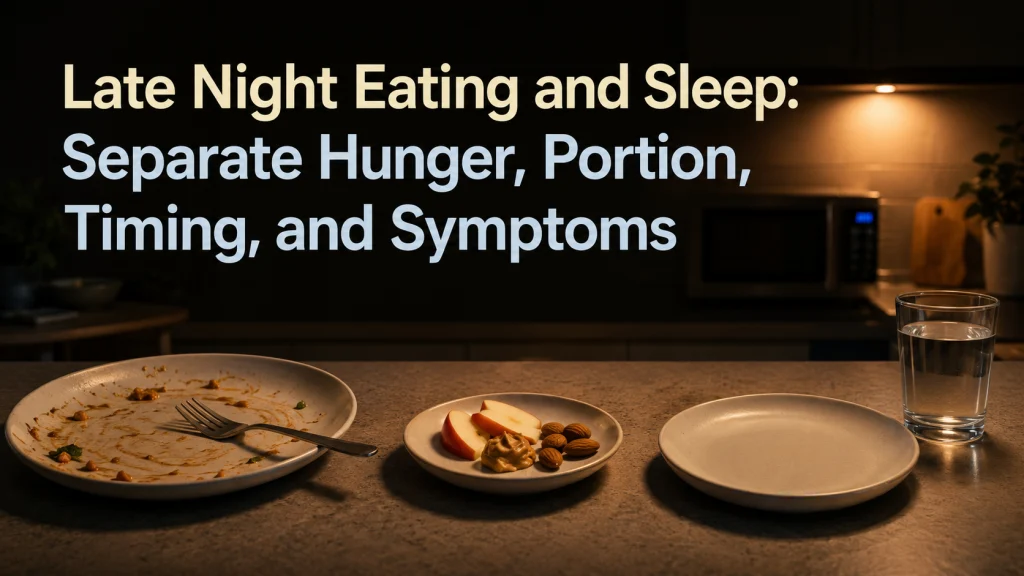
Three Plates at 9 p.m. Can Represent Three Different Problems
Place three settings on the same kitchen counter at 9 p.m. One holds a full dinner because work ran late. One holds a small planned snack because dinner was early. The third is an empty plate beside a note that says, “Hungry, but trying not to eat.”
| 9 p.m. Scenario | What Happened Before It | The Real Decision |
|---|---|---|
| Full dinner | The normal meal was delayed by work, caregiving, commuting, or an evening event. | Can the meal become earlier or less physically demanding without leaving the person underfed? |
| Planned snack | Dinner happened earlier, and genuine hunger returned before sleep. | Can the eating event stay defined instead of expanding into another meal or grazing period? |
| Empty plate and hunger | A rigid rule says eating after a fixed hour is always wrong. | Is hunger itself interfering with comfort or sleep, and would a planned response be more useful than forcing an empty stomach? |
One clock time can represent three different problems. That is why people often feel confused by blanket advice: the person eating a delayed dinner, the person needing a small snack, and the person lying awake hungry are not making the same decision. The answer cannot come from the hour alone.
Starting rule: Identify whether the issue is hunger, meal size, food type, timing, alcohol, caffeine, or a persistent symptom before choosing what to change.
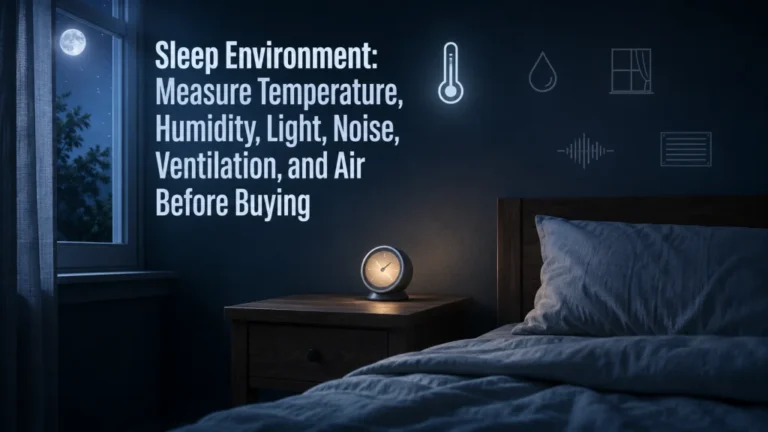
The complete sleep guide places evening food beside schedule, light, activity, stress, and bedroom conditions. The healthy sleep habits framework helps keep the meal question connected to the rest of the night.
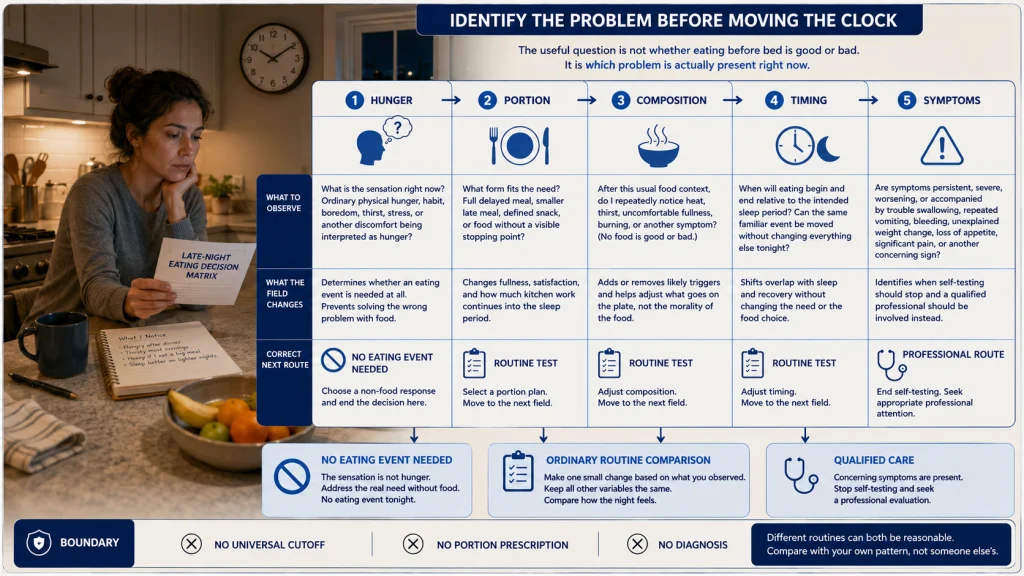
Define Whether to Eat, What Size, and Whether Symptoms Change the Answer
Begin with five separate fields rather than one question about whether eating before bed is good or bad.
| Decision Field | What to Observe | What It Changes |
|---|---|---|
| Hunger | Is the sensation ordinary hunger, habit, boredom, thirst, stress, or discomfort being mistaken for hunger? | Whether an eating event is needed at all |
| Portion | Is this a full meal, a smaller late meal, a defined snack, or food without a visible stopping point? | How much fullness and digestive workload may continue into the sleep window |
| Composition | Is the usual food repeatedly associated with heat, thirst, fullness, burning, or another symptom? | Whether the food context should be recorded for professional discussion or a non-clinical comparison |
| Timing | When did eating begin and end relative to the intended sleep period? | Whether the same meal can be moved without changing everything else |
| Symptoms | Are there persistent or severe symptoms, swallowing problems, vomiting, bleeding, weight change, or significant pain? | Whether self-testing should stop and qualified care should begin |
This matrix does not prescribe food, calories, nutrients, or a universal cutoff. It helps determine whether the next step belongs in ordinary routine testing or professional care.
Use Meal-Timing Evidence Without Inventing an Exact Cutoff
Institutional sleep guidance advises avoiding going to bed either hungry or overly full and notes that heavy or large meals close to bedtime may create discomfort that interferes with sleep. That supports separating meal size and physical comfort from the clock time alone.
A 2024 systematic review examined time-restricted eating interventions and sleep outcomes. The small set of included trials used structured eating windows over multiple weeks, different populations, and a mix of wearable and self-reported sleep measures. Results were not uniform.
Those studies do not establish how many minutes every adult should leave between one ordinary dinner or snack and sleep. They also do not prove that moving a meal will improve sleep for a person whose actual issue is caffeine, alcohol, shift work, pain, reflux-like symptoms, or an inconsistent bedtime.
| Evidence Can Help With | Evidence Cannot Supply |
|---|---|
| Recognizing that meal timing may interact with sleep and comfort | One guaranteed stopping time for all adults |
| Supporting caution with large meals close to the sleep period | A prescribed snack size, calorie target, or food list |
| Designing a stable personal observation | A diagnosis or treatment plan for persistent symptoms |
| Comparing repeated patterns across several nights | Proof that one late meal caused one poor night |
Evidence limit: Population findings can guide the design of a comparison. They cannot replace the reader’s schedule, symptom history, health needs, or professional advice.
Identify What the Evening Eating Event Is Doing
The same plate can serve hunger, scheduling, recovery, convenience, social connection, boredom, or emotional relief. Naming the function is not a diagnosis. It is a way to avoid solving the wrong problem.
Ordinary hunger may follow a meal that was early, small, interrupted, or skipped. Record how hungry the person felt before eating and whether the sensation settled afterward.
Schedule pressure may be the real issue when work, commuting, caregiving, or an appointment repeatedly pushes dinner later. In that case, record whether the delay is occasional or built into the week.
A social dinner may be timed for connection rather than hunger. Note how often it occurs, how the meal differs from an ordinary evening, whether alcohol is involved, and when sleep is actually attempted.
Evening exercise can move dinner later or create hunger after the usual meal. Record the workout finish, eating finish, body heat, showering, and the time the person truly felt ready for bed.
Convenience can make food appear before a decision has been made. The container, serving format, leftovers, and cleanup sequence may determine whether the eating event stays small or continues.
Boredom or emotional relief may also be part of the pattern. Record the situation plainly, such as worry, loneliness, frustration, or an open-ended evening, without assigning a mental-health diagnosis.
A person who is truly hungry after an unusually early dinner needs a different experiment from someone who finishes dinner comfortably and then grazes while watching television. The first may need a defined response to hunger. The second may need a clearer stopping point.
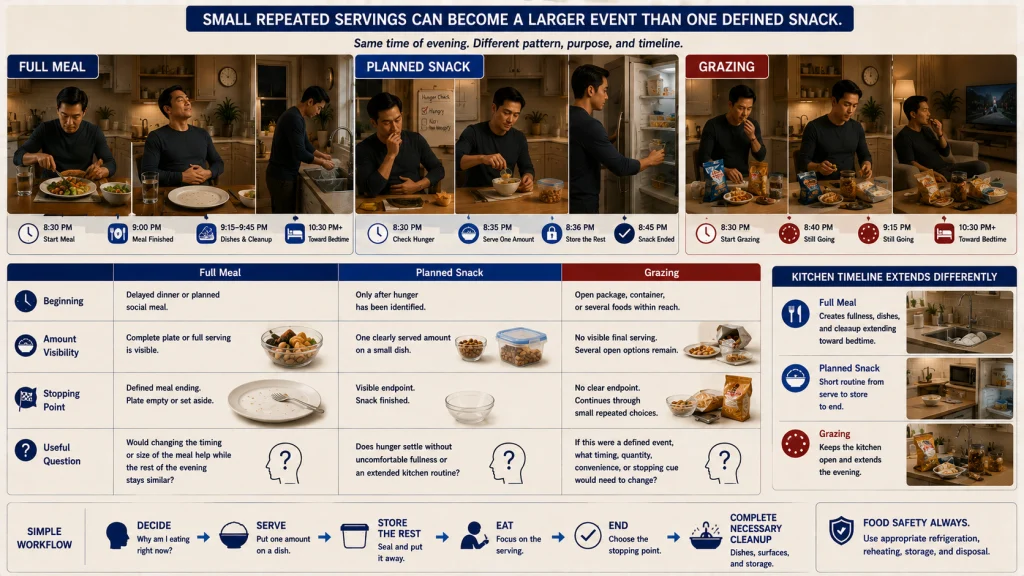
Separate a Full Meal, a Planned Snack, and Unbounded Grazing
Once the function is visible, classify the form of the eating event. These patterns can all be described as late eating, but they create different amounts of food, different stopping points, and different kitchen timelines.
| Pattern | Beginning | Stopping Point | Useful Question |
|---|---|---|---|
| Full meal | A delayed dinner or planned social meal | The meal is complete, but fullness may continue toward bedtime. | Can timing or meal size change while the rest of the evening stays similar? |
| Planned snack | Hunger is identified before food is prepared. | The amount and end of the eating event are visible from the start. | Does the snack settle hunger without creating fullness or extending the routine? |
| Unbounded grazing | Food remains open, nearby, or repeatedly available. | There is no clear final serving or end time. | Would defining the eating event reveal whether the issue is timing, quantity, or the lack of a stopping cue? |
A small item eaten several times from an open package can become a larger eating event than one clearly served snack. The practical difference is not moral. It is whether the amount and endpoint can be observed.
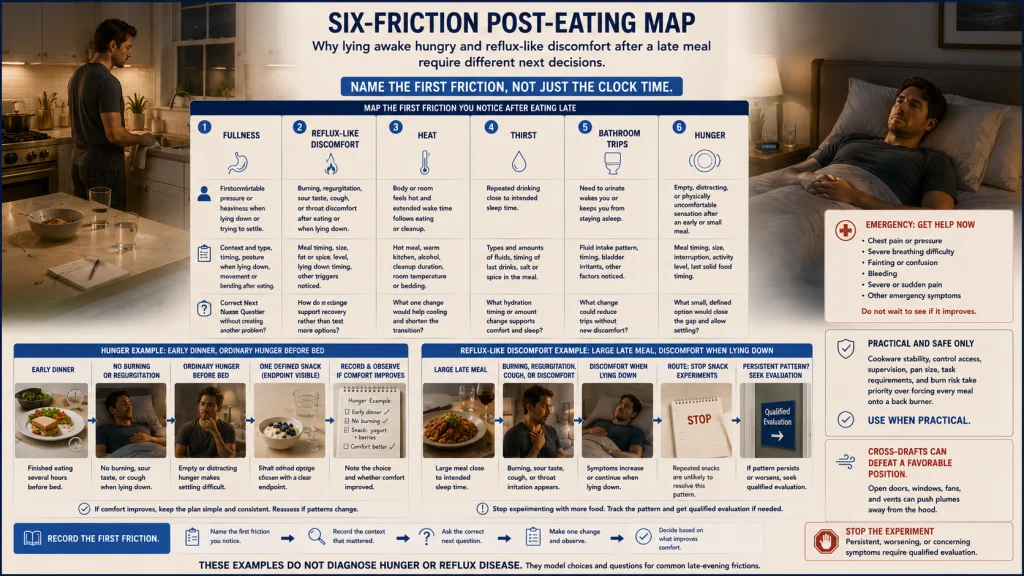
Map the Sleep Friction That Appears After Eating
Do not label every difficult night as a timing problem. Record the first physical or practical obstacle that appears after the eating event.
- Fullness: The body feels uncomfortably full when lying down or trying to settle.
- Reflux-like discomfort: Burning, regurgitation, sour taste, cough, or throat discomfort appears after eating or when lying down.
- Heat: A hot meal, warm kitchen, alcohol, or prolonged cleanup leaves the body or bedroom too warm.
- Thirst: The meal leads to repeated drinking close to sleep.
- Bathroom trips: Fluid intake or discomfort contributes to waking.
- Hunger: The person lies awake feeling empty, distracted, or physically uncomfortable.
Dinner ended unusually early. Before bed, the stomach feels empty, there is no burning or regurgitation, and a defined snack ends the eating event.
A large late meal is followed by burning, regurgitation, cough, or discomfort when lying down. This is a symptom question, not a reason to keep testing larger or different snacks.
The examples help separate two experiences. They do not diagnose hunger, reflux disease, or the cause of chest or abdominal discomfort.
Choose One Non-Clinical Change to Test
Choose the change that matches the suspected problem. Keep the test ordinary, reversible, and limited to routine comfort rather than treatment.
If a full dinner ends too close to sleep: Move the same familiar dinner earlier on comparison nights when the schedule allows.
If a late meal creates uncomfortable fullness: Try a smaller version of the usual late meal without assigning an exact portion.
If genuine hunger appears before bed: Use one defined snack event instead of forcing hunger or beginning open-ended grazing.
If grazing has no visible endpoint: Serve the intended amount once, close and store the remaining food, and record the end time.
The next section explains which surrounding conditions should remain reasonably stable. Do not change meal timing, food type, portion, alcohol, caffeine, bedtime, and exercise on the same night and then claim one factor caused the result.
If symptoms are persistent or significant, skip the experiment and seek appropriate care.
Keep Bedtime, Caffeine, Alcohol, and Room Conditions Stable
It is tempting to redesign the whole evening once sleep feels off. That usually makes the result harder to read. A meal comparison becomes more useful when the rest of the night changes as little as practical.
- Keep the intended bedtime and wake time reasonably consistent.
- Keep caffeine timing and amount stable, or remove it from both comparison conditions.
- Keep alcohol stable rather than adding or removing it on only one test night.
- Use similar room temperature, light, and noise conditions.
- Record unusual stress, illness, pain, travel, or sleep loss.
- Keep exercise type and finish time similar unless exercise is the variable being tested.
Alcohol deserves its own decision because early drowsiness can hide later sleep disruption. The guide to alcohol and overnight sleep quality separates sedation from the rest of the night.
Account for Evening Exercise and Shift-Work Schedules
An evening workout can delay dinner, increase hunger, add body heat, and create shower or cleanup time. In that case, the meal cannot be evaluated accurately without recording the session around it.
Use the guide to evening exercise and sleep to separate workout intensity, finish time, heat, stimulants, meal timing, and the full transition into bed.
For shift workers, define late relative to the intended sleep period, not the wall clock. A meal at 8 a.m. may be the final meal before daytime sleep, while a meal at midnight may occur in the middle of the person’s active period.
Keep the same decision fields: hunger, portion, composition, timing, and symptoms. Do not apply a daytime schedule’s cutoff to a night worker without considering when the main sleep episode begins.
Make the Kitchen Workflow Show a Clear Stopping Point
By this point, the problem may look less like a nutrition question and more like an evening-design problem. The eating event includes more than the food. Container size, serving format, leftovers, convenience products, dishes, storage, and kitchen cleanup can determine whether a quick snack ends quickly or becomes a second dinner.
Editorial observation: The product that makes food easiest to prepare can also make the stopping point less visible. An open multipurpose container beside the couch invites a different pattern from one serving placed on a plate while the remainder is stored.
Use a simple workflow:
- Decide whether this is a full meal, smaller late meal, or planned snack before opening several foods.
- Make the intended amount visible instead of eating repeatedly from a large container.
- Put remaining food away when the eating event begins or ends.
- Complete necessary dishes and surface cleanup without turning bedtime into a long kitchen project.
- Follow safe storage, refrigeration, reheating, and disposal instructions. Do not leave food out overnight for the sake of convenience.
This is a workflow tool, not a portion prescription. The aim is to make the amount and end time observable while respecting food-safety limits.
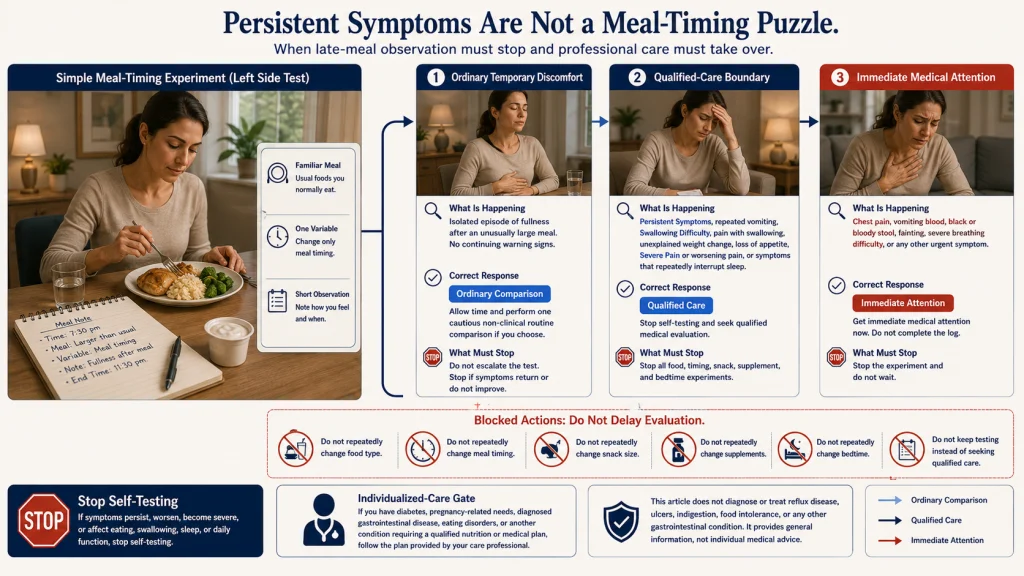
Move Persistent or Concerning Symptoms Out of a Timing Experiment
When discomfort keeps returning, it is understandable to keep adjusting dinner and hoping the next timing change will solve it. Occasional fullness after an unusually large meal is different from recurring symptoms that affect eating, swallowing, sleep, or daily function. This article does not diagnose or treat reflux disease, indigestion, ulcers, food intolerance, or another gastrointestinal condition.
The NIDDK’s digestive symptom guidance advises medical attention for concerns such as chest pain, persistent vomiting, swallowing difficulty or pain, digestive-tract bleeding, loss of appetite, or unexplained loss of body weight.
Escalation boundary: Seek qualified care for persistent reflux-like symptoms, repeated vomiting, swallowing difficulty, pain with swallowing, unexplained weight change, loss of appetite, severe or worsening abdominal pain, or symptoms that repeatedly interrupt sleep. Chest pain, vomiting blood, black or bloody stool, fainting, severe breathing difficulty, or another urgent symptom requires immediate medical attention.
Do not repeatedly change foods or meal timing to delay evaluation. People with diabetes, pregnancy-related needs, eating disorders, diagnosed gastrointestinal disease, or another condition requiring individualized nutrition should use their qualified care plan rather than this general experiment.
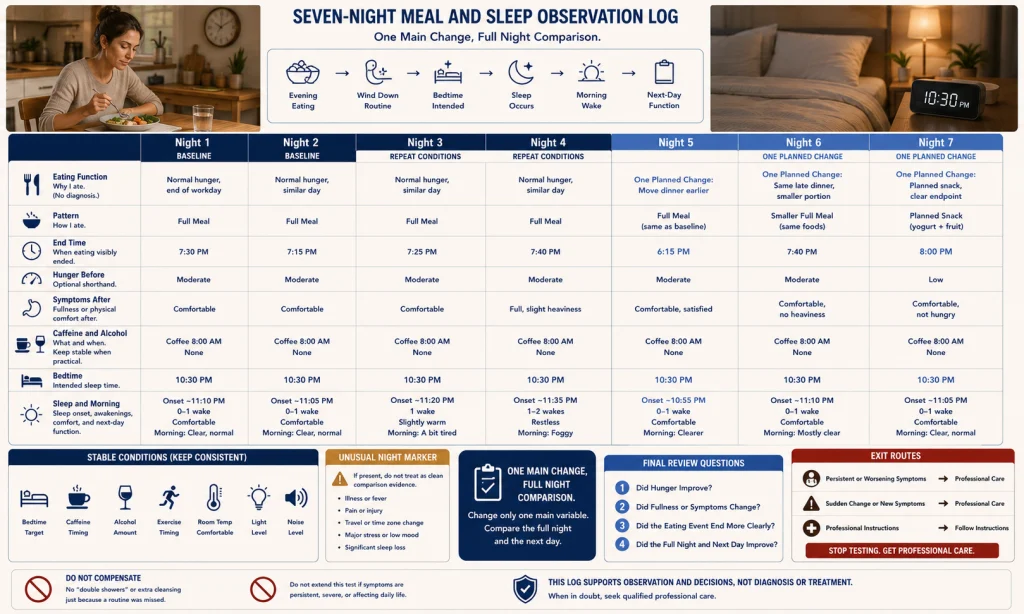
Use a Seven-Night Meal-and-Sleep Observation Table
The goal is not to score the food. Record the context, physical comfort, sleep pattern, and morning function while changing only one main variable.
| Night | Eating Function | Meal, Snack, or Grazing | Eating End Time | Hunger Before | Fullness or Symptoms After | Caffeine and Alcohol | Bedtime | Sleep and Morning Notes |
|---|---|---|---|---|---|---|---|---|
| 1 | Hunger, schedule, social, exercise, convenience, or emotion | Record the pattern | Record time | Low, moderate, or high | None or describe plainly | Source and timing | Record time | Sleep onset, awakenings, comfort, morning function |
| 2 | Record the function | Record the pattern | Record time | Low, moderate, or high | None or describe plainly | Keep stable when possible | Record time | Note unusual stress, illness, or room conditions |
| 3 to 4 | Repeat normal conditions | Keep comparable | Record time | Record | Record | Keep stable | Keep similar | Look for repeated friction, not one poor night |
| 5 to 7 | Repeat the same function | Apply one planned change | Record time | Record | Record | Keep stable | Keep similar | Compare the full night and next day |
Review the week by category. Did hunger improve while fullness worsened? Did the defined snack end more clearly than grazing? Did symptoms appear regardless of timing? The answer should identify the next question, not produce a verdict about one food.
Identify the Problem Category Before Moving the Clock
First decide whether the evening eating event is addressing hunger, a delayed schedule, social plans, exercise, convenience, or an open-ended habit. Then classify it as a full meal, a planned snack, or grazing without a clear endpoint.
Choose one change that matches the problem: an earlier dinner, a smaller late meal, a defined snack, or a clear end to grazing. Keep bedtime, caffeine, alcohol, exercise, and room conditions reasonably stable so the comparison remains readable.
When symptoms persist, worsen, or cross an escalation boundary, stop treating the issue as a timing puzzle. The correct next step is professional care, not a stricter rule about the clock.
FAQs
🌙 How are late night eating and sleep connected?
The connection may involve hunger, meal size, food context, timing, alcohol, caffeine, fullness, reflux-like symptoms, thirst, heat, bathroom trips, or the rest of the bedtime routine.
⏰ How long before bed should I stop eating?
There is no universal cutoff for every adult, schedule, and eating event. Compare the same familiar pattern at different times while tracking comfort, symptoms, sleep, and morning function.
🍽️ Is a late dinner the same as a bedtime snack?
No. A full delayed meal, a defined snack for genuine hunger, and unbounded grazing differ in amount, purpose, endpoint, and the work required before bed.
🥣 Should I go to bed hungry instead?
Do not assume hunger is preferable to every eating event. Identify whether the sensation is genuine hunger and whether a planned, defined response creates less friction than lying awake hungry or beginning open-ended grazing.
🏃 What if I exercise in the evening?
Record workout intensity, finish time, heat, stimulants, meal timing, showering, and bedtime-ready time. The workout and the meal may be contributing separate variables.
🧃 Do caffeine and alcohol affect the test?
Yes. Keep them stable or test them separately. Changing caffeine, alcohol, meal timing, portion, and bedtime together makes the result difficult to interpret.
🔥 Does burning after a late meal prove reflux disease?
No. This article cannot diagnose the cause. Persistent burning, regurgitation, swallowing problems, vomiting, weight change, bleeding, chest pain, or significant pain needs appropriate medical evaluation.
📋 What should I compare across seven nights?
Track the eating function, meal pattern, end time, hunger, fullness or symptoms, caffeine, alcohol, bedtime, sleep onset, awakenings, and morning function while changing one main variable.