Why Does Good Posture Feel Uncomfortable: Overcorrection, Fatigue, Unfamiliarity, or a Reason to Stop
Why Does Good Posture Feel Uncomfortable

Feeling uncomfortable after trying to sit or stand more upright does not prove that the old position was correct or that the new one is helping. First classify the sensation, notice when it begins, and check whether the shoulders, ribs, pelvis, jaw, or abdomen are being forced. Move away from extremes toward a lower-effort range,
How to Check Your Posture at Home Without Turning a Wall Test Into a Diagnosis

How To Check Your Posture

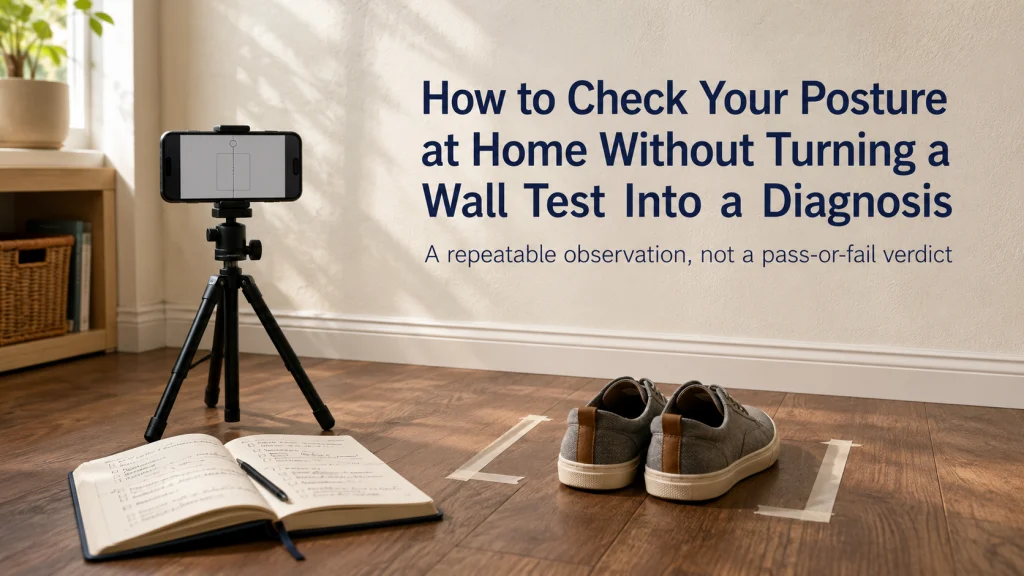
A useful posture check is a repeatable observation, not a verdict from one mirror glance, wall reference, photograph, or app overlay. Choose one ordinary task, keep the time, surface, footwear, camera position, and recent activity as consistent as practical, then record appearance alongside comfort, effort, breathing, contact, and symptoms. Compare ordinary posture with a deliberately

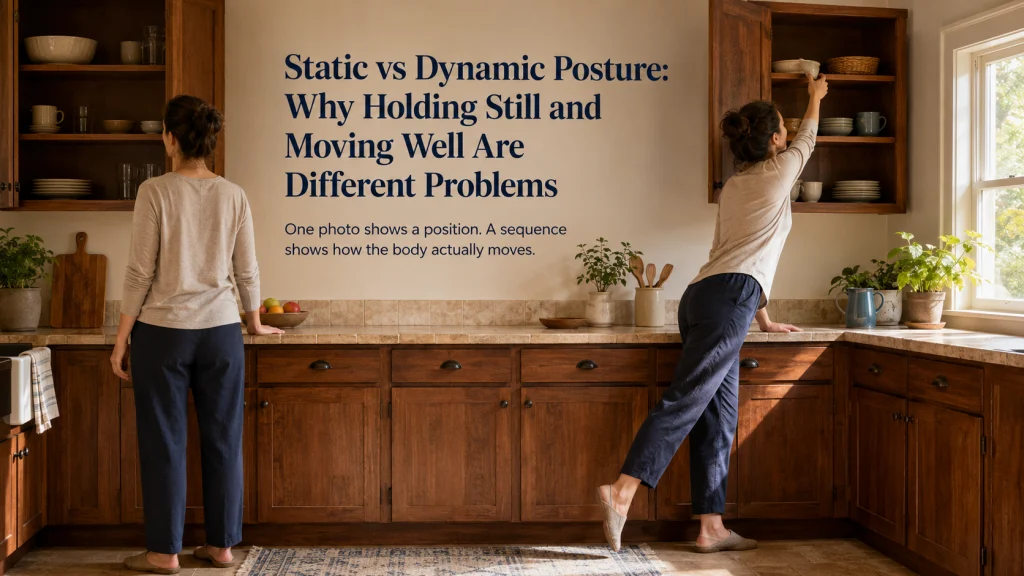
Static vs Dynamic Posture: Why Holding Still and Moving Well Are Different Problems

Static Vs Dynamic Posture

Static posture describes how the body is organized while a position is being held. Dynamic posture describes how support, balance, reach, timing, and force change while the body moves. Many household tasks are mixed because they combine stillness, transitions, and repeated movement. A chair or cushion may change contact during sitting, but it cannot automatically

Neutral Spine Position: Find a Comfortable Middle Without Flattening or Overarching Your Back

Neutral Spine Position

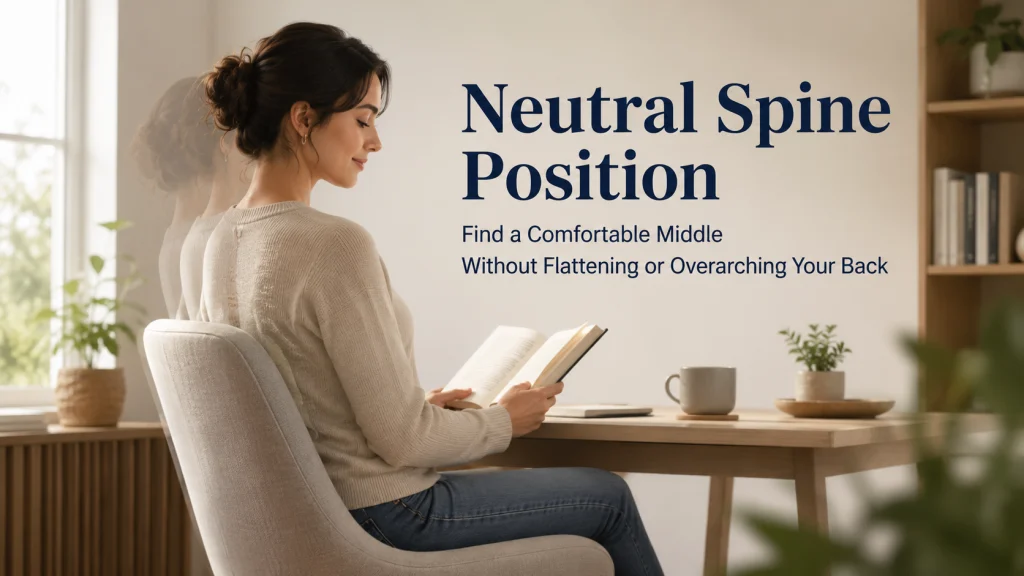
A neutral spine position is a comfortable reference that keeps the spine’s natural curves without pressing the back flat or forcing a larger arch. It is not one angle to copy or a pose to hold from morning to night. The useful position changes with the task, the support under the body, and the amount

What Is Good Posture: A Comfortable, Adaptable Position, Not a Military Pose

What Is Good Posture

Good posture is not a rigid shape that everyone should hold from morning to night. It is a position that fits the task, feels manageable, uses support where it helps, and leaves room to move. Alignment can be a useful starting point, but a photograph cannot tell you how hard someone is working to hold

How to Improve Posture: Build Awareness, Find Neutral, Vary Position, and Stop Forcing a Perfect Shape

How To Improve Posture

Learning how to improve posture starts with awareness, support, effort, and position changes, not with forcing the body into one fixed shape. Notice what task you are doing, where the body is supported, how hard you are working to hold the position, and how long you stay there. Choose one observable variable, make a low-force