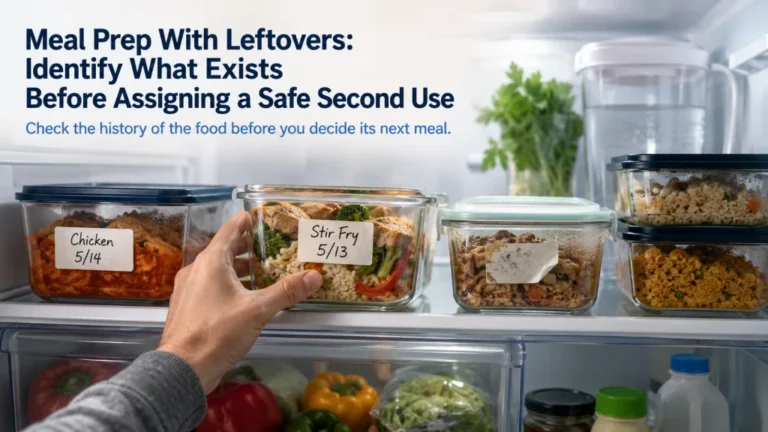
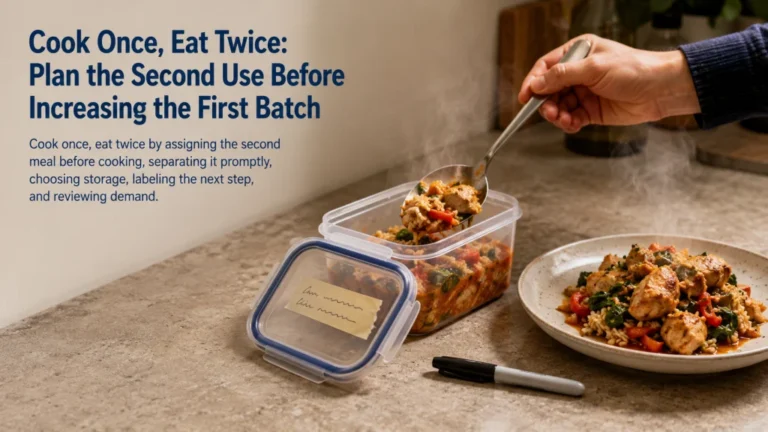
A useful weekly meal plan starts by counting the meals that will actually happen at home, not by filling every calendar box with a new recipe. Mark meals away from home, late work periods, planned leftovers, and flexible nights before deciding what to cook. Then match meal difficulty to the time and help available, use food that should be used first, and keep one dependable backup. The result should make the week feel lighter, not turn every skipped recipe into evidence that the plan failed.
Seven Nights Do Not Require Seven New Dinners
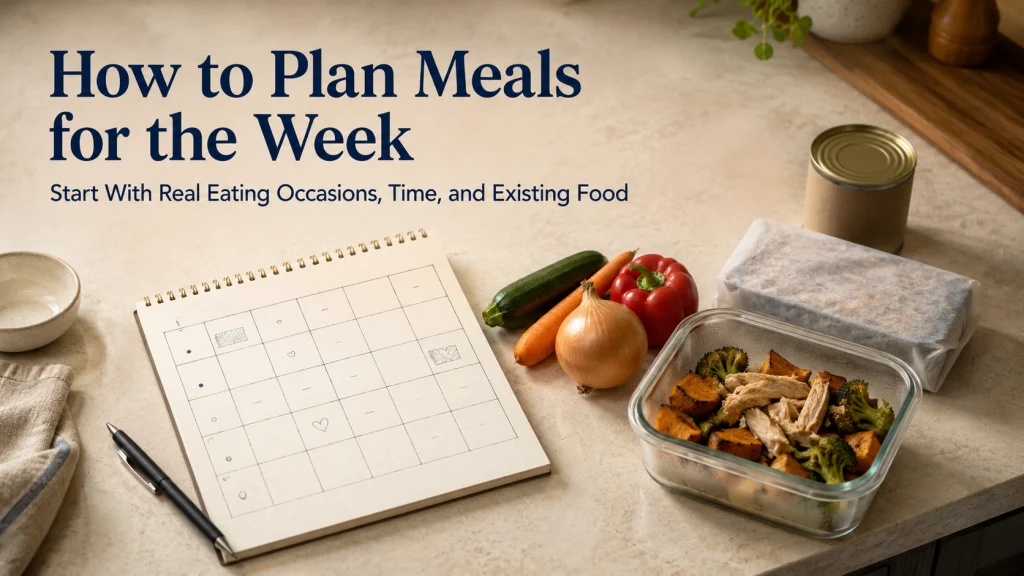
Learning how to plan meals for the week becomes easier when the first step is subtraction. A calendar may show seven dinner boxes, but those boxes do not all represent the same amount of cooking. One night may be spent at a restaurant, another may end after a late work shift, a third may already be reserved for leftovers, and a fourth may need to stay open because the week is still uncertain.
That distinction matters on a tired evening. A full calendar can look reassuring on Sunday and accusatory by Wednesday, even when the problem was never a lack of discipline. The plan simply asked for dinner in places where dinner was unlikely to be cooked.
| Night | What is already known | Does it need a new dinner plan? |
|---|---|---|
| Monday | Normal evening at home | Yes |
| Tuesday | Dinner away from home | No |
| Wednesday | Late work night | No new recipe; keep it flexible |
| Thursday | Planned leftovers | No |
| Friday | Normal evening at home | Yes |
| Saturday | More time and help available | Yes |
| Sunday | Backup or open night | No fixed recipe |
This example begins with seven dinner boxes but ends with only three meals that need active selection. The other four nights are not missing. They already have a realistic role. That small shift can replace the feeling of falling behind with the calmer sense that the calendar is telling the truth.
Editorial observation: Printed planners often give every meal the same visual weight even though household availability and cooking burden vary sharply. A blank or flexible slot can be more useful than a recipe that will predictably be skipped.
This article focuses on deciding what will be eaten and when. The broader beginner meal-prep process covers the later decisions around shopping, preparation, storage, and household routines.
Note: This is a household planning framework, not an individualized nutrition plan. It does not set calories, macros, therapeutic meal timing, disease-specific menus, allergy plans, pregnancy nutrition, or feeding plans for infants or children. Individual medical or nutrition needs should be handled with an appropriately qualified professional.
Give Each Kind of Meal Slot a Clear Meaning
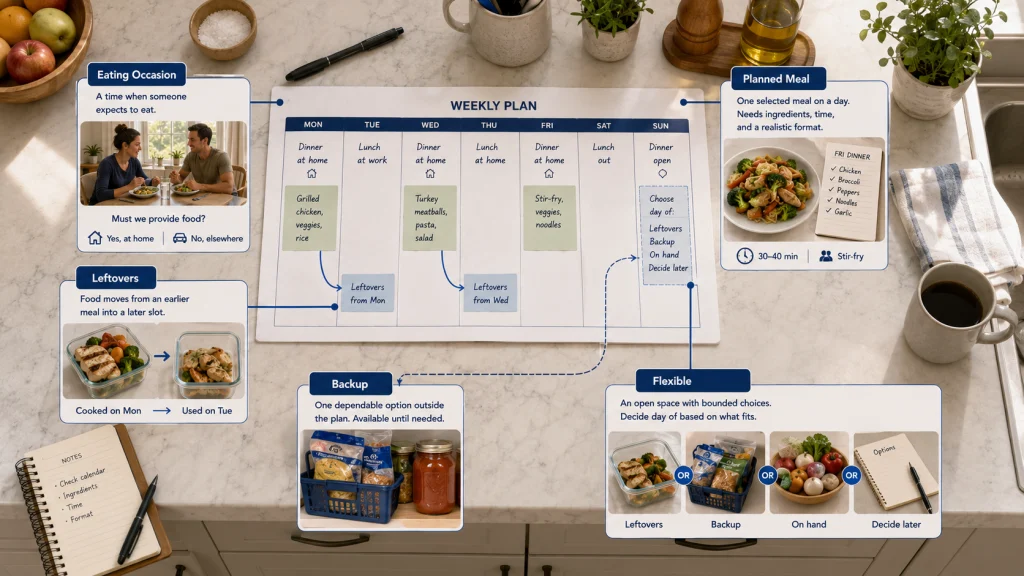
A weekly plan becomes harder to trust when every box is labeled simply “meal.” The word hides several different situations. Some boxes need a recipe, some need food already cooked, and some need permission to remain undecided until the day arrives.
| Meal format | What it means | What must be decided now |
|---|---|---|
| Eating occasion | A time when someone expects to eat, whether at home or elsewhere | Confirm whether the household must provide food |
| Planned meal | A meal chosen for a specific day or time | Select a realistic format or recipe |
| Leftover slot | A meal reserved for food prepared earlier in the week | Confirm which earlier meal is expected to supply it |
| Backup | A dependable option used when the original plan no longer fits | Confirm that it is already available or easy to keep |
| Flexible slot | A meal left open because timing, appetite, attendance, or plans may change | Set a boundary, such as use leftovers, use the backup, or decide that day |
These labels reduce a quiet kind of pressure. A planned meal asks for ingredients and cooking time. A leftover slot depends on another meal producing enough food. A flexible slot asks for less certainty, but it still needs a simple boundary so it does not turn into last-minute confusion.
Key decision: Label the function of each meal slot before assigning a dish. The label should explain what kind of planning work is still required.
Mark Meals Away From Home and Unavailable Cooking Windows
Before selecting meals, place the week’s fixed constraints on the calendar. Include work shifts, appointments, evening activities, travel, meals with other people, planned takeout, and any period when the kitchen will not realistically be used. This is not about scheduling every minute. It is about noticing where the week has already made a decision for you.
Imagine a Wednesday when work ends late and everyone arrives home at a different time. A recipe with several components may look reasonable on paper, but the cooking window is fractured before the day begins. Calling that night flexible is not lowering the standard. It is matching the plan to the life around it.
Attendance matters too. A dinner for two should not remain unchanged when only one person will be home. A lunch does not need to be prepared for a day when lunch is provided elsewhere. A weekend breakfast may need only a loose note when household members wake at different times and already use simple food on hand.
- Remove meals that will happen away from home.
- Mark late arrivals and split schedules before choosing a meal format.
- Reduce the expected amount of food when fewer people will be present.
- Use a flexible slot when the evening is genuinely uncertain.
Once these constraints are visible, the remaining boxes show the real meal-selection task. A separate meal-prep schedule can later decide when planning, shopping, cooking, and kitchen resets will happen. At this stage, the goal is only to identify which eating occasions the household must support.
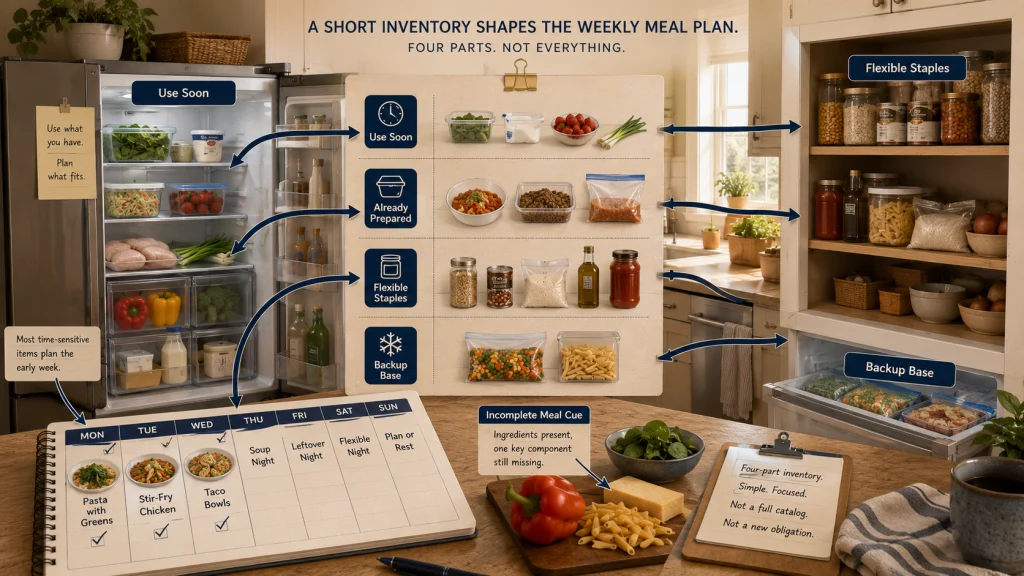
Inventory Food That Should Be Used First
Do a short inventory before choosing the remaining meals. This is not a complete catalog of every item in the refrigerator, freezer, and pantry. A long inventory can become another task to maintain. The useful version is smaller: it identifies the food most likely to shape this week.
- Use soon: opened packages, produce, dairy, cooked food, or other items with the shortest practical use window.
- Already prepared: leftovers, cooked components, or frozen portions that can fill a planned slot.
- Flexible staples: foods that can support more than one meal format without requiring a fixed recipe.
- Backup base: frozen or shelf-stable food that can remain available if the week changes.
Turn the most time-sensitive food into a clue rather than an obligation. Vegetables that should be used soon may guide Monday’s dinner, but they do not need to appear in several meals merely because they are present. The inventory should narrow the field, not make the calendar feel crowded again.
Also check whether an ingredient is complete enough to support a meal. Finding one useful component can feel like progress, but it does not mean the household already has everything required. Record the missing part only after the meal survives the rest of the planning process.
Choose Meal Difficulty From Available Time and Help
Meal difficulty is not determined by cooking time alone. A short recipe can still demand constant attention, several pans, precise timing, and immediate cleanup. Another meal may take longer overall but leave room to answer a message, help someone with homework, or sit down for a few minutes while it cooks.
Think about the shape of the evening, not just the number of minutes. A short, interrupted window fits a meal with few steps and little coordination. A low-energy night may support simple assembly or mostly unattended cooking. A spacious weekend window may be the better place for a meal that is enjoyable but genuinely more involved.
Help counts only when it is reasonably expected. Planning a demanding meal around someone who might be available can leave one person carrying the whole evening when plans change. When shared work is part of the plan, make the split clear enough that each person can begin without waiting for instructions.
A simple low, medium, or high-effort label can be enough. The purpose is not to grade the recipe. It is to prevent three demanding meals from landing on the three evenings when the household has the least room for them.
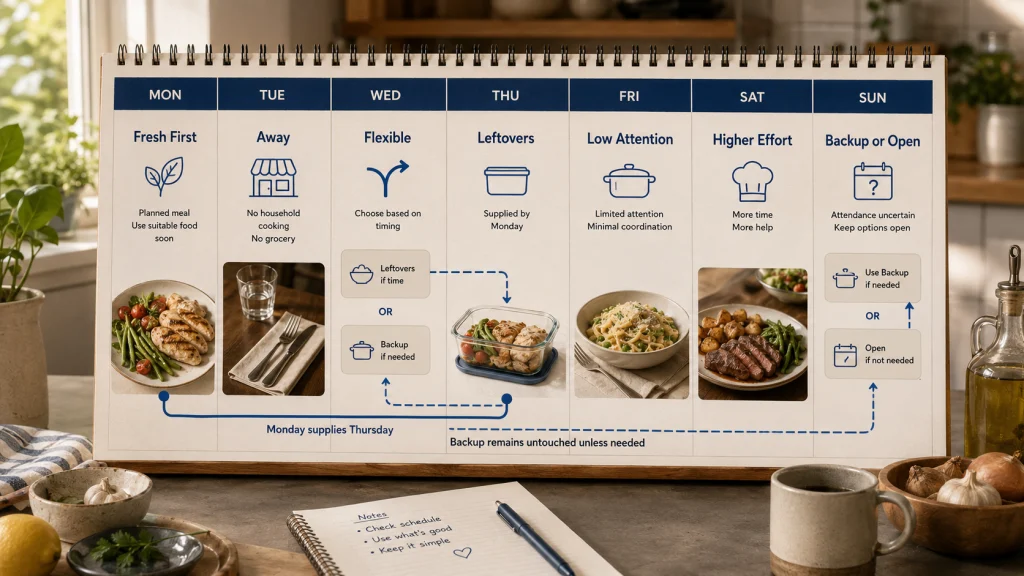
Assign Fresh, Frozen, Shelf-Stable, Leftover, and Flexible Meals Across the Week
After constraints and use-first food are visible, assign meal formats across the calendar. Fresh, frozen, shelf-stable, leftover, and flexible are not rankings. They are different tools. Each one can make the week easier when it is placed where it solves a real problem.
| Day | Known condition | Assigned format | Planning note |
|---|---|---|---|
| Monday | Normal evening; food should be used soon | Fresh-first planned meal | Use the most time-sensitive suitable food |
| Tuesday | Dinner away from home | No household dinner | Do not buy for this slot |
| Wednesday | Late work night | Flexible | Use leftovers or the backup depending on timing |
| Thursday | Food expected from Monday | Leftover | Confirm Monday can reasonably supply it |
| Friday | Limited attention | Frozen or low-attention planned meal | Avoid several coordinated steps |
| Saturday | More time and help | Higher-effort planned meal | Choose it intentionally, not by habit |
| Sunday | Attendance uncertain | Shelf-stable backup or open slot | Keep the decision reversible |
This calendar contains only three fixed cooked meals, yet every night has enough direction. The household knows which evening is away, which one uses leftovers, which one stays flexible, and where the backup belongs. Nothing has to be invented at the end of a difficult day.
The relief comes from having fewer promises to keep. A flexible Wednesday does not have to compete with a fresh Monday or a more involved Saturday. Each night carries only the amount of planning it can reasonably hold.
Key decision: A complete plan does not need a named recipe in every box. It needs enough information to prevent avoidable shopping, unrealistic cooking, and forgotten food.
Do Not Use One Ingredient in More Meals Than Its Quantity Supports
Ingredient reuse can make a weekly plan more efficient, but the calendar may quietly promise the same food several times without checking whether enough is available. On paper, one ingredient can appear in Monday’s dinner, Thursday’s leftovers, and Saturday’s meal without ever running out. In the kitchen, the first meal may use nearly all of it.
Check reuse in three directions:
- How many meals depend on the ingredient?
- Will an earlier meal consume most or all of it?
- Is the ingredient still expected to be available when the later meal occurs?
When the answer is uncertain, change the later meal rather than assuming more food will appear. Another option is to leave the later slot flexible until the earlier meal shows what remains. This small pause can prevent the frustrating moment when a planned meal reaches the stove and its main ingredient is already gone.
The separate guide to how much food to meal prep addresses quantity decisions in more depth. Here, the required check is simpler: do not assign the same limited ingredient to more meal slots than it can plausibly support.
Add One Backup That Does Not Depend on Fresh Food
A backup meal protects the weekly plan from a missed shopping trip, an unexpectedly late day, a changed social plan, or fresh food that was used elsewhere. It is the quiet option that keeps one disrupted evening from pulling the rest of the week apart.
The backup should be dependable enough to remain available until needed and simple enough to use after the original plan has already become inconvenient. It does not need to feel special, and it does not need to satisfy every possible preference. It needs to work when time and attention are running low.
- It is already in the home or intentionally added to the final grocery list.
- It does not depend on food expected to be used earlier in the week.
- It requires less time, attention, or cleanup than the meal it may replace.
- Using it will not break another planned meal.
A frozen meal, a frozen prepared component, or a simple shelf-stable combination can serve this role. The exact choice depends on the household, but one dependable backup is usually enough for a small weekly test. Several backups may feel safer at first, yet they can create a second pile of food waiting for a purpose.
Note: A backup is different from an unplanned extra purchase. It has a defined role on the calendar and remains available for the situations the plan already expects may occur.
Check Variety Without Demanding a Different Recipe Every Day
Variety can come from meal format, texture, temperature, seasoning, serving method, or the role a component plays. It does not require seven unrelated recipes. For many households, the harder question is not whether two meals share an ingredient. It is whether the repetition still feels pleasant by the time the second meal arrives.
Review the calendar through that lens. One person may be comfortable repeating breakfast but dislike the same dinner three nights in a row. Another household may welcome a repeated component because it lowers work, as long as the final meals are assembled differently. The plan should reflect those preferences without turning variety into a new performance standard.
Use the guide to meal prep without eating the same thing every day when repetition is the main obstacle. For the weekly calendar, the goal is simply to notice whether the chosen formats feel varied enough without creating more cooking than the household wants.
Convert Only the Final Plan Into a Grocery List
Do not build the grocery list from the first draft of the calendar. Early plans often contain meals that disappear once the real week is added. Shopping too soon can leave the refrigerator holding ingredients for a version of the week that was never likely to happen.
Before translating the plan into purchases, confirm that:
- Meals away from home have been removed.
- Existing food has been assigned where appropriate.
- Leftover slots have a realistic source.
- Fresh food is not promised to more meals than it can support.
- The backup is available without disrupting another meal.
- Flexible slots have a clear boundary.
Then list only what is missing for the meals that remain. The detailed process belongs in the meal-prep grocery list guide. The weekly plan should provide clean input for that step rather than trying to become the shopping list itself.
Practical tip: Keep uncertain ingredients off the list until the related meal has a confirmed place on the calendar. A recipe idea is not yet a shopping requirement.
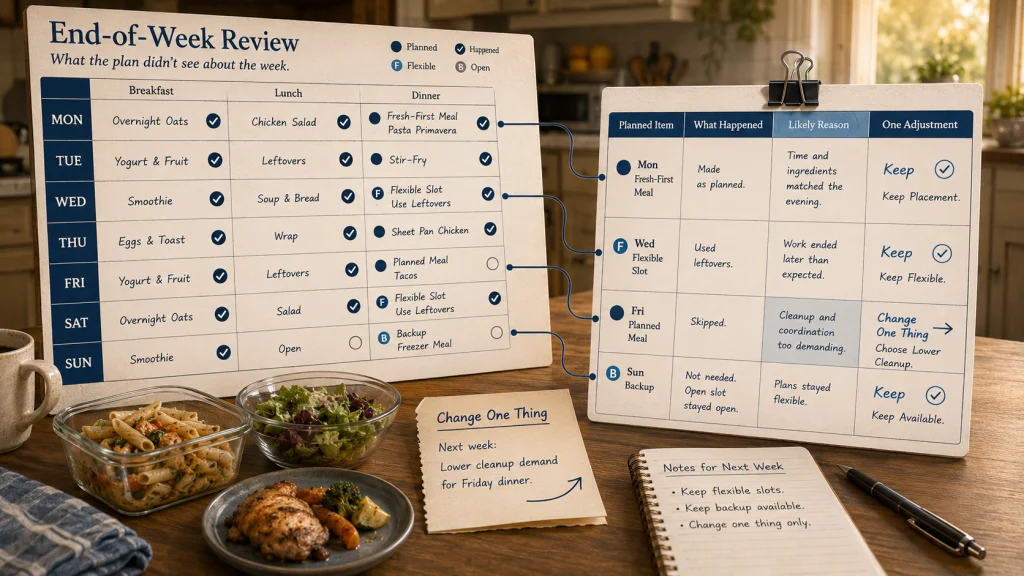
Review the Plan After the Week and Record What Was Skipped
A weekly meal plan is a test of household fit, not a contract. When a meal is skipped, the useful question is not, “Why did I fail to follow the plan?” It is, “What did the plan fail to notice about this day?” That change in wording keeps the review practical and makes it easier to adjust without turning one difficult week into a judgment about the household.
| Planned item | What happened | Likely reason | One useful adjustment |
|---|---|---|---|
| Monday fresh-first dinner | Made as planned | Time and ingredients matched the evening | Keep the same placement rule |
| Wednesday flexible slot | Used leftovers | Work ended later than expected | Keep Wednesday flexible |
| Friday planned meal | Skipped | Cleanup burden was too high | Choose a lower-cleanup format next week |
| Sunday backup | Not needed | The open slot stayed open | Keep the backup available rather than replacing it automatically |
Record the reason a meal changed instead of merely marking it as unfinished. A meal may have been too difficult, placed on the wrong night, dependent on unavailable help, based on food that was already used, or unnecessary because plans changed. Each reason points toward a different adjustment.
Change one obvious source of friction in the next plan. Keep the parts that worked, including a flexible slot that absorbed a late night or a backup that never had to be used. A calm review protects useful structure instead of discarding the whole week because one box went differently.
Build Next Week From Real Eating Occasions
Start with the meals that will actually happen at home. Place fixed constraints, remove meals away from home, identify food that should be used first, and match each remaining slot to the time and help available. Assign fresh, frozen, shelf-stable, leftover, backup, and flexible formats only where they serve a clear purpose.
The finished calendar should feel believable when you imagine reaching the middle of the week tired, busy, or slightly off schedule. Once it does, it can support the next decisions in the complete meal-prep process. The strongest plan is not the one with the most recipes. It is the one that leaves enough room for real life without losing track of the food already waiting at home.
FAQs
🗓️ Can a weekly meal plan include blank days?
Yes. A blank day can be useful when attendance, timing, or appetite is uncertain, but it should still have a boundary. Label it as flexible and decide whether it will use leftovers, the backup, food already at home, or a same-day decision.
🍽️ How many new recipes should I plan each week?
There is no universal number. Count the meals that actually need household cooking, then subtract meals away from home, leftovers, backups, and flexible slots. The remaining number is a more realistic starting point than the number of days on the calendar.
🥣 Should breakfast, lunch, and snacks all go on the plan?
Include an eating occasion when the household needs to make a decision about it. A repeated breakfast that already works may need only a short note, while a weekday lunch with changing attendance may need a clearer plan. Do not add detail that does not change shopping or preparation.
🔄 What should I do when plans change midweek?
Check which food should be used first and which later meal depends on the changed slot. Move the flexible slot, use the backup, or reassign leftovers before adding a new meal. The goal is to protect the rest of the plan rather than force the original calendar.
📦 Can leftovers count as a planned meal?
Yes. A leftover slot is a real part of the plan when an earlier meal is expected to supply it. Confirm that the earlier meal can plausibly produce enough food and that using those leftovers will not conflict with another planned use.
🛒 When should I make the grocery list?
Make it after the weekly calendar is final. Remove meals away from home, confirm existing food, check leftover and backup roles, and resolve uncertain recipes first. Then list only the ingredients missing from the meals that remain.