Shower frequency is better decided by activity, sweat, visible soil, odor, climate, skin response, access, and professional instructions than by one calendar number. Set an ordinary baseline, then add event-triggered bathing after situations such as heavy sweating, close-contact activity, swimming, or soil-heavy work. A full shower is not always necessary when a targeted wash safely addresses the task. Persistent odor, sudden changes, skin symptoms, wounds, fever, night sweats, or sweating that disrupts daily life requires appropriate evaluation instead of a more aggressive routine.
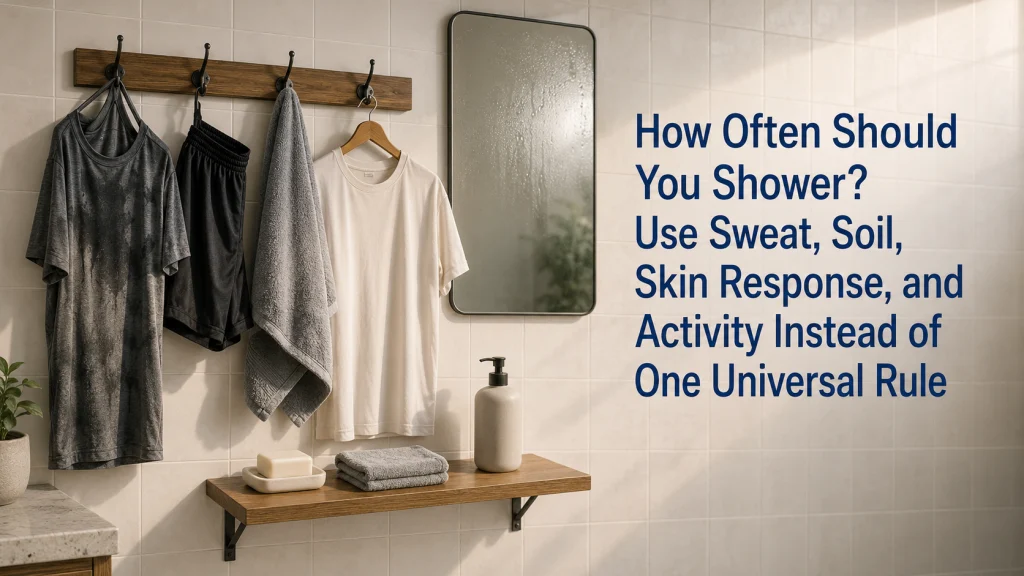
Four Adults Can Need Four Different Bathing Decisions on the Same Day
One adult works from home during cool weather and has little sweat or visible soil. Another finishes a close-contact sport. A third spends the day doing outdoor work that leaves soil and debris on the skin and clothing. A fourth takes a long, hot shower and notices tight, itchy skin afterward.
The date is the same, but the useful bathing decision is not. The first person may follow an ordinary baseline. The athlete may need an event-triggered shower and a clothing change. The outdoor worker may need to follow workplace or exposure instructions. The person with irritated skin may need to review heat, duration, cleanser, and aftercare rather than simply increasing frequency.
The question is not whether one schedule proves better hygiene. It is which bathing method fits the activity, exposure, skin response, and current instructions.
For the broader routine, begin with the personal hygiene guide. The bathing and body-odor guide can help when the uncertainty is not only frequency but also technique, product function, fabric odor, or post-shower troubleshooting.
Define the Bathing Options Before Setting a Schedule
Several actions are often grouped under the word shower even though they solve different tasks. Naming the option prevents a full-body routine from becoming the automatic answer to every situation.
- Full shower or bath: Washing most or all external body areas as part of one bathing session.
- Targeted washing: Cleaning selected external areas that need attention, such as underarms or another appropriate area, without repeating a full shower.
- Rinse: Using water to remove sweat, pool water, or surface residue when that method fits the situation and current instructions.
- Event-triggered bathing: Bathing because a specific activity, exposure, or condition occurred rather than because the calendar reached a fixed day.
- Skin response: What the skin does after the routine, including comfort, tightness, itching, redness, cracking, or irritation.
- Medical or professional instruction: Guidance linked to a wound, surgery, condition, workplace, contamination event, or another situation that takes priority over general frequency advice.
Key decision: Choose the smallest bathing action that safely completes the task, unless a clinician, workplace, exposure protocol, or public-health instruction requires something more specific.
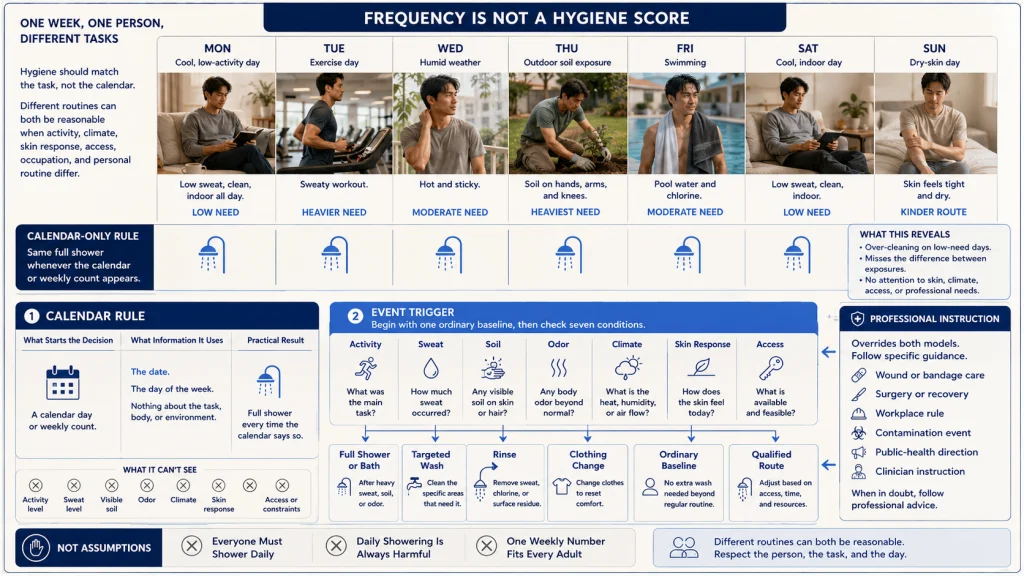
Do Not Treat Frequency as a Hygiene Score
A calendar count cannot capture sweat, visible soil, climate, work demands, skin response, cultural routine, water access, clothing changes, or professional instructions. Two adults can bathe at different frequencies and both be following a reasonable routine for their circumstances.
Frequency also changes within the same person’s week. A cool, low-activity day may not create the same need as an outdoor shift, a workout, a swim, or a close-contact activity. Skin comfort may also change with season, water temperature, cleanser use, and age-related dryness.
Shame makes this decision less accurate. It can push someone toward excessive heat, repeated scrubbing, or unnecessary extra showers while hiding the actual issue, such as retained odor in clothing, incomplete drying, limited bathroom access, or a symptom that needs evaluation.
| Decision Model | What It Uses | Practical Result |
|---|---|---|
| Calendar-only rule | The date or weekly count, regardless of activity, exposure, skin response, or access | The same full shower is assigned even when the task has changed. |
| Event-triggered routine | An ordinary baseline plus sweat, soil, odor, exposure, symptoms, and professional instructions | The bathing method changes when the day creates a different need. |
Set an Ordinary Baseline From Seven Practical Factors
A baseline is the routine that usually works on an ordinary day. It is a starting point, not a permanent rule. Build it from the conditions that repeatedly affect the body and the bathing setup.
| Factor | Question | How It May Change the Baseline |
|---|---|---|
| Activity | Was the day mostly sedentary, moderately active, or physically demanding? | More activity may create an event-triggered need that is not present on a quiet day. |
| Sweat | Was sweating light, heavy, prolonged, or held under clothing? | Heavy or prolonged sweat may make washing, drying, and clothing changes more useful. |
| Visible soil | Is there dust, debris, grease, mud, or another removable material on external skin? | Visible soil may make a full shower or a specific workplace process appropriate. |
| Odor | Does ordinary odor remain manageable with the current routine, clothing, and product use? | Persistent return after washing needs troubleshooting rather than automatic frequency increases. |
| Climate | Is the environment hot, humid, cold, dry, or changing seasonally? | Heat may increase sweat, while cold or dry conditions may increase skin discomfort. |
| Skin response | Does bathing leave skin comfortable, or does it lead to tightness, itching, redness, or cracking? | Discomfort may call for technique and aftercare changes or professional evaluation. |
| Preference and routine | What schedule is practical, culturally appropriate, private, and sustainable? | A usable routine must fit time, water access, bathroom setup, products, and laundry handoffs. |
Editorial observation: A full shower may be unnecessary for the immediate task when the relevant external areas can be washed safely, clean clothing is available, and no exposure rule requires full-body bathing. Time, water access, laundry, and bathroom setup are part of routine fit, not evidence of personal failure.
Add Event Triggers After Sweat, Soil, Swimming, or Close Contact
The baseline covers ordinary days. Event triggers handle the days that create a different hygiene task.
| Event | First Decision | Important Boundary |
|---|---|---|
| Heavy sweating or sustained heat | Decide whether a full shower, rinse, targeted wash, drying step, and clothing change are needed. | Sudden or severe sweating, night sweats, or daily-life disruption requires evaluation. |
| Exercise | Consider sweat, shared equipment, damp clothing, travel time, and facility access. | Use the dedicated post-workout workflow rather than applying one exercise rule to every day. |
| Soil-heavy outdoor or manual work | Remove visible material from external skin and change affected clothing. | Follow workplace, chemical, contamination, or protective-equipment instructions when they apply. |
| Swimming | Consider pool, open-water, facility, skin, and hair needs separately. | Follow facility, health, and clinician instructions when exposure or skin concerns are present. |
| Close-contact sport | Address sweat, shared surfaces, protective equipment, and clothing promptly. | Skin lesions, wounds, rash, pain, drainage, or fever require appropriate evaluation. |
| Occupational or environmental exposure | Use the exact decontamination or washing procedure provided for that exposure. | General shower-frequency advice does not replace exposure protocols. |
For exercise-specific timing, shared facilities, and delayed cleanup, use the guide on showering after a workout.
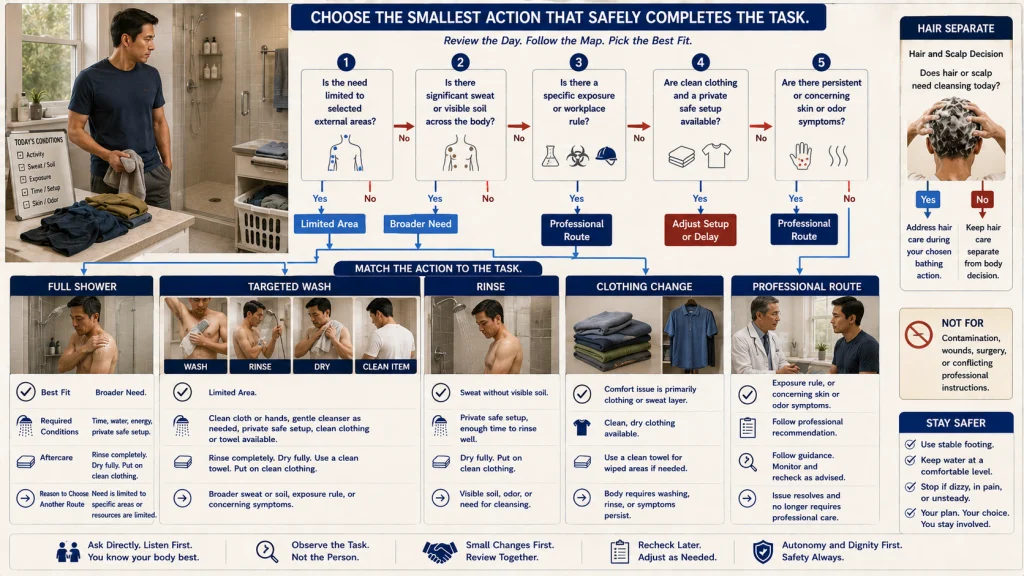
Decide When Targeted Washing Can Complete the Task
A full shower is only one bathing option. Targeted washing may be enough when the need is limited to selected external areas, there is no significant exposure, clean clothing is available, and the method does not conflict with medical or workplace instructions.
| Situation | Targeted Washing May Fit When | A Full Shower or Other Route May Fit Better When |
|---|---|---|
| Ordinary low-activity day | Only a few external areas need washing and the rest of the body remains comfortable. | There is broader sweat, visible soil, odor, or personal preference for a full routine. |
| Limited time or water access | A safe, private setup allows selected areas to be washed and dried thoroughly. | The exposure or professional instruction requires complete washing. |
| Skin feels dry after frequent bathing | Reducing the washed area lowers unnecessary cleanser, heat, and friction. | Symptoms persist, worsen, or include cracking, bleeding, rash, pain, or drainage. |
| Odor seems localized | The source is an ordinary external area and clothing or towels are also addressed. | Odor remains unexplained, returns after reasonable care, or comes from an intimate, urinary, foot, or textile source needing another route. |
Targeted washing still requires appropriate cleanser use when needed, complete rinsing, careful drying, and clean items afterward. It is not a shortcut around contamination or medical instructions.
Separate Body Bathing From Hair Washing
Choosing between a full shower and a targeted wash still leaves one separate decision: whether the hair and scalp need attention too. Body bathing frequency and hair-washing frequency answer different questions. A person may shower the body without washing the hair, or may need to rinse or wash the hair after a specific exposure while keeping the body routine unchanged.
Hair and scalp needs vary with hair type, scalp response, styling, activity, sweat, protective styles, products, and professional instructions. This article does not set a hair-washing schedule.
Keeping the decisions separate prevents one routine from becoming unnecessarily long. It also makes the two-week log easier to interpret because body bathing and hair washing are not treated as one event.
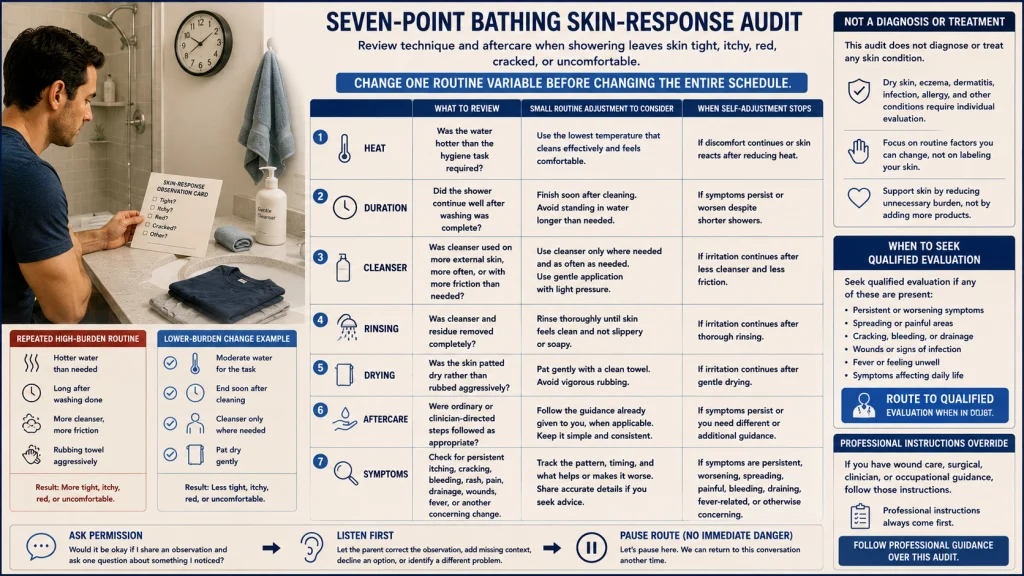
Adjust Heat, Duration, Cleanser, and Aftercare When Skin Reacts
When bathing leaves skin tight, itchy, red, cracked, or uncomfortable, changing frequency alone may miss the part of the routine creating irritation. Review technique and aftercare before assuming that the calendar is the only variable.
- Heat: Was the water hotter than needed for the task?
- Duration: Did the shower continue after washing was complete?
- Cleanser: Was cleanser used on more skin, more often, or with more friction than the task required?
- Rinsing: Was cleanser removed completely?
- Drying: Was the skin patted dry rather than rubbed aggressively?
- Aftercare: Were any clinician-directed or ordinary skin-care steps followed as appropriate?
- Symptoms: Is there persistent itching, cracking, bleeding, rash, pain, drainage, or another concerning change?
Use the guide on how to shower properly when the main question is water temperature, cleanser placement, rinsing, drying, and aftercare rather than frequency.
Safety warning: This article does not diagnose or treat dry skin, eczema, dermatitis, infection, or another skin condition. Persistent or concerning symptoms require qualified evaluation.
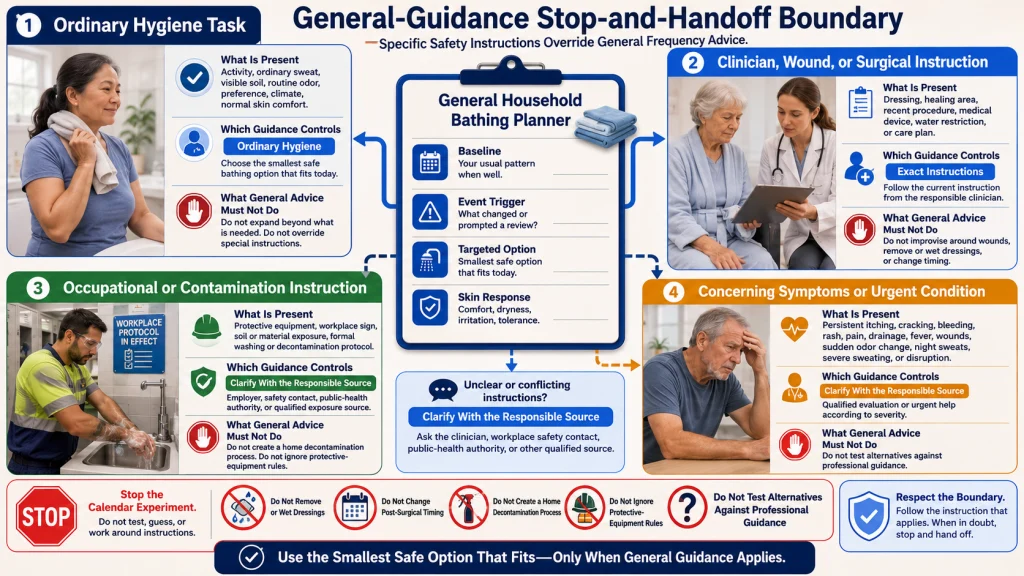
Follow Occupational, Wound, Surgical, and Clinician Instructions
General bathing advice stops where a specific exposure, wound, procedure, condition, or workplace rule begins. The correct method may involve timing, water restrictions, dressings, protective equipment, decontamination, or a cleanser chosen for that exact situation.
Medical and occupational boundary: Follow current clinician, wound-care, surgical, workplace, contamination, and public-health instructions over this article. Do not improvise bathing around wounds, recent procedures, chemical exposure, infection concerns, immunocompromise, or required decontamination.
When instructions are unclear or conflict with the home routine, contact the responsible clinician, workplace safety contact, or other qualified authority. A general calendar rule cannot resolve a situation-specific safety requirement.
Do Not Compensate for a Missed Routine With Repeated Full Showers
Once medical, occupational, and exposure instructions have been separated out, an ordinary missed routine can be handled without punishment. Missing the usual bathing time does not create a debt that must be repaid with several full showers. Return to the current task: Is there sweat, visible soil, odor, an exposure, a skin concern, or a professional instruction that needs action now?
If the answer is an ordinary hygiene need, choose the option that fits today’s condition and resume the baseline afterward. Extra heat, cleanser, friction, and repetition can create skin discomfort without making the routine more accurate.
Restart rule: Use the next safe and practical bathing opportunity. Choose a full shower, targeted wash, rinse, clothing change, or other required route based on the present condition rather than trying to make up for the calendar.
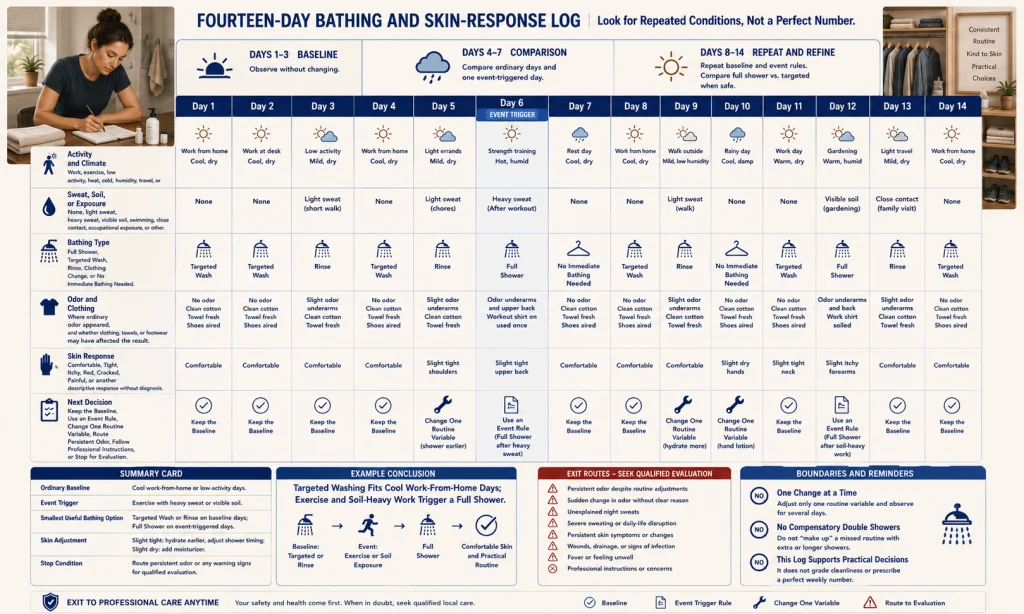
Run a Two-Week Bathing and Skin-Response Log
A short log can reveal whether the current baseline fits ordinary days and which events need a different response. Keep it observational rather than using it to grade cleanliness or appearance.
| Day | Activity and Climate | Sweat, Soil, or Exposure | Bathing Type | Odor and Clothing | Skin Response | Next Decision |
|---|---|---|---|---|---|---|
| 1 to 3 | Record ordinary work, exercise, heat, cold, humidity, or low activity. | Note none, light sweat, heavy sweat, visible soil, swimming, close contact, or another event. | Full shower, targeted wash, rinse, clothing change, or no bathing needed. | Record where odor appeared and whether clean fabric was used. | Comfortable, tight, itchy, red, cracked, painful, or another response. | Keep the baseline stable unless a warning sign appears. |
| 4 to 7 | Compare ordinary days with one event-triggered day. | Identify the exact task the bathing method needed to complete. | Change only one routine variable when practical. | Check whether clothing or towels changed the result. | Note whether heat, duration, cleanser, or drying differed. | Choose the smallest useful adjustment. |
| 8 to 14 | Repeat the baseline and event rules. | Follow any professional instruction without testing alternatives. | Compare full shower and targeted options only when safe and appropriate. | Route persistent post-shower odor to troubleshooting. | Stop the log for persistent or concerning symptoms. | Write the final baseline, trigger, option, and stop condition. |
Review the log for repeated conditions rather than searching for a perfect number. A useful result might be, “A targeted wash fits cool work-from-home days, while exercise and soil-heavy work trigger a full shower.” That is more informative than a weekly total without context.
Route Persistent Odor to Post-Shower Troubleshooting
If odor remains immediately after washing or returns quickly, another full shower may repeat the same weak layer. Check whether the source is skin, incomplete rinsing or drying, a product mismatch, clothing, towels, footwear, an intimate area, or an unexplained change.
The guide to body odor after a shower provides the full troubleshooting sequence. It separates underarm skin from fabric and other body areas so the next change matches the source.
Safety warning: Seek qualified evaluation for sudden odor changes, unexplained night sweats, severe sweating, sweating that disrupts daily life, rash, pain, swelling, drainage, fever, wounds, or other concerning symptoms.
Route Disability, Low Energy, and Access Constraints to Adaptation
Not every frequency problem begins with sweat, odor, or skin response. Sometimes the barrier is the bathroom itself. Access, mobility, fatigue, sensory needs, privacy, water availability, travel, public facilities, and reliance on another person’s support can change what bathing is safe and practical.
A supported routine may need a different time, bathing method, equipment setup, assistance plan, fallback option, or professional assessment. When a person cannot safely enter, stand in, use, or exit the bathing area, generic frequency advice is not enough.
Move these questions to access and supported-bathing guidance rather than increasing the calendar frequency. The next decision may concern assistance, privacy, setup, energy, or safe alternatives instead of how many showers fit into a week.
Write the Baseline, Event Trigger, Targeted Option, and Stop Condition
Write one ordinary baseline that fits activity, sweat, visible soil, climate, skin response, preference, and access. Then name the events that change the task, such as heavy sweating, swimming, close-contact activity, outdoor work, or a specific exposure.
Add a targeted washing option for days when a full shower is unnecessary and safe to skip. Keep body bathing separate from hair washing, and adjust heat, duration, cleanser, rinsing, drying, and aftercare when skin reacts.
Finish with a stop condition. Professional instructions override the baseline, and persistent odor, sudden changes, wounds, fever, night sweats, severe sweating, or concerning skin symptoms move the next decision from routine adjustment to qualified evaluation.
FAQs
🚿 Should adults use the same shower schedule?
No single schedule fits every adult. Activity, sweat, visible soil, climate, skin response, occupation, access, preference, and professional instructions can change the useful frequency and bathing method.
📅 Is a daily shower necessary on low-activity days?
Not automatically. Review sweat, odor, visible soil, skin comfort, clothing, preference, and access. A full shower, targeted wash, rinse, or no immediate bathing may fit different ordinary days.
🏃 When does exercise change the bathing decision?
Exercise adds sweat, damp clothing, shared equipment, facility surfaces, and possible delays before washing. Use the post-workout route to choose a clothing change, temporary cleanup, rinse, or full shower based on the actual session.
🧼 Can targeted washing replace a full shower?
It may fit when the hygiene need is limited to selected external areas, there is no significant exposure, clean clothing is available, and no medical or workplace instruction requires full washing.
🧴 Should body bathing and hair washing follow the same schedule?
No. Hair and scalp needs depend on factors that are separate from body bathing. Track the two routines independently so one decision does not unnecessarily lengthen or complicate the other.
🌡️ What if showering leaves my skin dry or itchy?
Review water heat, duration, cleanser use, friction, rinsing, drying, and aftercare. Persistent itching, cracking, bleeding, rash, pain, drainage, or another concerning symptom requires qualified evaluation.
👕 Can clothing make it seem as though I need another shower?
Yes. Previously worn clothing, towels, footwear, or fabric with retained odor can transfer odor back to clean skin. Check the item before changing the entire bathing schedule.
🚩 When should I stop adjusting shower frequency on my own?
Stop self-directed adjustments when professional instructions apply or when there is persistent itching, cracking, bleeding, rash, pain, drainage, fever, wounds, sudden odor changes, night sweats, severe sweating, or daily-life disruption.