A shower after a workout is mainly about removing sweat, changing out of damp clothing, and managing shared-space exposure without turning every session into an aggressive cleaning routine. After an ordinary workout, change clothes and shower when practical, using a gentle wash rather than scrubbing harder or adding unnecessary products. A delayed shower calls for a clean-clothes fallback and careful separation of used items, while contact sports may require stricter team or facility rules. Stop routine cleanup and seek appropriate help when serious heat, injury, breathing, or infection warning signs are present.
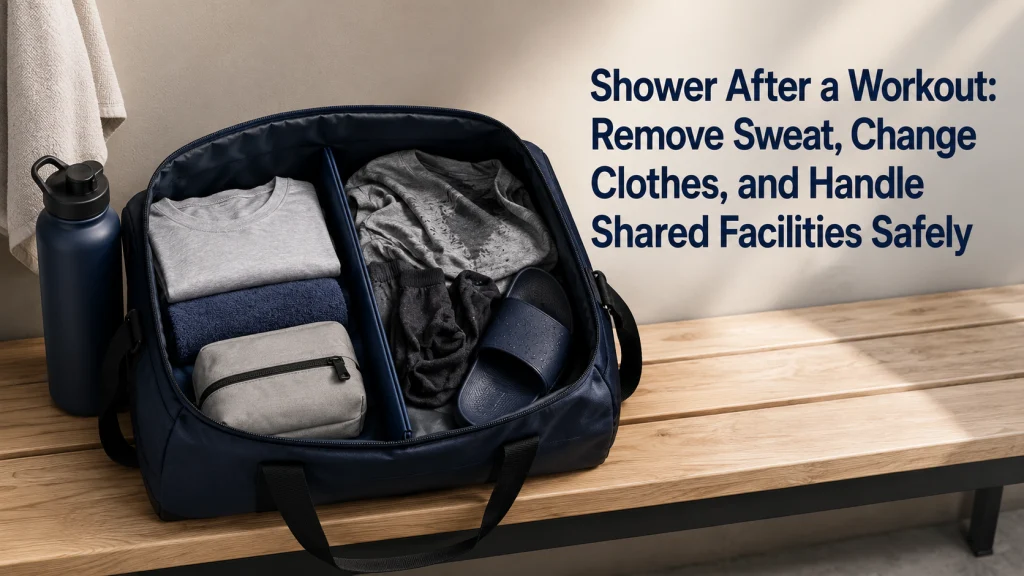
Three Workouts Can Require Three Different Cleanup Plans
Picture three finishes to a workout. One person exercises at home, cools down, and can step into a private shower almost immediately. Another leaves a gym after heavy sweating, faces a long commute, and knows the damp shirt and socks will stay against the skin unless there is a change of clothes in the bag. A third has just finished a contact-sport practice on shared mats with close skin contact and team rules that apply before leaving the facility.
All three people exercised, but their hygiene needs are not identical. The first needs a simple home sequence. The second needs a practical bridge between the workout and a later shower. The third may need a higher-risk athlete protocol that should not be copied automatically by someone who only completed a light solo workout.
| Workout context | Main hygiene priority | What changes the plan |
|---|---|---|
| Ordinary workout with a shower available | Remove sweat, dry the skin, and put on clean clothing | Little shared contact and no long delay |
| Heavy sweating with a delayed shower | Change damp clothing, complete temporary cleanup, and isolate used items | Commute time, privacy, and access to clean clothes |
| Contact sport or repeated shared-mat exposure | Follow sport, team, and facility hygiene requirements | Close contact, shared surfaces, wounds, and outbreak rules |
The useful question is not simply whether to shower. It is which sequence fits the workout, the amount of sweat, the facility, and the time before a proper wash. This article focuses on that exercise-triggered decision. For the wider routine, use the bathing and body odor guide, and place it within your broader personal hygiene routine.
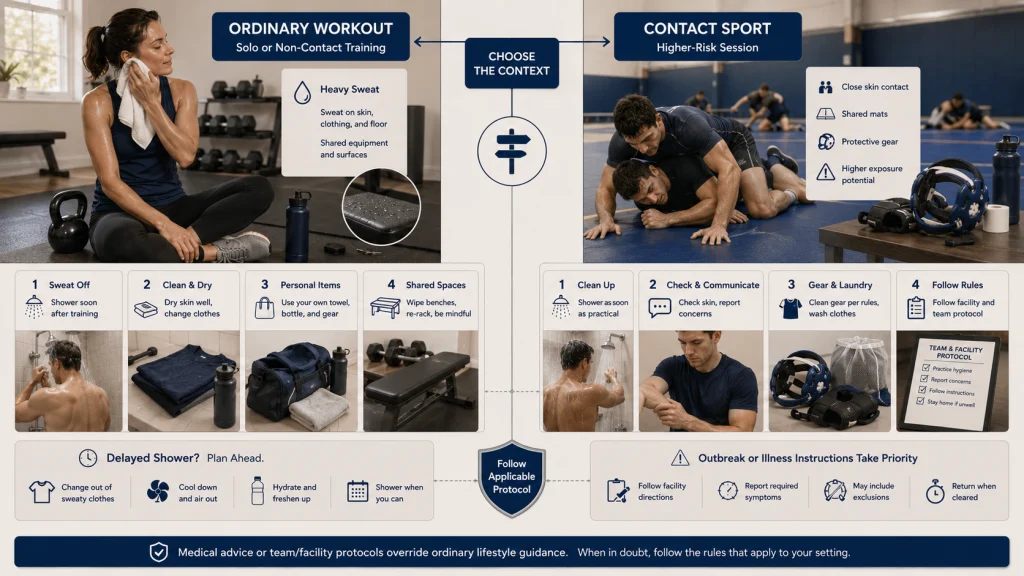
Define the Workout Context Before Choosing the Cleanup
An ordinary workout may involve walking, home strength work, cardio equipment, a class, or a gym session without extensive skin-to-skin contact. Heavy sweating is a practical condition, not a judgment about workout quality. It matters because soaked clothing can stay against the skin, transfer moisture into a bag, and make a delayed trip home less comfortable.
Gym exposure adds shared benches, handles, floors, locker rooms, and showers. Contact sports add another level because skin contact, shared mats, protective gear, and sport-specific rules may change what is required. A delayed shower simply means a complete wash is not available soon after exercise, so the reader needs a temporary sequence rather than pretending a quick wipe is the same as a shower.
A medical or team protocol is different from ordinary lifestyle guidance. Instructions related to an active infection, a wound, a sports outbreak, recent surgery, or a diagnosed skin condition should come from the appropriate clinician, team, or facility. This article does not replace those instructions.
| Ordinary exercise | Higher-risk contact sport |
|---|---|
| Usually focuses on sweat removal, clean clothing, personal items, and shared-shower precautions | May add sport-specific washing, wound coverage, gear handling, facility cleaning, and outbreak rules |
| Does not automatically require antimicrobial products | May involve instructions chosen by a qualified medical, athletic, or facility authority |
| Can often be managed with a simple repeatable sequence | Should follow the stricter applicable rule when a team or facility has one |
Use the ordinary column unless your activity, team, facility, or clinician has placed you in the higher-risk column.
Address Heat, Breathing, or Injury Symptoms Before Routine Hygiene
A shower is not the first task when someone finishes exercise with severe or rapidly worsening symptoms. Do not let a cleanup checklist delay attention to a possible heat emergency, serious injury, breathing problem, or other urgent condition.
Safety warning: Seek urgent help for fainting, confusion, severe shortness of breath, chest pain or pressure, signs of stroke, a serious injury, uncontrolled bleeding, or other immediate danger. Move away from the exercise setting and follow emergency instructions rather than continuing with a routine shower.
Milder discomfort can still deserve caution. If dizziness, unusual breathlessness, weakness, pain, or overheating does not settle as expected after stopping activity, get appropriate guidance. Hygiene can wait until the person is safe and stable.
Change Out of Wet Clothing as Soon as Practical
An unavailable shower does not make the whole cleanup plan fail. The immediate goal is narrower: stop carrying the workout in the dampest layer of clothing. Remove a soaked shirt, underwear, socks, or other items likely to stay against the skin during the next part of the day, then put on a complete dry set.
The value of this step is comfort and practicality. It shortens the time spent in wet fabric and lets the later shower remain a normal wash instead of an urgent attempt to fix everything at once.
Practical tip: Pack the clean layer as a complete set. A spare shirt without clean underwear and socks may still leave the dampest items in place during the commute.
For people who exercise more than once in a day, a full soapy shower after every light session may not always be necessary. The amount of sweat, skin comfort, shared exposure, and time until the next workout all matter. The shower-frequency guide can help separate a workout trigger from the overall daily routine.
Use a Simple Sequence After an Ordinary Workout
Most ordinary workouts do not need a complicated post-exercise ritual. A consistent order is more useful than adding extra steps each time the workout feels intense.
- Finish the session and address any urgent symptoms or injuries first.
- Change out of damp clothing when a shower is delayed.
- Shower when practical after heavy sweating or shared-facility exposure.
- Wash gently, paying attention to visibly soiled or sweaty areas.
- Dry the skin, especially the feet and skin folds.
- Put on clean underwear, socks, and clothing.
- Separate the used towel, clothes, footwear, and personal items for transport and later care.
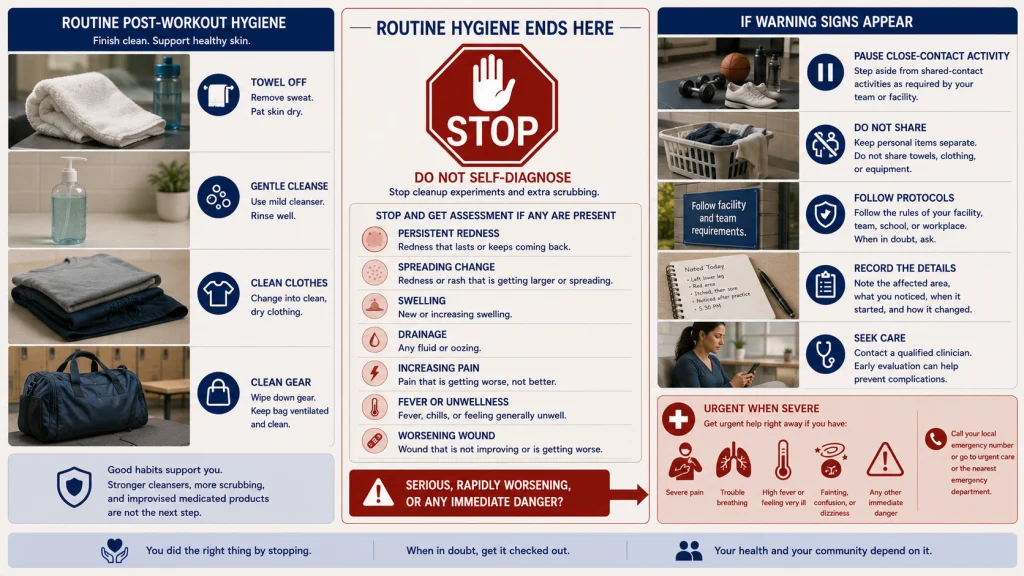
The sequence is meant to remove sweat and ordinary soil, not to sterilize the body. More cleanser, hotter water, harder scrubbing, and repeated washing can add irritation without improving the basic workflow. The goal is clean, dry, comfortable skin and a controlled path for used items.
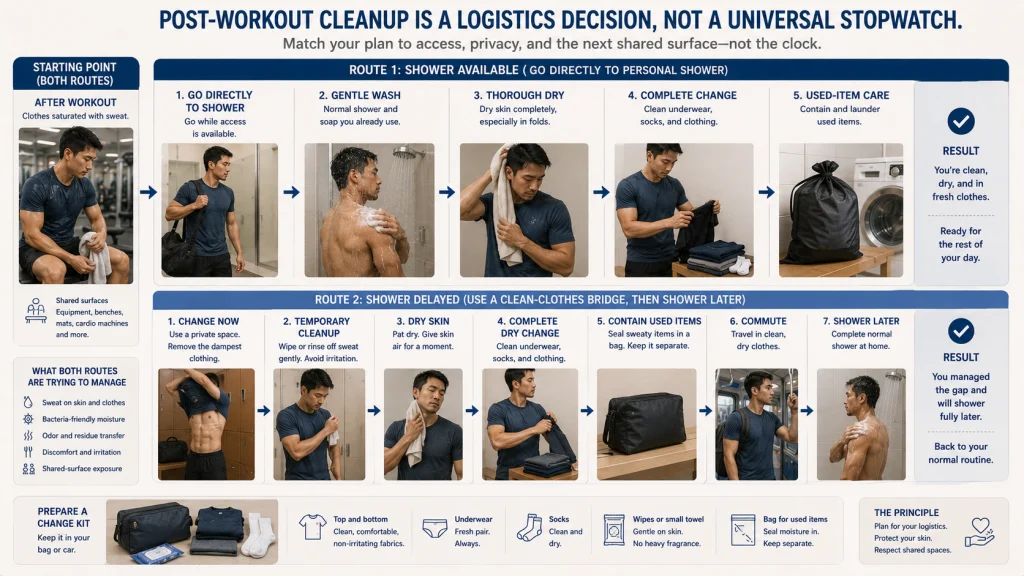
Shower as Soon as Practical After Heavy Sweat or Shared Exposure
There is no single countdown that fits every workout and every household. A person who exercises lightly at home and changes into dry clothes has a different situation from someone leaving a crowded gym in sweat-soaked clothing. Treat “as soon as practical” as a planning instruction: reduce unnecessary delay without turning an ordinary interruption into panic.
A prompt shower deserves higher priority when clothing is saturated, the skin has contacted shared surfaces, the session took place in heat, or another commitment would keep the same clothing on for a long time. If access is delayed, the full wash is simply divided into a temporary step now and a normal shower later.
| Immediate cleanup available | Shower delayed |
|---|---|
| The full wash can happen before dressing and leaving | Cleanup has to be split between the current setting and home |
| Shared-surface contact can be addressed before the next obligation | Privacy, commute time, and facility limits shape what is possible now |
| Used items can move directly into their next care step | A prepared change kit matters more than an improvised solution |
This comparison is about logistics, not a stopwatch. The next section gives the temporary sequence for the delayed side of the table.
Follow a Gentle General Shower Sequence
A post-workout shower does not need a special temperature contest or a long recovery routine. Use comfortable water, wash the areas that need cleaning, rinse well, and dry thoroughly. Avoid treating tingling, burning, tightness, or redness as proof that the skin is cleaner.
Focus on ordinary sweat and soil rather than trying to scrub every part of the body with the same intensity. Underarms, groin, feet, skin folds, and areas that touched shared equipment may need deliberate attention, while other areas may only need a rinse depending on the workout and the person’s normal routine.
For the complete washing sequence, including water, cleanser, friction, drying, and skin comfort, follow the general shower method. This article adds the workout-specific timing, clothing, and shared-facility decisions.
Use a Clean-Clothes Fallback When the Shower Is Delayed
A delayed shower is an inconvenience, not a hygiene failure. It may happen because of a commute, limited locker-room access, work, caregiving, travel, or a facility without private washing space. The fallback only needs to bridge that gap without pretending to replace a full wash.
- Move to a private place and remove the dampest clothing.
- Use a temporary cleanup method that does not irritate the skin.
- Dry the skin before dressing.
- Put on clean underwear, socks, and clothing.
- Contain used items separately from clean items.
- Take a normal shower when practical.
Note: Do not apply harsh disinfectants, concentrated cleaning products, or shared facility cleaners to the skin. Temporary cleanup should remain ordinary personal hygiene, not improvised chemical treatment.
The awkward part is often logistical rather than technical. Discovering one spare shirt but no dry socks after a tiring session can undo an otherwise workable plan. Prepare the complete change kit before the workout so the fallback is available when it is actually needed.
Wear Footwear in Public Locker Rooms and Showers
Public locker rooms and showers add wet floors, shared walking surfaces, and traffic from many users. Wear designated shower footwear rather than walking barefoot through these areas. Keep the footwear on from the changing area through the shower and back to the place where feet can be dried.
Afterward, dry the feet carefully, including between the toes, before putting on clean socks. Let the footwear dry after use rather than leaving it sealed in a damp state.
Editorial observation: Compact shower footwear is only practical when it stays secure on wet floors, fits into the routine without fuss, and can be dried easily after the bag is unpacked.

Litfun Quick-Dry Shower Shoes are lightweight EVA slides made for wet environments such as locker rooms, shared showers, pools, and gym changing areas. Drainage openings help water leave the footbed quickly, while raised grip details add traction across wet surfaces. The compact slip-on design also makes them easy to carry in a gym bag or travel bag between uses.
Check On AmazonIf you click this link and buy, we earn a commission at no additional cost to you.
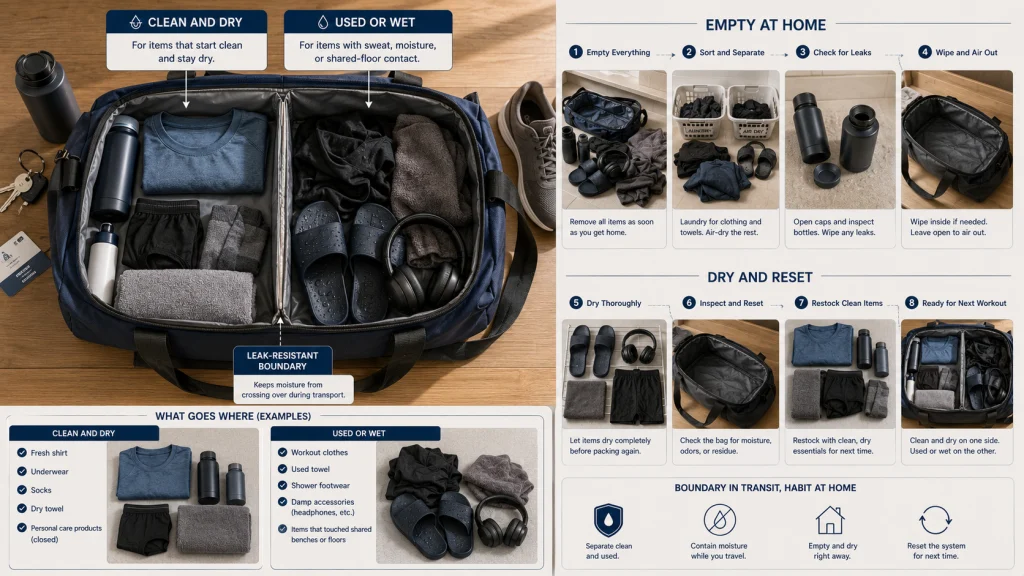
Separate Clean and Used Items Inside the Gym Bag
A single open compartment can undo the value of packing clean clothing. The practical goal is not a complicated organizer. It is a clear boundary between items that will touch clean skin and items that already contain sweat, moisture, or floor contact.
| Clean and dry side | Used or wet side | After arriving home |
|---|---|---|
| Fresh shirt, underwear, socks, and dry towel | Workout clothing and used towel | Remove items instead of leaving them sealed in the bag |
| Personal washing items with closed caps | Shower footwear and damp accessories | Open, dry, clean, or launder items according to their care needs |
| Items stored away from leaks | Anything that touched a shared floor or bench | Wipe or clean the bag when moisture or soil has spread inside |
Editorial observation: A wet-dry system fails when the wet section leaks into the dry section or stays sealed for days. The useful setup is the one that contains moisture during transport and is easy to empty, dry, and reset at home.
Keep the system simple enough that every item has an obvious destination. A clean towel should not share loose contact with used shoes, and a leaking bottle should not turn the spare-clothes section into another wet compartment.
Keep Cuts Clean and Covered Under the Appropriate Guidance
Inspect exposed skin before using shared equipment, mats, locker rooms, or pools. A cut, scrape, blister, or other damaged area changes the situation because it may require protection, activity modification, or professional care.
Use the wound-care instructions already provided by a clinician, team, workplace, or facility. Do not improvise by applying strong cleaning chemicals, borrowing another person’s treatment, or assuming that covering every wound makes all activities appropriate.
Safety warning: Get appropriate care for a serious wound, uncontrolled bleeding, increasing pain, spreading redness, swelling, pus, fever, or a wound that cannot be kept clean and securely covered. Follow facility restrictions rather than returning to shared-contact activity against the rules.
This article does not diagnose or treat wounds, chafing, acne, folliculitis, ringworm, athlete’s foot, impetigo, or other skin conditions.
Treat Contact-Sport Hygiene as a Separate, Higher-Risk Protocol
Contact sports can involve repeated skin contact, shared mats, shared protective gear, and team environments where one person’s skin problem may affect participation rules for others. That context justifies a clearly separated protocol rather than a stronger version of ordinary gym advice.
Follow the current instructions from the team, athletic staff, facility, league, school, or clinician. These may cover shower timing, clean clothing, wound inspection, equipment handling, participation restrictions, and what to do when a possible infection is reported. The applicable authority should decide the protocol, not an online routine copied from another sport.
Do not hide a concerning skin change to avoid missing practice. Persistent redness, a spreading rash, drainage, swelling, pain, or fever needs appropriate evaluation, especially when close-contact participation could expose others.
Key decision: Ordinary workout hygiene is the default only when no stricter sport, team, facility, outbreak, wound, or clinical instruction applies.
Do Not Generalize Antimicrobial Instructions to Every Workout
A recommendation designed for a contact-sport team, a known outbreak, or a clinician-managed condition should not become a universal rule for every person who sweats. Ordinary post-workout hygiene does not automatically require antimicrobial soap, antiseptic washes, acne treatments, antifungal products, or medicated cleansers.
These products can have specific uses, limitations, and irritation risks. Choosing one without a supported reason may add another variable while the actual problem is damp clothing, a contaminated towel, a shared razor, incomplete drying, or a bag that keeps clean and used items together.
Keep the basic sequence basic. When a medical or sports authority gives a specific instruction, follow that instruction within its intended context rather than extending it to every workout or household member.
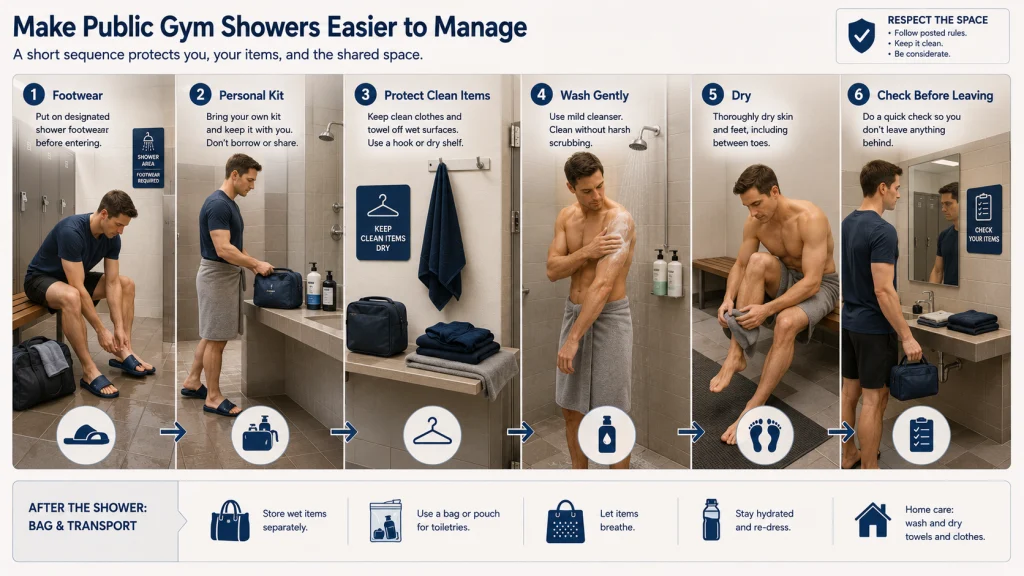
Move Used Clothing and Towels Into Their Own Care Routine
The post-workout sequence ends when used items are no longer mixed with clean items and have been moved into the household’s normal care process. Do not leave a damp towel, socks, or workout clothing compressed in a closed bag longer than necessary.
Laundering choices depend on the item’s care label, material, color, and construction. Footwear and protective gear may have different cleaning and drying limits. This article does not invent one washing method for every fabric or piece of equipment.
The practical handoff is simple: empty the bag, separate what needs laundering from what needs drying or surface care, inspect for leaks or soil inside the bag, and reset the clean side before the next workout. That prevents yesterday’s wet items from becoming today’s packing problem.
Look Beyond the Shower When Odor Returns Quickly
A shower can remove sweat and ordinary residue without solving every source of odor. A damp towel, previously worn clothing, shoes, protective gear, or a gym bag can put odor back into the routine immediately after washing.
Check the sequence before adding more cleanser. Confirm that clean clothes were actually clean and dry, the towel had not remained damp, footwear was separated, and the bag was unpacked after the previous session. If the problem is specifically odor that returns after washing, use the body odor troubleshooting guide rather than turning the workout shower into repeated scrubbing.
Persistent or unusual odor accompanied by pain, rash, drainage, wounds, or other symptoms needs appropriate evaluation rather than a stronger hygiene experiment.
Seek Care for Concerning Skin or General Symptoms
Routine hygiene ends where diagnosis and treatment begin. Do not use an online article to identify a rash, decide whether drainage is infectious, or choose a medicated wash for an unexplained skin change.
Safety warning: Seek qualified care for persistent or spreading redness, swelling, pus or other drainage, increasing pain, a spreading rash, fever, a wound that is worsening, or symptoms that interfere with normal activity. Use urgent care when symptoms are severe, rapidly worsening, or accompanied by immediate danger.
Until the situation is assessed, follow the applicable facility or team rules and avoid sharing personal items. Close-contact participation may need to pause when a concerning wound or skin problem cannot be safely covered or when the governing protocol requires evaluation.
Match the Cleanup to the Workout and the Setting
Start by identifying the context: ordinary exercise, heavy sweating with a delay, shared gym exposure, or higher-risk contact sport. Address urgent symptoms first, change out of damp clothing, shower when practical, and use a gentle general wash rather than escalating heat, friction, or products.
In shared facilities, protect the feet, keep personal items personal, and maintain a clear wet-dry boundary in the bag. Contact-sport rules, wounds, and concerning symptoms require their own instructions. A useful post-workout routine is not the most aggressive one. It is the one that reliably moves you from sweaty clothing and shared exposure to clean, dry skin, clean clothes, and properly separated gear.
FAQs
🚿 Do I need a full shower after every light workout?
Not every light session automatically requires a full soapy shower. Consider sweat, skin comfort, shared surfaces, clothing, and the time until the next wash. Changing into clean, dry clothes may be enough temporarily when the session was light and there was little shared exposure.
⏱️ How soon should I shower after a workout?
Shower as soon as practical after heavy sweating or shared-facility exposure, but do not treat the decision as a universal minute-by-minute deadline. When access is delayed, change damp clothing, dry the skin, use a temporary cleanup, and shower normally when you can.
👕 What should I change if I cannot shower right away?
Prioritize the dampest items, especially the shirt, underwear, and socks. Put on a complete clean, dry set and keep the used clothing separate from clean items during the trip home.
🩴 Should I wear shower shoes in a gym locker room?
Yes, designated footwear is a practical precaution on wet public floors and in shared showers. Keep it separate from clean clothes afterward and let it dry when you unpack the bag.
🧼 Do I need antimicrobial soap after exercising?
Ordinary exercise does not automatically require antimicrobial soap or a medicated wash. Do not copy a contact-sport, outbreak, or clinical instruction into a general routine unless it applies to your situation.
🥋 Is contact-sport hygiene different from normal gym hygiene?
It can be. Close contact, shared mats, wounds, protective gear, and team rules may require a stricter protocol. Follow the current instructions from the team, facility, athletic staff, or clinician.
🎒 How do I keep clean clothes clean in a gym bag?
Use a clear wet-dry separation so fresh clothes and the clean towel do not touch used footwear, damp clothing, or a used towel. Empty the bag after returning home instead of leaving wet items sealed inside.
🚩 When should a post-workout skin problem be checked?
Seek qualified care for persistent or spreading redness, swelling, drainage, increasing pain, a spreading rash, fever, or a worsening wound. Severe or rapidly worsening symptoms need more urgent attention.