Daylight Saving Sleep Adjustment: Use Separate Plans for Spring Forward and Fall Back
Daylight Saving Sleep Adjustment

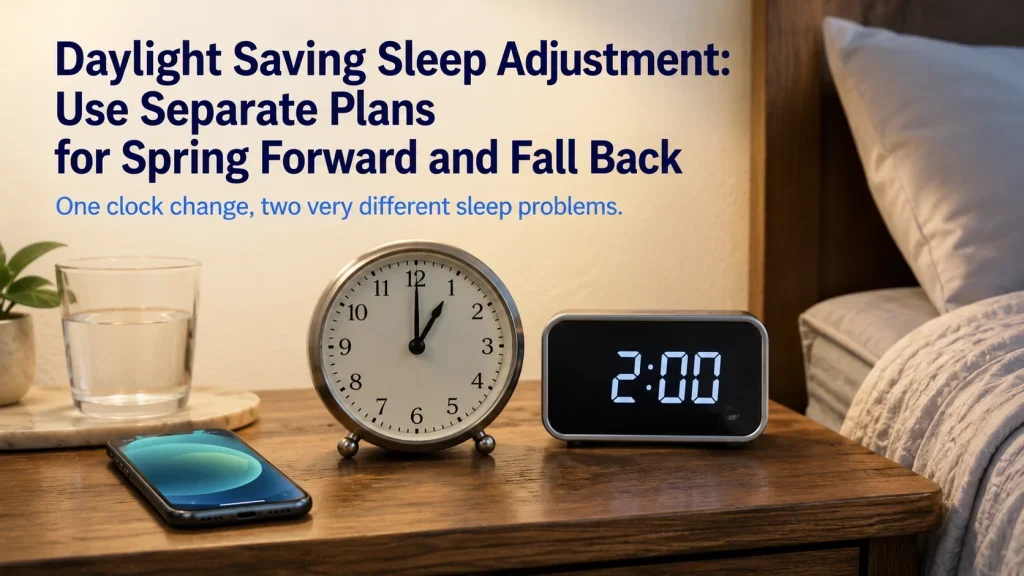
A daylight saving sleep adjustment needs separate spring and autumn plans because losing an hour and repeating an hour create different practical problems. Verify whether the reader’s location changes clocks, protect sleep opportunity before the transition, and move routines in the same direction as the upcoming clock change. Audit automatic and manual devices so alarms,


Social Jet Lag: Measure the Weekday-Weekend Shift Before Blaming the Weekend

Social Jet Lag

Social jet lag describes a difference between sleep timing on constrained days and free days, not a diagnosis and not proof that sleeping later on weekends is automatically harmful. Measure bedtime, estimated sleep onset, wake time, and sleep midpoint before deciding what needs to change. Check whether weekday sleep is being compressed by an early

Jet Lag Sleep Plan: Build the Trip Around Direction, Local Time, Light, and the First Obligation

Jet Lag Sleep Plan

A useful jet lag plan begins with the actual itinerary, not a universal list of airport tips. Direction, time-zone difference, trip length, arrival time, first fixed obligation, local daylight, and realistic sleep opportunity all change the plan. Translate the journey into destination local time, decide which flight segments support sleep, and protect the first local-time

Night Shift Sleep Plan: Protect an Anchor Sleep Period, Alertness, and the Commute Home

Night Shift Sleep Plan

A night shift sleep plan works best when sleep is protected as a scheduled block rather than squeezed into whatever time remains. Build the day around one anchor sleep period, then decide whether a pre-shift nap, light boundary, caffeine cutoff, meal plan, and household agreement are needed. Give the commute home the same attention as

How Long Should a Nap Be: Choose Duration by Purpose, Sleep Inertia, and the Next Task

How Long Should A Nap Be

Nap duration should be chosen by purpose, expected time to fall asleep, the chance of post-nap grogginess, and the task that follows waking. Time in bed is not the same as time asleep, so the alarm must account for settling time as well as the wake-up buffer. Brief naps can fit quick alertness goals, while

Best Time to Nap: Place the Nap Between Wake Time, Bedtime, and the Job It Needs to Do

Best Time To Nap

The best time to nap depends on where the nap sits between wake time, intended bedtime, and the task that follows it. A 2 p.m. nap can be early, mid-day, or late depending on whether the person woke at 5 a.m., 8 a.m., or noon. Choose the nap window by purpose, available sleep opportunity, time

Consistent Sleep Schedule: Keep Workdays and Weekends Close Without Making Life Rigid

Consistent Sleep Schedule

A consistent sleep schedule should make the week easier to return to, not force every night into the same minute. Choose a realistic timing range and one reliable anchor, then decide in advance how late events and free mornings will be handled. Before limiting weekend sleep, check whether the weekday schedule provides enough opportunity to

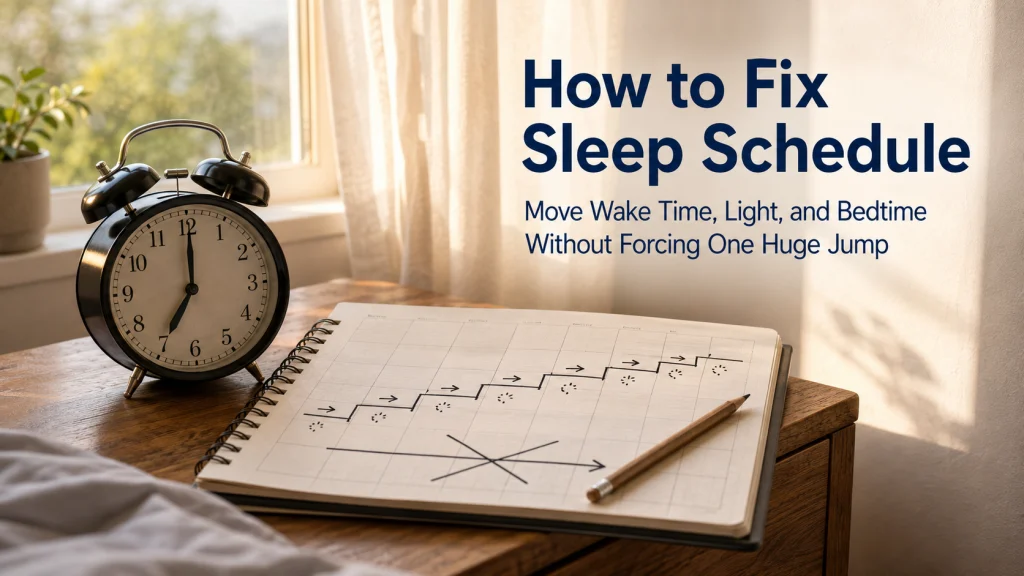
How to Fix Sleep Schedule: Move Wake Time, Light, and Bedtime Without Forcing One Huge Jump

How To Fix Sleep Schedule

To fix a sleep schedule that has temporarily drifted, first measure the difference between your current timing and the wake time daily life now requires. Build the repair around that wake time, protect a realistic opportunity for sleep, pair the morning with light, and keep evening cues, naps, meals, caffeine, and weekends steady enough to

Sleep Schedule: Match Bedtime, Wake Time, Naps, Work, Travel, and Weekends to Real Life

Sleep Schedule

A useful sleep schedule is not defined by one universal bedtime. It must fit the wake time you actually need, provide enough opportunity to sleep, remain workable across the week, and account for naps, work, travel, weekends, and other timing pressures. Start by identifying whether the real problem is temporary drift, ongoing inconsistency, daytime sleep,

Bedtime Procrastination: Protect Personal Time Without Letting the Night Disappear

Bedtime Procrastination

Bedtime procrastination is the voluntary delay of sleep even when you intend to go to bed and have a reasonable opportunity to do so. The delay often protects something the day failed to provide, such as quiet, autonomy, entertainment, task completion, or a transition out of responsibility. The practical goal is not to remove all