How to Build Hygiene Habits: Use Cues, Minimum Versions, and a Restart Rule
How To Build Hygiene Habits

Hygiene habits become easier to repeat when the task has a stable cue, the supplies are ready at the point of use, and a minimum version is available for difficult days. Start with one task instead of rebuilding an entire routine at once. Use one reminder only when the cue is not yet reliable, track

Why Seniors Refuse Help: Understand What the No Is Protecting

Why Seniors Refuse Help

A refusal of help may be protecting control, privacy, identity, trust, reciprocity, routine, or the right to choose how a problem is solved. Before repeating the same offer more forcefully, ask what the offer changes besides the workload. Separate a preference conflict from an unmet essential need or immediate danger, then redesign the support around

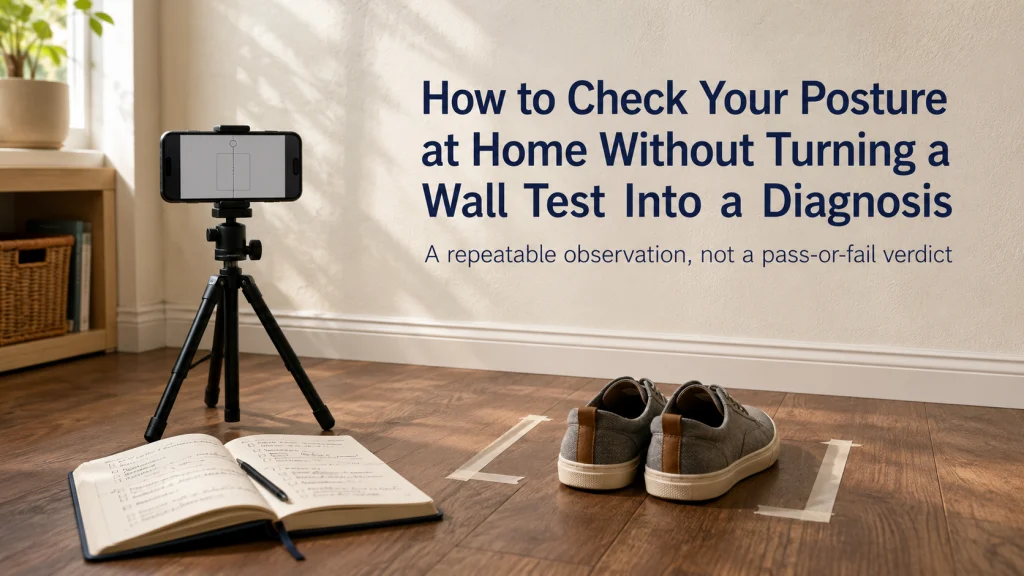
How to Check Your Posture at Home Without Turning a Wall Test Into a Diagnosis

How To Check Your Posture

A useful posture check is a repeatable observation, not a verdict from one mirror glance, wall reference, photograph, or app overlay. Choose one ordinary task, keep the time, surface, footwear, camera position, and recent activity as consistent as practical, then record appearance alongside comfort, effort, breathing, contact, and symptoms. Compare ordinary posture with a deliberately

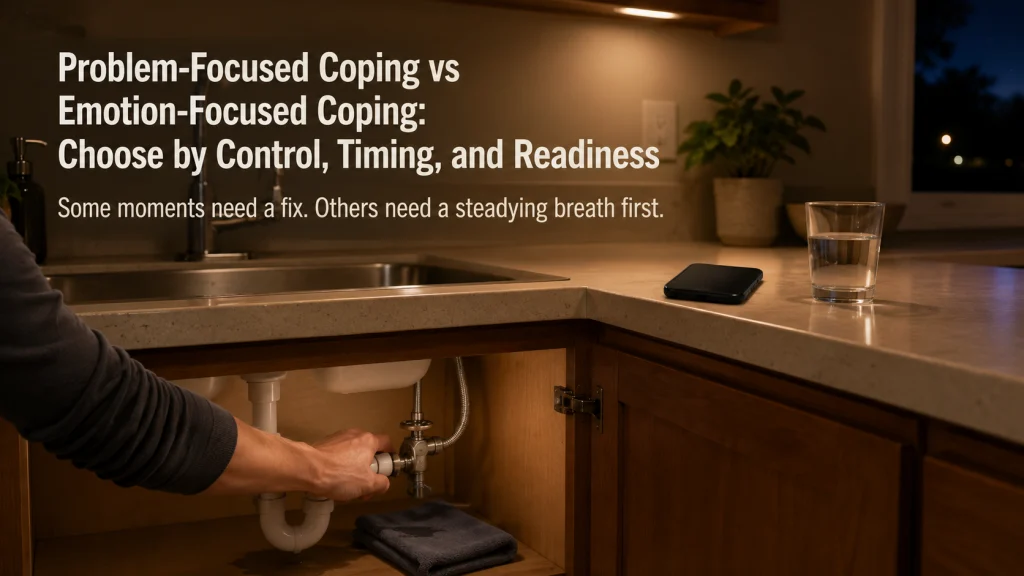
Problem-Focused Coping vs Emotion-Focused Coping: Choose by Control, Timing, and Readiness

Problem Focused Coping Vs Emotion Focused Coping

Problem-focused coping changes the part of a stressful situation that can be changed, while emotion-focused coping helps you handle the reaction happening inside you. The better choice depends on three questions: what is controllable, what must happen now, and whether you are ready to think and act. Many situations need both approaches in sequence rather

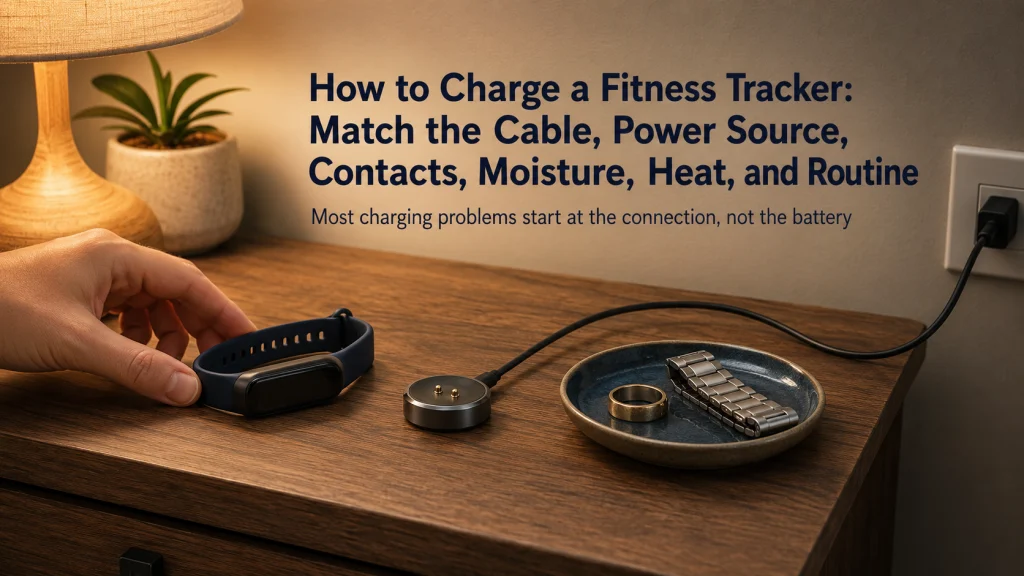
How to Charge a Fitness Tracker: Match the Cable, Power Source, Contacts, Moisture, Heat, and Routine

How To Charge A Fitness Tracker

Learning how to charge a fitness tracker starts at the connection between the exact device, charger, cable, power source, and charging surface. Confirm compatibility, clean and dry both sides of the connection, remove metal objects, and place the setup where heat can escape. Verify that the device is actually charging, then build a routine around

How Long Does Meal Prep Take: Estimate Active Work, Passive Cooking, Cooling, and Cleanup

How Long Does Meal Prep Take

Recipe time and kitchen time are different measurements. A realistic meal-prep estimate includes active work, passive cooking, blocked equipment time, cooling, packing, cleanup, and a buffer for the parts that do not overlap cleanly. Build the estimate from the actual recipes and shared tasks, then check burner, oven, counter, sink, and container conflicts before committing

Exercise Intensity for Beginners: Use the Talk Test and Effort Scale Before Chasing Heart-Rate Zones

Exercise Intensity For Beginners

Exercise intensity for beginners is best judged by how the activity feels in your body, not by a treadmill speed, calorie estimate, video level, or smartwatch zone alone. Use the talk test and a simple 0-to-10 effort scale to separate light, moderate, and vigorous work. Start below your hardest repeatable effort, then change intensity separately

Caffeine Cutoff Time: Work Backward From Bedtime and Count Every Source

Caffeine Cutoff Time

A useful caffeine cutoff time is the last planned caffeine exposure before your intended sleep period, not one universal hour on the clock. Build a complete inventory, compare caffeine per serving with the number of servings actually consumed, and work backward from bedtime using a conservative test window. Keep morning intake and other major sleep

How to Ventilate a House: Create a Safe Air-In and Air-Out Path for the Actual Activity

How To Ventilate A House

Ventilating a house means creating a useful path for outdoor air to enter and indoor air to leave. One cracked window may provide only an opening, while a separated inlet and outlet can create a clearer route through the room. Start with the source event, check whether outdoor conditions and the opening are safe, then

Personal Hygiene Products: Choose One Useful Function Before Adding Another Item

Personal Hygiene Products

Personal hygiene products are easier to choose when each item has one defined job. Start with the care tasks already selected, match one suitable product or tool to each necessary function, and keep optional grooming, body-specific items, and symptom-driven products outside the basic list. Separate reusable tools from consumables, place active items where they are

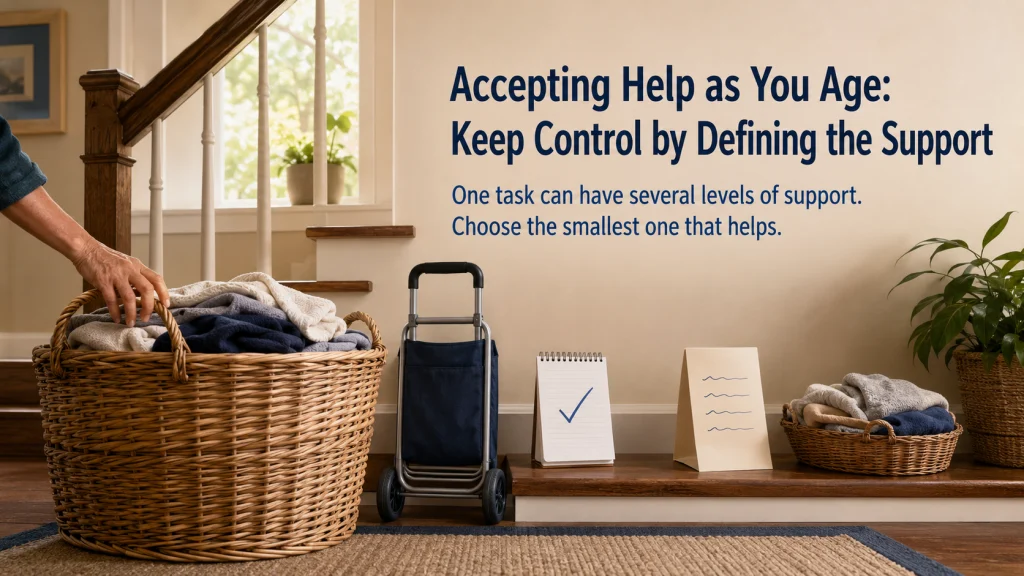
Accepting Help as You Age: Keep Control by Defining the Support

Accepting Help As You Age

Accepting help as you age does not have to mean handing over an entire part of life. Start by naming what you want to protect, identify the exact objection, and define the smallest useful support with clear limits. Keep consent, privacy, timing, cost, and a stop rule visible from the beginning. A short trial can

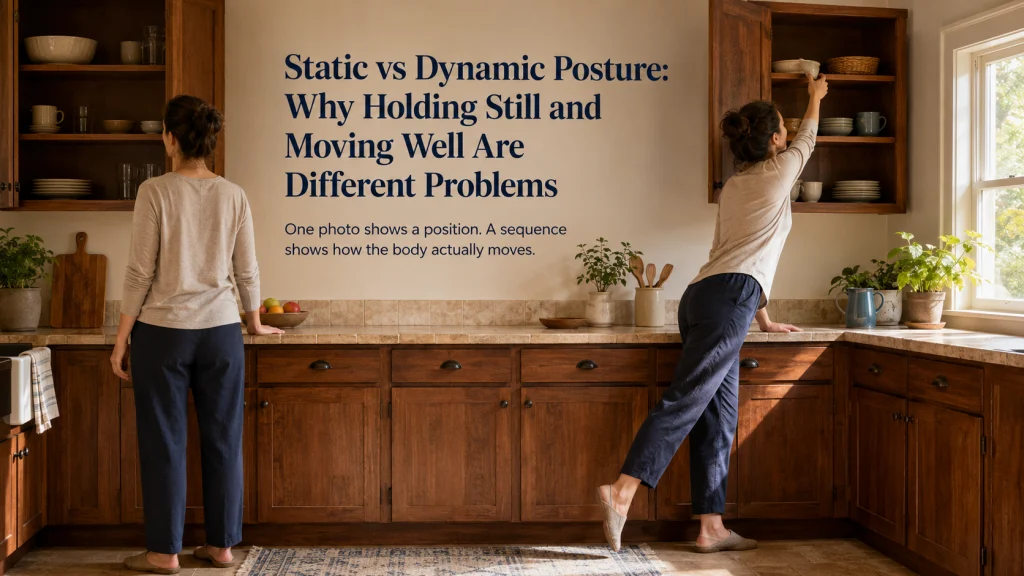
Static vs Dynamic Posture: Why Holding Still and Moving Well Are Different Problems

Static Vs Dynamic Posture

Static posture describes how the body is organized while a position is being held. Dynamic posture describes how support, balance, reach, timing, and force change while the body moves. Many household tasks are mixed because they combine stillness, transitions, and repeated movement. A chair or cushion may change contact during sitting, but it cannot automatically